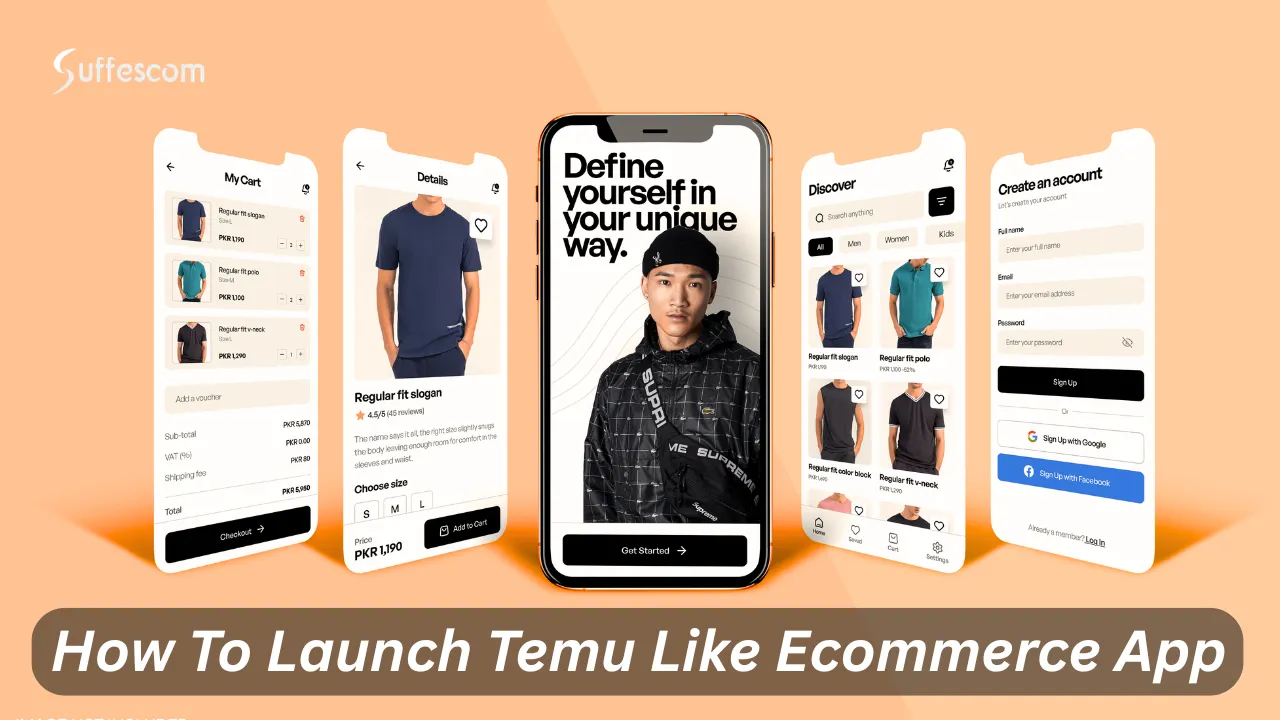
When Temu launched, it instantly achieved phenomenal success, becoming one of the most hyped shopping apps globally in a relatively short time. The app has over 130 million app downloads. About 31.6% of its users are from the US. Experts expect it to reach around $70.8 billion in sales in 2024.
If Temu’s success inspires you and you want to build a micro-ecommerce app for local UK sellers, we are here to explain what it takes to build an app like Temu, how long it takes, how much it costs, and all the important details you need to know.
Want to launch your own microcommerce app like Temu?
Book a free call with our expert.
Existing market gaps for small sellers in the UK, and how you can leverage them?
Even though there are many large marketplaces like Amazon, eBay, and Etsy, many small UK sellers still face challenges, such as:
- High fees and commissions that eat into their profits
- Low visibility, as bigger brands dominate search results
- Limited tools for marketing, analytics, or inventory management
These gaps create a big chance for micro-ecommerce founders. You can build a platform that helps small merchants who are often ignored. If your app is easy to use and has low fees, you can create a marketplace that small businesses will really like.
Key Concept of Micro-ecommerce App
The core concept of ecommerce site revolves around starting a small, specialised online store that focuses on a very specific niche or segment, rather than building a full product catalogue. These models are designed to be highly targeted. They are streamlined for quick purchasing, and often act as micro funnels to boost sales and SEO for a larger brand.
How a Micro-Ecommerce App Works: Design and Development
Earlier, we talked about micro-ecommerce and why it works well for small, niche sellers. Now, let’s look at how these apps are built and designed. We will also see what makes them useful for both sellers and buyers.
This will help you understand what it takes to build an app that works well, feels easy to use, and can do well in the market.
Design and User Experience
Whether you choose to go with mobile app development or website development, the approach will be the same. You will be focusing on keeping the design fast and intuitive to facilitate fast product exploration and quick buying. Here are the components that will make up the frontend of your microecommerce app:
For Buyers
- Find Products: Simple search and filters to quickly see what they want.
- Product Pages: Clear pictures, descriptions, prices, and reviews.
- Easy Checkout: Fast setup, multiple payment options, and secure transactions.
- Personal Experience: Suggestions based on what they browse and like.
- Notifications: Updates on discounts, new products, and orders.
For Sellers
- Dashboard: A simple panel to manage products, orders, and stock.
- Storefront: Customize mini-shops with branding, banners, and product layouts.
- Analytics: See sales, top products, and customer habits.
- Marketing Tools: Run promotions, coupons, and loyalty programs.
- Order Management: Track orders, shipments, and returns in real time.
Backend and Development
Now, let’s look at the backend layer and what key components it must have to support the smooth functioning of your app:
- Product Management: Let sellers add, update, and organize products. Keep inventory easy to manage and error-free.
- Order Processing: Track orders from purchase to delivery. Update stock automatically and notify sellers and buyers in real time.
- Payment Integration: Accept cards, digital wallets, and local payment options.
- User Management: Handle buyer and seller accounts, logins, and permissions.
- Analytics and Reporting: Collect data on sales, traffic, and user behavior to help sellers make better decisions.
- Notifications and Communication: Send push notifications, emails, and alerts about new products, promotions, or order updates.
Technical Considerations
- Scalability: The app should handle thousands of users at once without slowing down. This is key as your marketplace grows.
- APIs and Integrations: Connect to payment systems, shipping services, marketing tools, and analytics for a smooth experience.
- Cloud Storage: Store product images, videos, and app content safely and efficiently.
- Security: Keep user data, payments, and seller information safe.
Development Process Overview
- Planning and Architecture: Decide how the app will work and what technology to use.
- Database and Server Setup: Create the system that stores products, orders, and user info.
- API Development: Connect the frontend and backend so everything updates in real time.
- Testing and Optimization: Make sure the app runs fast, has no bugs, and can handle more users.
- Launch and Maintenance: Release the app and keep it updated, safe, and reliable.
A strong backend and a clear frontend help micro-ecommerce apps give a smooth experience for both buyers and sellers.
Step-by-Step Process to Build the Micro-Ecommerce Application
Here is how the process of building a microecommerce app like Temu unfolds when you work with an experienced team of developers:
Discovery and Business Analysis
To build a micro-ecommerce app successfully, you first need to understand your business goals, target audience, and how you will make money. This is where we start.
We begin with a free consultation. You can ask any questions about development, technology, timeline, or cost.
Once you decide to work with us, we will work closely with you to figure out the following:
- Your target audience, for e.g., local UK sellers, niche product categories
- Core business model, such as commission-based, subscription, or hybrid
- Essential features required for your MVP launch
- Key unique selling propositions that you intend to reflect on during the design and development
- Market gaps and limitations faced by sellers on existing marketplaces
By the end, you will have a clear blueprint that outlines the app’s structure, feature priorities, and technical approach.
Define Business Model
Before building the app, you need to decide how it will make money and help users. This step is very important. It shapes your product choices, like which features to build first and how the app will grow over time. Here are some simple ways a microcommerce app like Temu can earn money:
- Commission-based: You earn a percentage from each transaction between buyers and sellers.
- Subscription-based: Sellers or buyers pay a recurring fee for access to the platform or premium features.
- Hybrid approach: You can combine commissions and subscriptions.
Choosing Technology Stack
Once the business model is decided, the next step is to choose the right technology stack. The key is to select a modern technology stack that allows you to build efficiently and maintain strong performance and security over time. A well-chosen tech stack determines how quickly the development is going to be, as well as how easy it will be to maintain the app in the long run.
Drawing from our experience building various micro-ecommerce solutions, we are adept at leveraging the following technology stack:
| Layer | Technology Options |
| Frontend | React Native, Flutter |
| Backend | Node.js, Django |
| Dataend | PostgreSQL, MongoDB |
| Payments | Stripe, PayPal |
| APIs & Integrations | REST APIs, Third-party services |
| Hosting & Infrastructure | AWS, Google Cloud |
UI/UX Design and Prototyping
Once the project roadmap is finalised, the next step is to design an intuitive, conversion-focused user experience. Keeping fast browsing, quick purchasing decisions, and smooth navigation as the key focus, we begin designing the interfaces. We prepare interactive prototypes and wireframes to give you a clear visual representation of how your micro-ecommerce app will function. This includes:
- Buyer journeys
- Seller journeys
- Navigation structure and app flow
- Mobile-first responsive design for better accessibility
We focus heavily on reducing friction in the buying process, ensuring that users can discover products and complete a purchase in just a few taps. Before moving into development, we validate the design with you to ensure it aligns with your vision and business goals.
Development and Backend Architecture
After the design is ready, we start building the app. This is when your micro-ecommerce app starts to take shape.
We make sure the app can handle more users and more products without slowing down. We also make sure the app and the server work together smoothly.
On the backend, we ensure the following:
- Make it easy to add and manage products
- Set up safe logins for buyers and sellers
- Track orders from checkout to delivery
- Connect payment methods like cards and wallets
- Send notifications for orders and promotions
- Add simple reports to see how the app is doing
On the frontend, we :
- Make the app fast and easy to use
- Make it work on phones, tablets, and computers
- We also built the app to grow. More users and sellers can join without problems.
At the end of this stage, the app works with all main features ready for testing.
Cost to Build a Shopping App Like Temu?
Temu is not just a shopping app. It is a large-scale marketplace ecosystem similar to:
- Amazon
- AliExpress
It includes:
- Multi-vendor system with thousands of sellers
- Logistics and delivery tracking
- Massive product catalogue
- Performance optimized infrastructure
- Discount games and rewards
Apart from that, a platform like Temu should be built with scalability in mind, as it must handle millions of users, products, and real-time updates. It must support fast loading and secure payments while preventing crashes.
This means you are not simply paying for an e-commerce app development but also a robust backend system, scaling capability, and cloud infrastructure.
Cost to Hire a Team in the UK
You will need a team that includes:
- A project manager
- Mobile developers
- Backend developers
- UI/UX designer
- QA testers
| Hiring Type | Typical Rates |
| Junior developers | £25–£50/hour |
| Mid-level developers | £50–£90/hour |
| Senior developers | £90–£150+/hour |
| Monthly team cost | £20,000 – £60,000+ |
Development Phases & Cost
| Phase | Description | Cost | Time |
| Phase 1: MVP | Basic marketplace with essential features | £7,940 – £15,880 | 5 Weeks |
| Phase 2: Full Marketplace System | Expanded marketplace with vendor capabilities | £19,851 – £23,819 | 3 months |
| Phase 3: Temu-Level Features | Advanced, large-scale system with high-end capabilities | £27,789 – £31,758+ | 6 months |
Infrastructure & Ongoing Cost
Even after building, you will have to pay for:
- Hosting on AWS/Google Cloud. You can expect to spend around £780 for dedicated server hosting and security, while standard hosting typically starts at £100 and goes up to £500.
- Addressing bugs in a complex, high-traffic e-commerce app generally falls under ongoing maintenance and usually costs about 15%–25% of the original development cost per year.
Key Things to Know Before Building Your Micro-Ecommerce App
Before you start building your app, you need to think about business, legal, and security issues. Planning these early can save you money and headaches. It also helps make your app safe, trustworthy, and ready to grow.
Business Setup
You must pick the right legal structure for your business. In the UK, most small e-commerce apps are either a sole trader or a limited company.
- Sole Trader: Easy to set up and fewer rules to follow. But you are personally responsible for any problems.
- Limited Company: Gives legal protection and looks better to investors and banks. But it needs more paperwork.
Your business type can affect how fast you launch, how you hire people, and how payment systems work. Some partners or payment providers may only work with limited companies.
Data Protection
You must protect your customers’ and sellers’ information. Following GDPR rules is required.
- Only collect the data you need
- Keep data safe
- Let users control their info
- Use encryption and secure logins
GDPR can add extra work for your app. You may need encrypted databases, secure login systems, and logs of who accessed data. This can cost £5,000–£15,000 depending on how complex it is.
Payment Security
Payments must be safe. Most apps follow PCI DSS rules to protect credit card and wallet transactions.
- Use certified payment gateways.
- Don’t store sensitive card info directly.
- Add fraud detection
Secure payments take more backend work and testing. Using ready-made solutions like Stripe or PayPal saves money. Custom solutions cost more.
Policies You Need
Clear policies build trust and protect you legally.
- Privacy Policy: Explains how you handle user data
- Refund Policy: Explains returns and cancellations
- Seller Agreement: Sets rules for sellers, like fees and delivery
Policies can affect app features. For example, a refund policy may need your system to track returns, issue refunds automatically, and notify users. This can add coding and testing work.
How to Decide What to Build First
When you start a micro-ecommerce app, it is easy to want to build everything at once. But that is a big mistake. You should focus on the most important features first. This saves money and time and helps you learn what your users really need.
1. Build the Must-Haves First
Ask yourself, what does a user need to buy or sell? These are your core features. Examples:
- Sign up and log in
- Product listings
- Cart and checkout
- Basic seller dashboard
- Payment system
These features let you launch fast and start testing your idea. Don’t add extra features yet.
2. Add Growth Features After Launch
Once your app has users, you can add features that make it easier to use or more fun. Examples include:
- Reviews and ratings
- Discount codes or coupons
- Wishlist
- Order tracking
- Basic seller reports
Add features that help users or increase sales. Ignore features that are not needed yet.
3. Scale Features Come Last
After your app works and users like it, you can add advanced features. Examples include:
- AI product recommendations
- Rewards and games
- Detailed analytics
- Multi-language support
- Dynamic pricing
These features take more time and money. Build them only after your app proves itself.
4. How to Prioritize
A simple rule to decide what to build:
- High impact, low effort → build first
- High impact, high effort → plan next
- Low impact → delay
Focus on features that give the most results with the least work.
5. Time-to-Market Mindset
- Launch your MVP in 30–60 days
- Avoid building everything at once
- Use user feedback to improve and add features
Many startups fail because they build too many features at the start. They spend months or even years on things users don’t care about. A focused MVP saves time and money and lets you improve your app based on real feedback.
Not sure what to build first?
Get your feature roadmap.
How to Grow Your App?
Making your app is just the first step. You also need a plan to get users and grow.
1. Before Launch
Do these things before your app is ready:
- Make a landing page to explain your app
- Collect emails from people who are interested
- Share your app on social media to get attention
Early users can help you test your app and spread the word
2. Launch Time
When your app is live, get users to try it fast:
- Work with influencers who can show your app to their audience
- Run paid ads on social media or search engines
- Use PR campaigns to get media coverage
Focus on places where your users spend time.
3. After Launch
Keep growing your app after it goes live:
- Write content and use SEO to attract new users
- Start referral programs so users can invite friends
- Run retargeting campaigns to bring back people who visited but did not sign up
How to Attract Local UK Sellers
Getting local sellers to join your app is important. Make it simple and rewarding for them.
- Free Listing at Launch: Let sellers list their products for free at the start. They can try your app without risk.
- Help Them Get Started: Show sellers step by step how to list products and manage orders. Guide them through the dashboard.
- Show Success Stories: Share stories of sellers who made money on your app. This builds trust and makes more people join.
- Work With Local Groups: Partner with local business groups or online communities. They can help you reach more sellers.
How to Rank Your App on Google
If you want people to find your marketplace in the UK, you need a smart SEO plan. This helps buyers and sellers discover your store on Google.
1. Use the Right Keywords
Focus on what customers search for:
- Product names and categories (like “cheap home gadgets UK”)
- Keywords like “multi-vendor marketplace UK” or “shop [product type] online UK.”
- Local keywords, if you target specific cities
Use these words in your product titles, descriptions, and blog posts.
2. Make Your Pages Clear
Help Google and users understand your site:
- Use headings that match your keywords
- Link product pages to categories and related items
- Add structured data, so Google shows products, prices, and reviews
3. Create Helpful Content
Write content your buyers care about:
- Blog posts on products, trends, and how-to guides
- FAQs about ordering, delivery, and returns
- Real examples or success stories from your sellers
4. Get Other Sites to Link to You
Backlinks show Google your marketplace is trusted:
- Partner with blogs and websites to write guest posts
- List your marketplace in UK directories
- Ask sellers or partners to share your site
5. Keep Improving
- Check which pages bring the most visitors
- Update content often
- Add new products and seller stories to stay fresh
Common Mistakes to Avoid
When building a Temu-like marketplace, some mistakes can slow you down or cost money. Avoid these to grow faster.
- Building Too Many Features Too Early: Focus on the core features first. Don’t try to add everything at launch. Too many features confuse users and delay your app.
- Ignoring User Experience: Make your app simple and easy to use. If buyers or sellers get confused, they will leave.
- Weak Seller Onboarding: Help sellers get started step by step. If they struggle, they will not list products or stay active.
- No Marketing Plan: Even a great app won’t get users on its own. Plan how you will reach buyers and sellers from day one.
Categories You Can Explore in a Temu-Like Marketplace
If you want to run a marketplace like Temu, choosing the right product categories is very important. The right categories attract buyers and make your sellers happy. Start with items that are popular, easy to ship, and in demand in the UK. You can always add more categories later.
- Fashion & Accessories
- Home & Living
- Electronics & Gadgets
- Beauty & Personal Care
- Kids & Toys
- Sports & Outdoor
- Health & Wellness
- Gifts & Lifestyle
Future Trends in Micro-Ecommerce Apps
Micro-ecommerce apps are changing fast. To stay ahead, watch these trends.
- AI Personalization: Apps can suggest products that buyers will like. This makes shopping faster and more fun.
- Social Commerce: People buy directly through social media. Linking your app to Instagram or TikTok can bring more users.
- Voice Search: More people use voice assistants to search and shop. Making your app voice-friendly helps buyers find products easily.
- Augmented Reality Shopping: AR lets buyers see products in real life before buying. It makes shopping interactive and easier to decide.
Conclusion
There is a huge opportunity in building a Temu-like app in the UK. You can explore unique product categories that are not served well. You can also reach sellers and merchants who feel left out or ignored by bigger platforms. These markets are full of potential buyers and sellers waiting for the right place to sell and shop.
All you need is the right team by your side. A team that has experience in the ecommerce industry and understands the challenges of running a marketplace.
As a veteran ecommerce development agency with years of experience building ecommerce stores and multi-vendor marketplaces, we can guide you from the very beginning. We can create a complete roadmap, help you plan features, design the platform, and launch successfully.
If you have any questions or want advice, we are here to support you every step of the way.
Take your first step today.
Book a free consultation.
FAQs
1. How is a micro-ecommerce app different from platforms like Amazon or eBay?
A micro-ecommerce app focuses on a specific niche or a local market. It helps small sellers get more visibility because there is less competition. On big platforms like Amazon or eBay, there are millions of sellers and buyers, so it is easy for small sellers to get lost. On the other hand, the micro-ecommerce app feels simpler and more personal. It brings together buyers and sellers who are looking for the same products. This makes shopping easier for buyers and selling easier for sellers.
2. What is the fastest way to launch a Temu-like app in the UK?
The fastest way is to start with a simple version of your app. Try to only include the most important features, such as signup, product listing, cart, and checkout. Pick the modern tech stack, like Flutter or React Native, to save time. You can go for payment options like Stripe that are ready to use. Most importantly, avoid adding too many features at the start. You can launch in 30 to 60 days if you focus on what matters first.
3. How do I attract sellers to a brand-new marketplace?
At first, focus more on sellers than on buyers. Start by offering zero or very low fees to join. Help them set up their products and give support. Find small communities where your sellers are active. Show early stories of sellers who are doing well. When sellers feel supported and see that the app works, they will list more products. This helps your marketplace grow fast.
4. What is the minimum budget required to build a micro marketplace app?
It depends on how you build it. A no-code app can cost about £1,000 to £5,000, while a freelancer-built app may cost £5,000 to £15,000. And, an agency-built app usually starts from £20,000. It is better to start small and test your idea. After you see it works, you can spend more and grow the app.
5. Should I build a mobile app or start with a web platform first?
Most people shop on mobile phones. It is better to start with a mobile app development or a progressive web app. Just make sure to build it with speed, simplicity, and usability at the core focus. Web platforms can come later if needed. A good mobile app makes shopping easy anytime, anywhere.
6. How do I handle payments and payouts to sellers?
Use payment tools like Stripe or PayPal. Stripe can automatically send money to sellers. The platform also gets its share without extra work. These tools are safe and simple. You do not need to handle money manually. Sellers and buyers will trust your app more.
7. How do I compete with low pricing strategies used by apps like Temu?
You do not need to compete only on price. You can also try offering products that are local or hard to find. Give fast delivery and good service. Build trust by showing quality. Make your brand strong so buyers recognize it. People will pay a little more if they feel safe and get value.
8. What legal requirements should I be aware of in the UK?
- Follow the law to protect yourself and users.
- Protect customer data with GDPR.
- Have clear rules for buyers and sellers.
- Create agreements for sellers.
- Use safe payment methods that follow rules.
This keeps your app safe and professional.
9. How do I ensure quality control across multiple sellers?
To ensure quality control across multiple sellers, check sellers before they join. Make sure to review their products to make sure they are good. Let customers give ratings and reviews. Give sellers clear rules to follow. This keeps your marketplace trusted and reliable.
10. What are the biggest mistakes when building a marketplace app?
Some of the most common and biggest mistakes founders make when building a marketplace app are:
- Do not launch without enough sellers.
- Avoid adding too many features at the start.
- Keep the app simple and easy to use.
- Pick one clear type of product or market.
- Trying to do everything at once can make your app confusing and weak.
11. How can I scale my app after launch?
After the app is live, you can add new features. For example, you can add AI-enabled product suggestions or loyalty programs. You can promote the app using SEO and online ads. Apart from this, you can expand into new product types or new areas, or work with delivery services to reach more buyers. Growing slowly helps the app stay strong.
12. Can I build a Temu-like app without coding skills?
Yes, you can build a Temu-like app using no-code or low-code tools to start. You can also use pre-built marketplace apps. These are faster and cheaper. But if you want more control and bigger growth, working with developers is better. They help you build a strong, professional app.

Senior Content Strategist
Jonathan Raabe is the Content Strategist at Suffescom Solutions and has more than 7 years of experience in developing data-driven content strategies for technology-centric organizations. He is proficient in the areas of mobile app development, software development, AI, cloud computing, fintech, healthcare, and digital transformation. Jonathan collaborates with industry leaders, developers, and business heads in creating high-value, SEO-optimized content that helps companies in increasing their visibility on the search engines, establishing trust, and driving business inquiries.
Need Help With
Development?