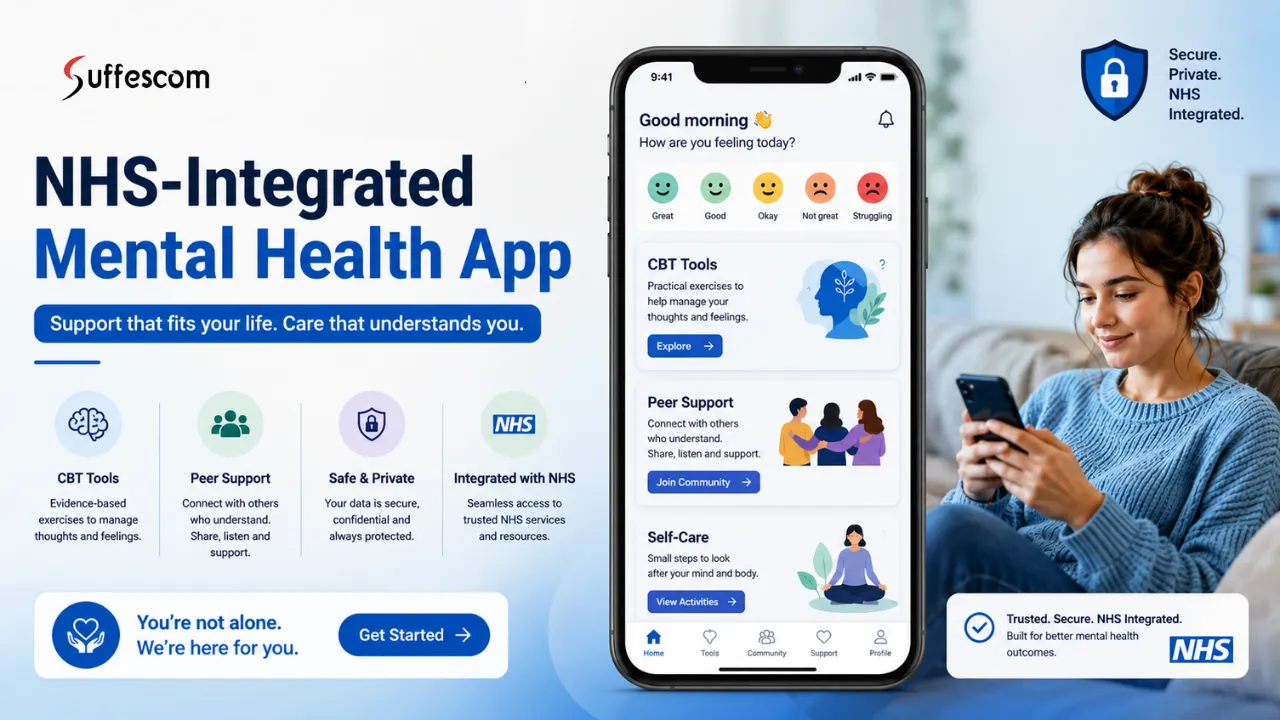
The UK mental health services are rapidly evolving through digital means due to increasing patient demand, long wait periods for therapies, and pressures on the mental health workforce. NHS Talking Therapies remain widely practiced in England, and the use of the NHS App is rapidly spreading throughout the UK.
Therefore, founders and investors are actively showing interest in creating NHS Integrated Mental Health apps. If you are planning something similar, this blog post offers you valuable insights on the development aspects, important features, timeline to development, cost, and more.
Key Takeaways
- The UK’s integrated NHS mental health applications have witnessed an increase in demand owing to ongoing initiatives in digital transformation by the NHS.
- The modern mental health platforms incorporate CBT therapy and assistance from artificial intelligence and automation.
- The development of a mental health application in the UK market starts from £20k for a basic application. However, the cost can shoot up to £150k for a fully integrated NHS application with AI features.
- Compliance is a critical factor in the development of the application, as key aspects include NHS Login, GDPR, FHIR Interoperability, cybersecurity, and safeguarding.
- The future developments in mental health application development involve AI, wearables, predictive analytics, and remote therapy technology.
UK Mental Health App Market Overview
The growth of the UK mental health application market is rapid, owing to the efforts by healthcare institutions, startups, and NHS bodies investing in digital-first mental healthcare. The increased knowledge regarding mental health issues, rising cases of anxiety and depression, and strain on NHS bodies have resulted in this trend.
Increased Demand for Mental Health Apps in the UK
The number of requests regarding mental health care services has considerably grown recently in the United Kingdom. Especially, young adults and remote employees have started using mobile applications for self-care purposes and tracking their mood. Moreover, long waits before a therapy appointment, together with growing concerns about one’s emotional state, make people try apps offering meditation, therapy, and mood management.
Development of Digital NHS Mental Health Services
At the moment, there is a significant increase in the development of digital healthcare services by the NHS. Particularly, NHS Talking Therapies and remote consultations are widely used in England. This fact results in the high demand for safe and reliable NHS-supported apps for mental health management and remote therapy provision.
Increased Popularity of CBT-based Therapy Apps
Currently, there is an increased interest in mental health applications using cognitive behavioral therapy. People appreciate the opportunities of conducting independent therapy exercises offered by such software. They allow people coping with depression, anxiety, and stressful situations by providing structured programs and tracking personal changes. CBT is actively implemented in digital healthcare.
Why Peer Support Systems Are Becoming Popular
Peer support systems have become an integral aspect of the use of technology to treat mental disorders. Users prefer to talk about their emotional issues anonymously with other people who are going through similar experiences. Peer support systems increase the engagement level of users, decrease their feelings of loneliness, and foster continued participation in mental health programs. Peer support systems thus form a crucial component of today’s mental health application.
Benefits of NHS App Integration in Digital Mental Healthcare
Integrating an NHS system into mental health applications ensures patient security, healthcare connectivity, and the seamless operation of the care pathway. NHS app integration is beneficial since it helps mental healthcare organizations ensure that they achieve patient trust, compliance, and continuity of care. For healthcare organizations, NHS integrations make work easier and more efficient while delivering digital mental healthcare at scale.
| Trend | Growth Status | Key Benefit |
| NHS-Integrated Apps | High | Better patient accessibility |
| CBT Therapy Apps | Rapidly Growing | Scalable treatment support |
| Peer Support Communities | Increasing | Emotional support & engagement |
| AI Mental Health Assistants | Emerging | 24/7 assistance |
| Teletherapy Platforms | High | Remote therapy access |
Tap into the growing demand for digital CBT and remote therapy platforms in the UK.
What is an NHS-Integrated Mental Health App?
The NHS integrated mental health apps are technologically advanced tools that aim to ensure people achieve good mental health conditions. It is centered on the idea of assisting users to have therapies and telemedicine while still within the NHS environment. Such apps are used by individuals who experience issues such as anxiety, depression, emotional fatigue, and other mental health-related issues.
Understanding Digital Mental Health Apps
A digital mental health application incorporates therapies, mood tracking, communication channels, and telehealth into one app. Digital mental health applications enable people to access psychological help anytime without completely relying on in-person sessions. Most apps provide self-help therapies, therapist scheduling services, teletherapy services, wellness tracking, and artificial intelligence-based help.
What is CBT (Cognitive Behavioral Therapy)?
The most commonly practiced forms of psychotherapy and scientifically proven treatment for psychological disorders such as stress, anxiety, and depression are cognitive behavioral therapy. With the help of CBT, patients can realize what unproductive thoughts they have within themselves and can substitute them with something productive. Cognitive behavioral therapy is provided through mental fitness applications in the form of exercises, mood monitoring, breathing techniques, and therapies.
How Peer Support Systems Work in Mental Health Apps
The use of peer support systems means there is anonymous communication among people going through similar mental health issues. This is very important as it helps create a secure environment where individuals share their personal problems, ways to cope, and emotional assistance. A peer support system can be provided through various means, including chat rooms, messaging, escalation, and reports.
Differences Between Mental Health Apps and Teletherapy Apps
While mental health applications are mainly aimed at offering self-help services, wellness monitoring tools, peer support, and virtual therapy, teletherapy apps concentrate on connecting users directly to professional therapists. Most current healthcare application platforms incorporate both functions in one integrated product, providing comprehensive digital mental health services to users.
Benefits of NHS Integration in Mental Health Application Programs
Integration of an application with the NHS allows better accessibility, improved security, and a seamless patient experience. NHS Login, patient identity verification, and interoperable data exchange are the key benefits of using an NHS-connected platform that can be highly beneficial for health service providers as well.
| Component | Purpose | Importance |
| CBT Therapy Modules | Guided mental health exercises | High |
| Mood Tracking | Monitor emotional patterns | High |
| Peer Support Community | Anonymous emotional support | High |
| Video Consultation | Online therapist sessions | Medium |
| NHS Integration | Connected patient services | High |
| Crisis Support Tools | Emergency mental health access | Critical |
Why the UK is Investing in Digital Mental Health Solutions
The demand for mental healthcare services has been on an increase in the UK due to increased investment in technology that ensures accessibility and enhances the psychological wellbeing of individuals. NHS bodies, healthcare providers, and health-tech companies use digital technologies in mental health apps for the delivery of efficient and sustainable support.
Long NHS Mental Health Waiting Times
Waiting for a long period for mental health support and therapy from the NHS is one of the primary reasons behind the development of digital technologies in mental well-being. Treatment of psychological diseases may take months and even weeks. In the case of mental health apps, however, the patient does not have to wait since he is able to access information regarding self-care right on his phone.
Increasing Anxiety & Depression Cases in the UK
Mental health problems such as anxiety, stress, and depression have increased in recent times in the UK. There has been an increase in the use of mental wellness apps among young people, including students, remote workers, and stressed individuals from work life.
NHS Talking Therapies Expansion
The NHS is continuing the expansion of Talking Therapies services with the intention of providing easier access to mental healthcare. Digital therapy devices, remote consultations, and cognitive behavioral therapy-based platforms have become one of the core strategies used by the NHS during the expansion of services. As a consequence, NHS-compliant mental healthcare applications are experiencing high demand by healthcare institutions and digital health companies.
Demand for Accessible Remote Mental Healthcare
There is an increasing tendency towards utilizing flexible and accessible alternatives of psychotherapy that do not necessitate physical presence at clinics or hospitals. Mobile apps provide an opportunity to conduct therapy activities, mood tracking, mindfulness exercises, and social support irrespective of place and time. This is particularly convenient for patients residing in distant regions or unwilling to attend in-person therapy.
Government Push Toward NHS Digital Transformation
The government of the UK and the NHS have been involved in multiple activities associated with digital transformation. Adoption rates of the NHS App, remote patient management, standards for interoperability, and other developments in the technology infrastructure of digital health present massive possibilities for mental health app development by the NHS.
NHS Mental Health App Development Cost in the UK
The development cost for a mental health application designed to integrate with the NHS system in the UK will vary based on the level of complexity, compliance needs, integration needs, and features. Basic CBT applications will be considerably cheaper than advanced NHS integrated ecosystems with AI and teletherapy.
Basic CBT Mental Health Application Development Cost
The core functionalities of a basic CBT mental health application include therapy sessions, mood tracker, journaling tools, meditative activities, and user registration functionality. Such applications are usually used in self-help mental health and wellness applications and MVPs. The basic cost of developing such applications in the UK usually lies between £20k and £50k, based on the complexity of design, supported devices, and content structure.
Peer Support Platform Development Cost
Applications that come with peer support facilities are expected to develop additional features, including an anonymous community, a moderation system, a reporting system, crisis escalation, and real-time communication. As safeguarding of users is essential when developing mental health applications, the development cost rises significantly. In the UK, applications that provide peer support usually have development costs lying between £40k and £90k.
Development Costs of the Enterprise NHS-Integrating Mental Health Platform
To build an enterprise-grade mental healthcare platform that can be integrated with NHS Login, EHR compatibility, sophisticated infrastructures, compliance frameworks, workflow automation, and scalable cloud architecture is needed. Such applications are developed for use by healthcare organizations, NHS associates, and major digital health solution providers. In the UK, NHS-interactive mental health applications usually have development costs varying from £90,000 to £250,000+.
Estimated Mental Health App Development Cost in the
Here is a typical range for mental health app development costs. Please note that it can vary depending on whether you are going for MVP development or a full-fledged app.
| App Type | Estimated Cost (GBP) | Timeline |
| Basic CBT App | £20,000 – £40,000 | 2 Months |
| Peer Support Mental Health App | £30,000 – £60,000 | 4 Months |
| NHS-Integrated Mental Health Platform | £60,000 – £90,000+ | 6 Months |
| AI-Powered Mental Health Ecosystem | £90,000- £ 150,000+ | 12 Months |
Want an exact cost estimate for your NHS mental health app idea?
Essential Features in a Mental Health App Like NHS Digital Platforms
Present-day mental health apps cannot simply rely on meditation techniques or mood-tracking features. Today’s users demand secure, accessible, and personalized digital healthcare services for therapy and emotional well-being purposes, as well as consultations and engagement processes. The development of NHS-linked apps should pay particular attention to compliance, security, and accessibility aspects.
CBT Therapy Programs & Exercises
One of the most useful components used in mental health apps is CBT therapy programs & exercises. These modules enable patients to cope with anxiety, depression, stress, and negative thought patterns by means of therapy sessions, behavioral activities, and self-assessment applications. Moreover, CBT programs increase user involvement and enhance consistency in therapy.
Guided Meditation & Mindfulness Features
The set of meditation and mindfulness features allows for reducing stress, regulating emotions, and forming healthy habits. Now, breathing exercises, sleep aids, meditation audio sessions, and mindfulness reminders are a regular part of mental wellbeing apps.
Anonymous Peer Support Communities
Peer support systems are a platform for communication between people facing similar problems with their mental health. In order to provide users with additional emotional support and make sure that they stay involved in the community, anonymous peer groups should be implemented. Of course, it is very important to develop a moderation system and workflow for escalation.
Mental Health Mood Tracking
Mood tracking can help to identify patients’ emotional patterns and behavioral triggers. In addition, this feature will let users track their sleep and stress levels, as well as progress in therapy.
Therapist Appointment & Video Consultations
The teletherapy feature provides users with the capability of booking an appointment and having video consultations with the therapist remotely. It enhances accessibility and scalability of the service by allowing remote consultations from wherever the user is located.
Integration with NHS Login & Patient Verification
The integration of NHS login allows for easy and secure access to healthcare services for users and increases patient verification and data protection. Secure login is helpful for interoperability with NHS-connected healthcare platforms.
Mental Health Journaling Feature
Journaling is a common way of keeping track of thoughts and emotions experienced throughout the day, and even reflections on therapy exercises. Journaling is often included as part of the CBT activities or mood tracking process.
Push Notifications & Meds Reminders
Push notifications will ensure that users are reminded regularly about the completion of therapy activities, meditation, appointments, medications, and wellness goals. They increase the user’s engagement and adherence to treatment.
Emergency Crisis Support Availability
Features that offer crisis support are essential for applications designed to provide mental health treatment. There are many applications that incorporate emergency support phone lines, crisis escalation protocols, therapist notifications, and easy access to crisis-related tools. Such features serve an important function in protecting vulnerable individuals.
Accessibility Features That Support Multiple Languages
Support for multiple languages increases accessibility for diverse users throughout the UK. Other accessibility tools like voice assistants, screen readers, adjustable text size settings, and other design-related measures increase usability.
Essential vs Advanced Mental Health App Features
Leveraging AI development, you can take your mental health app to the next level. Here are the most common AI features that are trendy in mental health apps:
| Essential Features | Advanced Features |
| Mood Tracking | AI Emotional Analysis |
| CBT Exercises | Predictive Mental Health Insights |
| Therapist Booking | Voice-Based Support |
| Peer Support Chat | Wearable Device Integration |
| Crisis Helpline Access | AI-enabled Wellness Assistant |
| Push Notifications | Smart Behavioral Tracking |
Peer Support System Development for Mental Health Apps
Peer support services have become some of the most essential elements of today’s mental health apps. A lot of individuals prefer sharing their experiences with other people who have gone through the same emotional difficulties. For this reason, anonymous forums, peer groups, and various peer interaction services can be found in many mental health platforms in the UK.
Importance of Peer Support in Mental Healthcare
Peer support helps users feel less alone when going through challenging emotions. Discussions within the community, experience-sharing, and emotional boosting often result in better engagement and sustained involvement in the program by the users. In many cases, the peer community becomes another layer of support for the users, other than therapy and other self-improvement practices.
Anonymous Community Features for User Safety
Privacy is a significant factor in mental health applications. Anonymity of user profiles, nicknames, and private messages allows users to share their concerns without fear of judgment. Additionally, mental health platforms provide ways to control visibility and communication options for users.
Moderation & Content Safety Systems
Forums that have anything to do with mental health must be protected by a stringent content policy, because these kinds of communities are frequent targets of spamming, bullying, and other forms of misconduct. This is often achieved through moderators, AI-based content monitoring technology, keyword spotting, and the use of reports.
User Engagement and Retention Techniques
A critical aspect of any peer support app should be ensuring user engagement. This could be realized through the inclusion of features such as support groups, discussion groups, wellness contests, group therapy sessions, and personal recommendations.
Vulnerable People Protection within Peer Support Apps
Another very difficult aspect that must be considered by developers of peer support apps is the issue of protecting vulnerable people. This would involve the inclusion of crisis escalation features, emergency intervention features, suicide prevention resources, and high-risk people identification processes.
Peer Support Platform Features
| Feature | Purpose | User Benefit |
| Anonymous Profiles | Privacy protection | Safe participation |
| Community Groups | Shared experiences | Emotional support |
| Content Moderation | Prevent harmful content | User safety |
| Crisis Escalation | Emergency intervention | Faster support |
| Peer Matching | Similar condition groups | Better engagement |
NHS Integration Requirements for Mental Health Apps
Any mental health applications that become integrated into the NHS system must meet very strict standards for interoperability, security, and compliance to ensure proper healthcare provision and patient information security. This is because such applications will contain highly sensitive personal information related to one’s physical and mental well-being.
Integration of NHS Login
Integration of NHS Login enables patients to use their authenticated NHS IDs for accessing mental health applications securely and conveniently. The process will enhance patient identification and authentication, ensure patient security, and result in improved patient experience when accessing mental health apps.
Integration of Mental Health Apps with NHS APIs and Interoperability Standards
For integrating the mental health apps with the NHS systems, the use of APIs and standards of interoperability provided by the NHS is often necessary. Integration with these APIs is helpful since it will allow the sharing of patient information among mental health apps and other NHS apps.
Integration with EHR
Integration with EHR will provide easy and quick access to electronic health records that include assessment reports, information related to therapeutic sessions, patient medical history, and many other aspects of interest.
Data Security & Compliance Standards for the NHS
To maintain patient confidentiality and safeguard their medical information, apps for mental health must comply with certain rules regarding the security of healthcare data. These rules include secure cloud hosting, encrypted communication protocols, authorization systems, and cybersecurity measures in NHS healthcare apps.
Healthcare Application Development Standards Based on FHIR
FHIR standards support the development of applications capable of securely transferring medical information between healthcare stakeholders. The implementation of FHIR standards for NHS healthcare apps can increase interoperability between healthcare services in the United Kingdom.
Data Protection in the UK: GDPR Compliance for Mental Health Apps
UK developers should consider data protection guidelines when building mental health applications operating in the NHS. It is important to implement consent management, data protection policies, and other compliance-related measures.
| Compliance Area | Purpose | Importance |
| NHS Login Integration | Secure patient access | Critical |
| GDPR Compliance | User data privacy | Critical |
| FHIR Standards | Healthcare interoperability | High |
| Clinical Safety Standards | Patient protection | Critical |
| Cybersecurity Compliance | Prevent data breaches | Critical |
Mental Health Workflow Automation Software
Workflow automation is fast becoming an integral component of current mental healthcare systems in the United Kingdom. Healthcare providers are making use of automation technologies for streamlining work processes, effective management of their patients, and the provision of fast mental healthcare services. Automation technology is also useful in dealing with increased patient volumes.
Automating Patient Intake and Assessments
Digital intake software can be used to automate the process of collecting information during the intake stage, filling out mental health questionnaires and consent forms, and conducting initial assessments. Rather than using paper-based processes, digital technology would allow healthcare providers to streamline their workflow.
Automation of Therapy Appointment Booking Process
Automated booking systems could be used to allow patients to schedule appointments on their own by logging onto a platform where the entire booking process is automated, including notifications, scheduling, rescheduling, and cancellation.
Workflow for Mental Health Risk Assessment
The automation process would help healthcare providers identify patients at higher risk based on symptoms, behavior changes, or signs of crisis situations. Some software may include automatic escalation processes if a user exhibits significant emotional risk.
Automated Therapist Matching Processes
Mental health websites are increasingly adopting intelligent matching processes to ensure that patients are matched with appropriate therapists according to their needs, type of treatment, language, preference for treatment, and other requirements.
Automated Follow-Ups and Recovery Monitoring
Automated follow-up processes will allow healthcare practitioners to better monitor patient recovery post-session. Updates on mood tracking, patient progress tracking, reminders for therapies, and digital wellness checks will lead to higher levels of patient involvement in monitoring recovery progress.
Workflow Automation for NHS Mental Health Treatment Facilities
Workflow automation in NHS-linked mental healthcare facilities will help increase efficiency in running operations related to patient triage, scheduling appointments, providing follow-ups, conducting online assessments, and conducting remote monitoring of mental well-being.
| Workflow Area | Automated Process | Benefit |
| Patient Intake | Digital onboarding forms | Faster assessments |
| Therapy Scheduling | Auto-booking system | Reduced admin workload |
| Mood Monitoring | Automated progress tracking | Better patient insights |
| Crisis Alerts | Risk detection escalation | Faster intervention |
| Follow-Up Care | Automated reminders | Improved engagement |
Planning to launch an NHS-compliant mental health app for the UK market?
AI & Emerging Technologies in Mental Health Apps
AI-Based Mental Health Chatbots
AI-enabled mental health chatbots enable users to instantly benefit from a conversation guide that can emotionally connect, get guidance on staying healthy, and gain access to relevant self-help material. Such applications are normally used to conduct mood checks, cognitive behavioral therapy exercises, relax the user, and monitor symptoms.
Use of Predictive Analytics for Mental Wellbeing
The predictive analytics approach enables mental health applications to recognize trends in user behavior, mood changes, and mental health problems based on the data on their activities. Predictive analytics can be instrumental in detecting trends in the user’s mood, sleep patterns, attendance in therapy sessions, and signs of increased stress.
Wearables Compatibility
In order to increase the effectiveness of their services, many modern mental health applications use wearables to gather information about health and wellness. Such information allows for collecting data on sleep, heart rate variability, stress, physical activity, and emotions.
Analysis of Voice Emotions
Voice emotion analysis is an emerging area where technologies for voice analysis are being developed that would be able to detect such states as emotional stress, anxiety, burnout, mood changes, and other emotional states through voice intonation and changes. These innovations will certainly be useful for healthcare providers in detecting patients’ emotional status.
VR-Based Therapy Solutions
VR-based therapy solutions have been discussed as an effective way of conducting exposure therapy sessions as well as addressing anxiety and PTSD issues. Patients will be able to learn how to cope with their psychological problems using different exercises in the comfort of the created VR environment.
Current discussions about the use of AI mental health solutions emphasize the need to validate the clinical value of these solutions, patient safety issues, safeguards, and responsible implementation of AI algorithms in digital healthcare platforms.
Challenges in Developing NHS-Integrated Mental Health Apps
Building NHS-integrated apps for mental health entails much more than the conventional process of developing mobile applications. It entails building an application that ensures security and reliability, can be scaled up, is compliant, and keeps user privacy intact, as the information being dealt with is very sensitive. Moreover, healthcare professionals expect security systems to be foolproof before they accept such innovations.
Clinical Validation and NHS Accreditation
All the apps and software that deal with mental illnesses need to prove their clinical validity and the basis of their treatment before being accepted by healthcare institutions as a means to help patients recover from their conditions. Clinical validation may be needed in many cases, including CBT therapies, AI recommendations, emotional tests, and various wellness apps.
Privacy and Protection of Personal Data
The data on which mental illness treatments are based are particularly sensitive and require strong security measures like strong encryption, cloud security, access control, compliance management, and a strong privacy policy. Any breach of security can lead to serious consequences and destroy the relationship between healthcare providers and patients.
Protection of Vulnerable Users
One of the most important aspects that the developers of mental illness apps should take into account is the protection of vulnerable users. To do that, crisis intervention and management systems need to be introduced.
Prevention of Harm in Communities
While peer-to-peer networks may afford better emotional support, their presence makes it imperative to carry out content moderation as an obligation. This is due to the fact that content moderation has to be provided in order to avoid negative scenarios such as misinformation, cyberbullying, self-harm, and harassment.
Handling Mental Health Crises
Mental health emergencies may also pose a threat to the safety of an individual’s life; hence, measures have to be taken in good time. This means that software for handling mental health emergencies needs to have features that can detect mental health emergencies and take prompt action.
Integration With NHS Platforms and APIs
A third obstacle that may be faced when developing and deploying mental health apps is the need for their integration into the NHS infrastructure. In order to ensure seamless integration and the proper functioning of the application during such integration, developers should comply with some technical criteria.
Benefits of NHS-Integrated Mental Health Apps
The introduction of NHS-integrated mental health apps has allowed healthcare professionals to offer mental healthcare services that are more accessible and patient-friendly in the UK. The use of such platforms will help reduce strain on already strained healthcare services.
Increased Access to Mental Health Care
Users can make use of therapy tools, mood trackers, peer networks, and mental well-being materials without leaving their homes due to the existence of mental health apps. In this regard, improved mental health care access is beneficial for residents of rural areas, people with physical restrictions, and those reluctant to see their therapist in person.
Decreased Pressure on NHS
As the need for NHS mental health services grows, while the number of clinical staff remains insufficient, digital health apps provide assistance to healthcare professionals in relieving this pressure through self-help options, automation, remote treatment opportunities, and electronic patient monitoring features.
Better Patient Engagement and Retention
The use of mobile apps in mental health services encourages continuous patient engagement with the help of customized therapy, timely reminders, feedback tracking, peer connections, and wellness monitoring systems.
24/7 Mental Health Support Availability
As opposed to conventional systems that are tied to specific appointment schedules, mental health applications are available all the time for users. The users can access CBT exercises, meditation guidance, journaling techniques, emotional assistance materials, and AI assistants at any time.
Scalable Therapy Delivery Across the UK
The integration of health applications with the NHS makes the scalability of mental health services much easier. The use of remote therapies, automated workflows, and digital treatment plans makes it possible for healthcare providers to increase their reach without relying solely on healthcare facilities.
Technology Stack for Mental Health App Development
Selecting the proper technologies that will be integrated into your product development process is crucial to making your app development project successful from the standpoint of its security, scalability, and NHS-compliance.
Frontend Technologies for Mental Health Apps
The choice of frontend technologies has an influence on how well your application will perform. Therefore, it is better to choose frontend technologies like Flutter and React Native since they enable you to create applications for several platforms in a single programming language.
Backend Infrastructure for NHS Platforms
Backend infrastructure includes components responsible for managing patient data, providing the authentication processes, managing workflows, integrating APIs, etc. Technologies such as Node.js and .NET are often applied due to their scalable healthcare infrastructure and security in mobile app development.
Cloud Hosting & Healthcare App Security
Cloud infrastructure plays an important role in ensuring app scalability and the protection of personal data within the healthcare platform. Such platforms as AWS and Microsoft Azure offer secure hosting services, disaster recovery solutions, backups, encryption, and secure infrastructure for sensitive data management.
Video Consultation Technologies
The teletherapy apps use secure video consultation technologies that facilitate communication between therapists and patients remotely. There are many video technologies used for teletherapy purposes. The most common include Twilio and Agora video chat platforms.
Database Solutions for Healthcare Applications
There are databases that store the patients’ personal information as well as progress, assessment, and other behavior-related information. Some of the most popular database solutions used in healthcare apps include PostgreSQL and MongoDB.
| Component | Technologies |
| Mobile App | Flutter, React Native |
| Backend | Node.js, .NET |
| Database | PostgreSQL, MongoDB |
| Cloud Hosting | AWS, Azure |
| Video Consultation | Twilio, Agora |
| Authentication | NHS Login API |
Future of Digital Mental Healthcare in the UK
The utilization of digital technology for mental health care services in the UK will continue to grow owing to continuous funding from the NHS organizations, health practitioners, and health technology firms for scaling mental well-being solutions. The next revolution in mental health technology will be brought about by innovations such as AI, remote care, and wearables.
AI-Facilitated Therapy
The AI-based therapeutic systems have become more advanced over time, becoming better at mood analysis, advice provision, monitoring patient emotions, and engaging the patients during the process. Although AI systems are not meant to take the place of therapists, their use has gradually increased.
Expanding NHS Digital Healthcare
The NHS is continuing to develop digital healthcare services in England via remote healthcare delivery, digital patient access, and other healthcare platforms. This digital health revolution is likely to lead to increasing demands for mental healthcare apps with NHS system.
Future Growth of Teletherapy and Telepsychiatry
Teletherapy and telepsychiatric treatments have become a permanent feature of contemporary healthcare services. Patients tend to opt for flexible access to therapeutic services provided at their convenience, whereas healthcare organizations find greater scalability and fewer limitations to offer them.
Personalized Mental Wellness Mobile Apps
The future of mental health mobile applications is seen in their increased level of personalization based on behavioral trends, past therapy history, emotional responses, and suggestions by AI algorithms. Personalized approaches in mental wellness journeys can significantly enhance patient commitment and treatment outcomes.
Use of Wearables and Biometric Technologies
There will be an increase in the use of wearables and biometric technology for digital mental wellness journeys. These include heart rate variability monitoring, sleep monitoring, stress measurement, and activity tracking as sources of information about patients’ well-being.
Ready to build an NHS-integrated mental health platform tailored for the UK market?
Conclusion
Mental health apps incorporated into the NHS are playing a crucial role in shaping the future of UK healthcare, with the increasing need for accessible and scalable healthcare facilities. The use of CBT therapy, peer networks, teletherapy, mood monitoring, and AI-driven wellbeing solutions is helping healthcare providers increase patient engagement and take some burden off NHS facilities. Mental health platforms are anticipated to become even more prevalent with the increased use of digital healthcare services across the country.
Creating a secure mental health app can involve multiple stages and aspects, such as compliance, safeguarding, NHS integration, scaling, and patient data protection. Depending on the functions and infrastructure of the platform, the creation of a mental health application may prove to be quite costly. Companies interested in operating in the UK market of digital healthcare solutions must create applications that offer access and have clinical value.
FAQs
1. How much does it cost to develop an NHS-integrated mental health app in the UK?
If you want to learn about making an NHS mental health app in the United Kingdom, the cost to build this kind of app is usually between £20k and £90k. But that is not the full story. Many things can change the final price. When you understand these details, you can make better choices for your business. Want to learn more and get clear information? Call us today and get a free consultation from our expert.
2. What is CBT in mental health apps?
The CBT approach involves aiding individuals with mental disorders in identifying negative thought patterns and breaking them. The rise in the demand for mental health therapy sessions in the UK has led to the development of mental health apps that are founded on the CBT approach by the National Health Service, as well as e-health service providers. Examples of such applications are those that offer mood and thought logs, journaling tasks, and breathing exercises.
3. What is peer support in mental health applications?
Peer support in mental health apps involves giving users an opportunity to get connected to others who have gone through the same mental health conditions. In essence, creating a community for the users to interact and receive support.
4. Can mental health apps integrate with the NHS App?
Yes, our specialty is to develop mental health apps compatible with NHS systems. We know how to take advantage of APIs from NHS Login, interoperability, and healthcare data standards when developing such software. In this way, we are able to build a system that provides connected healthcare services.
5. Are NHS-integrated mental health apps GDPR compliant?
Yes, if you want to make a mental health app, it is very important to follow GDPR rules and NHS data rules. Our expert can help guide you through the process and help you build a safe and secure app for people in the UK.
6. What features should a mental health app include?
Essential mental health app features usually include:
- Mood tracking
- Therapist booking
- Peer support communities
- Meditation tools
- CBT Programs
- Crisis support access
- Notifications
- Secure patient authentication systems
7. Why is demand for digital mental health apps increasing in the UK?
Demand is increasing because of the following factors, mainly:
- Rising mental health awareness
- Long NHS waiting times
- Remote healthcare adoption
- The growing need for accessible and scalable mental wellness support across the UK
8. How long does mental health app development take?
It totally depends on your plan to get your app built. The timeline can range from 2 to 6 months, and even beyond. For an exact estimate, talk to our expert consultant. They can tell you the accrate time to develop a mental health task by understanding your requirements.
9. What technologies are used in mental health app development?
The following are the most highly recommended technology stacks used for mental health app development:
- Flutter
- React Native
- Node.js
- .NET
- PostgreSQL
- MongoDB
- AWS
- Azure
- Twilio
- Agora
- NHS Login APIs
10. Are AI mental health chatbots safe?
AI can be greatly helpful for promoting mental well-being. However, using AI in chatbots is often not considered safe. However, with robust moderation and clinical supervision, it is possible to develop an AI mental chatbot that’s highly secure.
11. What are the biggest challenges in NHS mental health app development?
The major issues are:
- NHS compliance
- Protection of vulnerable users
- Clinical validation
- Data security
- Content moderation
- Crisis-management escalation
- NHS system interoperability
12. Why should healthcare providers invest in NHS-integrated mental health apps?
They enable the following benefits:
- Better access
- Lower operational burdens
- Enhanced engagement

Senior Content Strategist
Jonathan Raabe is the Content Strategist at Suffescom Solutions and has more than 7 years of experience in developing data-driven content strategies for technology-centric organizations. He is proficient in the areas of mobile app development, software development, AI, cloud computing, fintech, healthcare, and digital transformation. Jonathan collaborates with industry leaders, developers, and business heads in creating high-value, SEO-optimized content that helps companies in increasing their visibility on the search engines, establishing trust, and driving business inquiries.
Need Help With
Development?