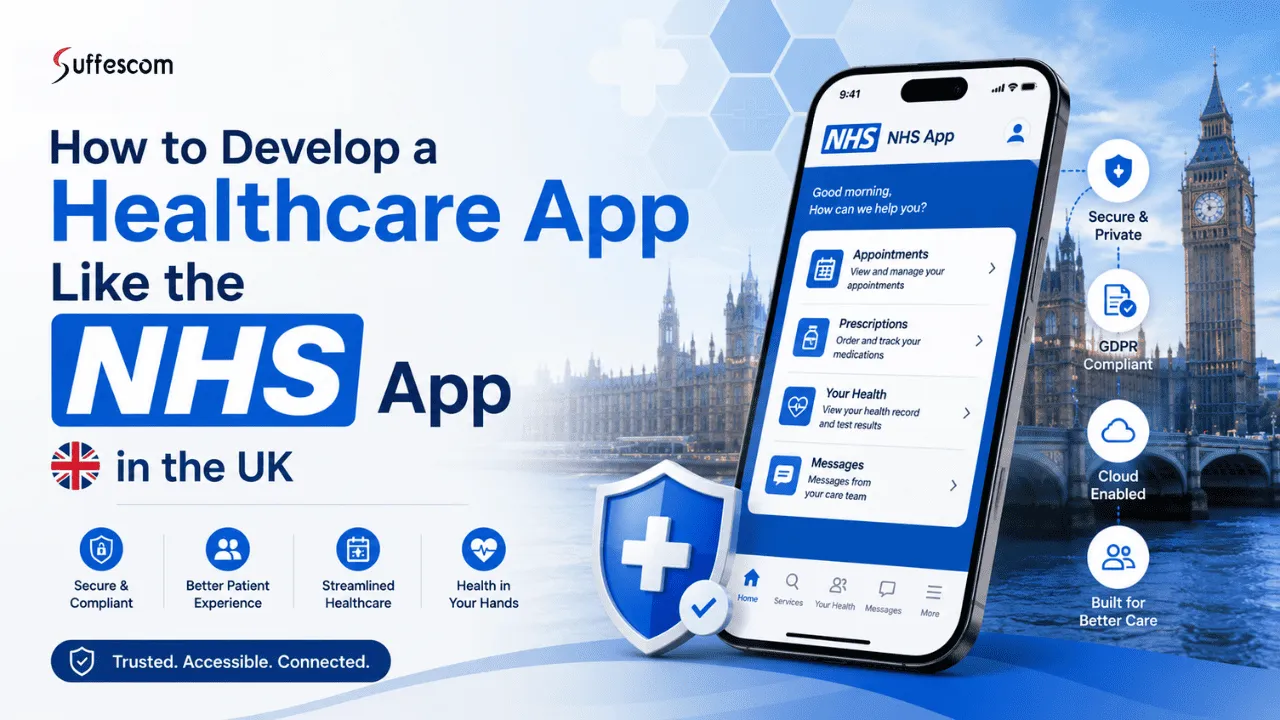
What Is the NHS App & Why It’s a Benchmark in the UK?
The National Health Service (NHS) App is the official digital healthcare provider for people living in England by providing patients access to a variety of healthcare services via the Internet in a secure manner. The NHS app provides an easy, one-stop shop solution to managing your health; rather than needing to physically go into your doctor’s office for each task associated with your healthcare, the NHS App provides you with access to various digitally enabled functionality provided by the NHS. Therefore, patients can log on via a secure log in, view their own personal health records, schedule appointments, and order repeat medications. The user interface is designed to be simple enough that anyone, regardless of age, can easily figure out how to use it. Thus, a patient who lives in Manchester can quickly log into the NHS App, view their test results, or change their contact information without having to call the doctor’s office.
Key Services Offered to UK Patients
The NHS App is a great help to patients because it has so many things that help patients utilize those services. For example: patients can book and cancel GP appointments; order repeat prescription medications; access medical record information or receive health advice; as well as track their immunization status information and other vital health status information. An individual with a chronic illness (i.e., diabetes) could regularly use the NHS App to monitor and keep up with their own medical records as well as medication, thus reducing the number of times (they go) to see the clinic, and giving them a better ability to take charge of their health.
Adoption Rate and Market Impact
The uptake of the NHS App has rapidly increased since the outbreak of COVID-19, with millions of users now relying on it for their everyday healthcare needs. This high level of adoption reflects how comfortable people have become using digital solutions for healthcare. As a result, there has been a shift in the way that private healthcare providers and startups look to create mobile solutions similar to the NHS App, demonstrating the potential for digital tools to create large scale improvements in access to healthcare services.
Role in Digital Transformation of UK Healthcare
Transformation of the UK Health system to be more Digital First through the use of the app, NHS App, which has had a substantial reduction in the NHS staff’s administration burden due to many of the most frequently used processes being able to be conducted online (as opposed to telephonically or through the use of paper), therefore allowing GP practices to spend more time providing care for patients and providing better communication to patients regarding service delivery; for example, patients typically receive their test results through the NHS App quicker than they would if they would have been called or sent their test results via post, creating a more efficient overall process.
Why Startups Want to Replicate NHS-like Apps
Due to strong needs and value associated with the NHS App, many start-ups are creating very similar types of applications. Not only do they recognize there is a need for this type of convenient and digital access to healthcare, but many have used the success of the NHS App as inspiration for implementing new technologies that build on this concept. Start-ups are developing AI-based symptom checkers, instant video consultations and personalized medical information; to give some examples, many private applications now offer 24/7 doctor consultations via online tools instead of just the ability to see a doctor in person through a traditional NHS service. Start-ups using the NHS app as a basis for creating new and innovative solutions that can meet the needs of the current healthcare environment will still ensure their users have confidence that their information is secure.
Build Your NHS-Style Healthcare App Today
Turn your healthcare idea into a fully compliant digital solution for the UK market.
Market Opportunity for Healthcare App Development in the UK
Growth of Digital Health in the UK
Digital health has become very popular amongst patients and providers in the UK over the past few years with more patients and providers utilising mobile applications to interact with various healthcare services. Digital tools such as booking general practice appointments and tracking ongoing chronic illnesses, are becoming a part of many people’s everyday lives. For example, many patients now prefer to view their medical records online rather than calling their local clinics, which indicates a noticeable shift to digital solutions.
Rising Demand for Remote Healthcare Services
The need for remote healthcare services continues to grow; consumers are looking for quicker and easier ways to access physicians without travelling to a physician office or waiting in long lines for an appointment. An example of this is, a working person from Birmingham can see a doctor through a video chat during lunch. This demonstrates a huge opportunity for companies to develop software applications for telemedicine or remote health services.
Government Support & NHS Digital Push
The United Kingdom government and National Health Service (NHS) are making a significant contribution to the development of digital transformation in the health service. The introduction of online GP and electronically stored patient records are part of the push to stimulate the uptake of health-related apps by the general population. By providing this opportunity, health services will reduce pressures on hospitals and improve patient care. Because of this Government/NHS support, private companies can enter the marketplace with innovative solutions.
Startup Ecosystem in UK HealthTech
The UK has one of the strongest HealthTech startup ecosystems in the world, including cities such as London. A number of startups are developing health apps which focus on mental health, fitness or remote service provision. There are also startups which provide treatment through mobile pathways to aid easy access to help. Therefore, as the HealthTech startup ecosystem expands, it becomes increasingly likely that there will be opportunities for new ideas and innovation.
Investment Trends in Healthcare Apps
The level of investment from investors into healthcare applications continues to grow as the investment community sees healthcare apps as providing long-term opportunities in the area of digital health. Venture capitalists are investing in start-up companies developing scalable, easy to use healthcare applications. Therefore companies developing compliant, well designed healthcare applications have higher levels of probability of attracting investment when entering the marketplace.
| Metric | Insight |
| Market Growth | Rapid 42.7% CAGR driven by increasing digital adoption |
| User Base | Millions of active users accessing digital healthcare services regularly |
| Investment | High venture capital funding in UK HealthTech startups |
| Demand | Rising demand for telemedicine, AI-based, and remote care applications |
| Adoption | Significant increase in usage after COVID-19 pandemic |
Types of Healthcare Apps You Can Build
Telemedicine Apps (Doctor Consultation)
Through the use of Telemedicine applications, patients can consult with their healthcare providers from a distance (through video/voice/chat consultation) to obtain advice, follow-up and treat non-life-threatening issues. This makes it easier for patients to access healthcare because of less time spent travelling and waiting to see their provider. Given that people in the United Kingdom usually have very busy lifestyles, many patients are currently using telemedicine applications to see their doctor from the comfort of their own home.
A good example of how telemedicine applications work is a patient based in Leeds, who has used Babylon Health to obtain a virtual GP consultation. The patient has received treatment or prescription advice within minutes of having his/her virtual appointment. As such, telemedicine applications increase the patient experience and reduce the time taken to receive care.
Appointment Booking Apps
Appointment Management applications enable patients to easily schedule, reschedule or cancel their appointments with their doctor. Appointment Management applications enhance the efficiency of clinics by reminding patients of their scheduled visits, thereby decreasing the number of no-shows at clinic appointments. With an appointment management application, patients are able to see what time slots their doctor is available, and pick an appointment time that best fits into their schedule.
A good example of how appointment management applications work is a working professional in London making an appointment to see his/her doctor through Zocdoc, selecting the appropriate time slot for the appointment, and being reminded of the upcoming appointment date. In doing this, patients spend less time waiting for their doctor and clinics are better managed.”
EHR/EMR Management Apps
EHRs (Electronic Health Records) along with EMRs (Electronic Medical Record) provide an electronic copy of the patient’s health history. EHRs/EMRs can be accessed by both patient and healthcare provider with ease from a central point. Both parties will have access to all pertinent information related to their health i.e., medical history; lab results; medication; and treatment plan which will allow there to be more accurate documentation and less reliance on having paper files stored in our increasingly digital world.
For Example: Patients have the MyChart application on their mobile phone, through which they can access medical records, track their ongoing medication and treatment regimens as well as securely communicate with their doctor in real time utilizing the MyChart application. Doctors and patients both benefit from the doctor being able to quickly access the patient’s medical records, thereby making a more accurate and timely diagnosis, and thus enhancing the patient’s overall quality of life.
Pharmacy & Prescription Apps
Similar to EHR/EMR applications, a pharmacy application allows users to order medications via an online pharmacy, upload their prescription, and manage their repetitive orders, making it easy for patients who require medications on a repetitive basis to keep track of their medications. The applications also provide delivery tracking and refill reminders for the user.
Example: For a patient with a chronic condition, PharmEasy provides an application where they can order their medication and receive their medications delivered to their homes. This eliminates any need for them to go to the pharmacy to pick up their medication and ensures they will always have access to their medication at the exact time they need it.
Fitness & Wellness Apps
Fitness and wellness (F/W) apps are used for preventative healthcare and also to provide the tools to help users live an active and healthy lifestyle by tracking their physical activity, nutrition, sleeping, and general mental well-being. In addition, many F/W apps connect to wearable devices via the internet to provide real-time health data.
Examples of F/W apps include MyFitnessPal, which allows users to track their caloric intake and exercise and to set fitness goals. Overall, F/W apps can help users stay active and avoid serious health issues through long-term maintenance of good health.
The following are just a few examples of different types of healthcare apps and how they are reshaping the future of the UK healthcare system. Each type of healthcare app serves a different purpose, such as providing diagnosis or treatment of illness, as well as general health maintenance.
Healthcare App Types & Use Cases
| App Type | Primary Use Case | Key Features | Target Users | Business Benefit |
| Telemedicine | Online doctor consultation | Video calls, live chat, e-prescriptions, appointment scheduling | Patients, GPs, Specialists | Expands access to care, reduces clinic load |
| Appointment Booking | Schedule and manage medical visits | Calendar integration, reminders, rescheduling, notifications | Patients, Clinics, Hospitals | Reduces no-shows, improves operational efficiency |
| EHR/EMR | Digital patient record management | Cloud storage, real-time sync, secure access, medical history tracking | Doctors, Hospitals, Patients | Improves diagnosis accuracy, reduces paperwork |
| Pharmacy | Order medicines and manage prescriptions | Online payments, prescription upload, delivery tracking, refill reminders | Patients, Pharmacies | Increases convenience and recurring revenue |
| Wellness & Fitness | Track health, fitness, and lifestyle | Wearable integration, activity tracking, diet logs, sleep monitoring | General users, Fitness lovers | Promotes preventive care and user engagement |
Must-Have Features to Build an App Like the NHS App
When you write a healthcare application like the NHS App, you need to focus on 3 key areas: usability, security and reliability. To conform to the UK’s standard of care and what patients expect, you will need to add well-defined patient features, doctor features and administrator features; your application also should have advanced functionality with security features.
Below is a list of essential patient features, presented in simple UK English and with easy-to-understand examples, that should be included in your patient panel.
Patient Panel Features
The patient panel is the most important feature of any healthcare application because it interacts directly with the users of the application (patients). The patient panel must be simple, secure and user-friendly.
- Secure Login (2FA): Patients must use Two Factor Authentication (2FA) in order to log into their patient accounts. 2FA means a patient must enter two different passwords (one password & one code sent to their mobile device) prior to accessing their patient account. 2FA protects patients’ sensitive healthcare data.
- Book/Cancellation of Appointments: Users must be able to easily book appointments with their doctor (GP) on-line. For example, a patient in Birmingham can schedule an appointment today for the same day as well as cancel an appointment through the application.
- Prescriptions: Patients must be able to view all the medications prescribed to them by their doctor (for doctors) and request repeat prescriptions.
- Access to Patient Medical Records: By providing patients with access to their complete history of medical treatment including lab results and test results, you will increase the level of trust that your users (patients) have when using your application.
- Notifications & reminders: Alerts for appointments, medication times, or test results help patients stay organised and avoid missing important updates.
Doctor Panel Features
The purpose of the doctor panel is to assist healthcare professionals in the management of their patients.
- Management of Patients through a Dashboard: Doctors will have an overall view of their patients’ details, appointments and treatment history from one central dashboard.
- Prescriptions via E-Prescribing Tools: Doctors will be able to generate and send e-prescriptions directly to their patients or to a pharmacy.
- Management of Availability and Appointments: By managing their appointments and availability, doctors can get organised for the day ahead.
- Access to Patient Medical History: Accessing patient medical records quickly supports better diagnosis and treatment decision-making.
- Communication Tools: Secure messaging and video consults allow doctors to connect with their patients remotely.
A London based GP could review the history of a patient, and provide advice via a video call to save both GP and the patient time.
Admin Panel Features
The admin panel manages the entire system to ensure a smooth functioning of the system.
- Admin-level user management includes patient and doctor user accounts, approval of users, and control of user access.
- A data analytical dashboard allows admins to understand how users are using the app, what the patients are doing, and identify potential improvements to enhance overall service.
- Compliance monitoring involves ensuring that the app complies with UK regulations such as GDPR, which is a crucial step that all apps must take to ensure compliance.
- Administrators can change or update health information (knowledge base articles), send notifications, send announcements, etc.
- System control involves all aspects related to managing the settings of the app, managing integrations with other systems, and managing the technical aspects of running the app to ensure proper functioning.
These features help the platform maintain quality, compliance, and performance across the entire platform.
Advanced Features
Adding advanced features to stand out from competitors in the UK market can enhance user engagement and encourage innovation.
- AI Symptom Checker entry will allow users to input a symptom(s) and receive general guidance about their health before consulting with their doctor.
- Chatbots can be implemented to answer frequently asked administrative questions and guide a user to complete tasks in the app without needing to speak with an administrator.
- Wearable device support can provide users with the ability to connect their wearable fitness or health device with the app, which can allow users to track their heart rate, the number of steps they take, and other health data that may be of interest to them.
- With voice assistance, users will find it easier to operate the app with voice commands and find it helpful for the bulk of the population, particularly the aging demographic.
- Real-time analytics will analyze how users interact with the application and health trends, which can then be used to enhance service offerings and create customized user experience.
For instance, a user may use a wearable device to record daily activity and supply the data to their physician, who can then provide better recommendations.
Security Features
In the UK, the importance of data security cannot be overstated when it comes to creating a healthcare application due to the stringent nature of the data protection laws in effect within the country.
- Data Encryption: All the user data is to be encrypted such that no one has the ability to gain access to user data without permission.
- Biometric Login: The addition of biometrics such as fingerprints and/or facial recognition adds an extra layer of security to the application.
- Secure APIs: By ensuring that there is a secure point-to-point method to exchange data, a safe data exchange will occur when two systems interact with each other.
- Compliance Tools for GDPR: The application is to comply with the UK data protection laws that govern both user consent and data usage.
- User Audit Logs: The ability to track users’ actions will help in the identification of and prevention of security issues.
Example: When a health care consumer uses a fingerprint to log into an application, they have limited access to their health records because only those with access rights can view them.
Must-Have Features to Build an App Like NHS App
| Category | Feature | Description | User Benefit |
| Patient Panel | Secure Login (2FA) | Two-step authentication using password + OTP | Protects sensitive health data |
| Appointment Booking | Book, reschedule, or cancel GP visits | Saves time, avoids long queues | |
| View Prescriptions | Access prescribed medicines and request refills | Easy medication management | |
| Medical Records Access | View test results and health history | Better awareness of personal health | |
| Notifications & Alerts | Reminders for appointments and medicines | Improves adherence and reduces missed visits | |
| Doctor Panel | Patient Dashboard | Centralised view of patient data and appointments | Efficient patient management |
| E-Prescription Tools | Create and send digital prescriptions | Faster and paperless workflow | |
| Appointment Scheduling | Manage availability and bookings | Better time management | |
| Medical History Access | Quick access to patient records | Improved diagnosis and care | |
| Communication Tools | Chat or video consultation features | Remote patient interaction | |
| Admin Panel | User Management | Manage user roles, access, and approvals | Maintains system control |
| Analytics Dashboard | Track app usage and performance | Data-driven decisions | |
| Compliance Monitoring | Ensure GDPR and healthcare regulations | Legal and secure operations | |
| Content Management | Update health info and notifications | Keeps users informed | |
| System Control | Manage backend operations and integrations | Smooth app performance | |
| Advanced | AI Symptom Checker | Analyse symptoms and provide basic guidance | Quick initial health insights |
| Chatbots | Automated support for common queries | 24/7 assistance | |
| Wearable Integration | Sync with fitness trackers | Real-time health monitoring | |
| Voice Assistance | Voice-enabled navigation | Accessibility for elderly users | |
| Real-time Analytics | Monitor user behaviour and health trends | Personalised experience | |
| Security | Data Encryption | Encrypt sensitive user data | Prevents data breaches |
| Biometric Login | Fingerprint or face recognition | Enhanced security | |
| Secure APIs | Safe data exchange between systems | Protects integrations | |
| GDPR Compliance Tools | Data protection and user consent management | Meets UK legal requirements | |
| Audit Logs | Track user activity | Detects and prevents misuse |
Step-by-Step Process to Develop a Healthcare App in the UK
Creating a healthcare application within an established rule framework, with effective planning of technical tasks and compliance with regulations pertaining to personal information is essential to develop a healthcare application. The following steps are critical to creating an application that will fit into the NHS App category.
Step 1: Market Research & Competitor Analysis
Conducting market research to understand UK Healthcare and identify areas of opportunity will be the first step towards developing your application. Researching and analysing competitor applications, viewing consumer behaviour, and reviewing key features of competitors will provide insight into the current state of the market. You will want to not only seek what has been successful, but also what could have been accomplished better.
An example of an area that could develop based on competitor app analysis would be one or more of the new telemedicine applications without any way to schedule a follow-up visit at the appointment site when using a videoconference to conduct a visit. This presents an opportunity to develop a more user-friendly platform for your developed application. The next key step will be identifying your target users (e.g. NHS patients, private clinic patients, and specific populations such as seniors).
Step 2: Define MVP & Feature Roadmap
The MVP covers only those fundamental features that will enable the initial rollout and provide a proof-of-concept for the business model and overall concept.
With a healthcare app, the basic features may include a secure login, appointment scheduling and access to medical records. Advanced features would then be added at a later time based on user feedback.
For example, a startup entering into the healthcare technology market may initially launch with a basic GP appointment scheduling solution and a prescription solution, then expand to include AI symptom checkers and wearable integration.
Step 3: UI/UX Design (Patient-Centric)
The application’s design is important for its success. The design of the application’s User Interface (UI) will be a significant factor in all users achieving their goals quickly and efficiently from the start to finish. For example, when a patient uses the application to complete tasks, they should be confused only to the extent that any task can potentially have some sort of ambiguity associated with it. Furthermore, the designer’s contribution will have an impact on how accessible the app is. Accessibility may include elements such as readable fonts, large, identifiable buttons and effective navigation methods.
As a point of reference, consider an elderly user trying to schedule an appointment for a physician’s visit with the fewest possible interactions (i.e., clicks) while also using buttons that are easy to see and instructions that are easy to understand.
An effective UI will benefit users of the app by enhancing their overall experience and increasing confidence in the app; therefore, designing a positive UI should be will in creating a better user experience and promote greater user confidence than when an app does not offer an optimal UI.
Step 4: Development (Frontend + Backend)
The Development Phase is different from other phases of the app creation process in that it is where the developer(s) work on the app with respect to the proper technologies (the Frontend is what the user sees and interacts with and the Backend is what stores data and processes code to perform actions). It is incredibly important that the app is developed in a manner that would allow the app to be fast, secure and able to scale up for multiple concurrent users. Another important consideration when developing applications is the use of APIs, payment systems and integration with healthcare databases. For example, if an iOS-based healthcare application is developed in Swift, it can be integrated with a secure, cloud-based environment in which the application can be safely stored.
Step 5: Testing, QA & Compliance Checks
After an application has been developed and is ready to be launched there needs to be thorough testing and quality assurance to ensure that everything functions correctly without bugs and the application meets legislative requirements (UK).
There are different types of tests that may take place: trying the application for functionality performance, security, usability and compatibility against all device types. Compliance verification (ensuring the secure and lawful use of user data) will also occur.
As an example, an application for healthcare must use encryption when transmitting patient data, before being able to be launched to the public. This is very important to establishing trust with users and avoiding potential legal issues with the developer.
Step 6: Deployment & Maintenance
Once you’ve fully developed and tested your application (with final approval), you will move into the process of launching it (deploying it) while also ensuring that it continues to run as intended over time (maintaining). Both of these steps are vitally important phases of the app development process because they assure that you have successfully launched your healthcare app as well as providing continued successful operation for an extended time period. Additionally, both of these steps will also require consideration of a number of other issues/requirements including regulations as well as compliance with security rules.
Validate Your Healthcare App Idea
Check feasibility, features, and compliance before investing in full development.
UK Healthcare Regulations & Compliance
In the UK, healthcare app development is subject to the following regulations regarding patients’ safety and their personal information. Any app involved in health services must meet these requirements in order to be operated legally and ethically.
GDPR (Data Protection Law)
The GDPR is a key piece of legislation regarding how apps will manage and protect your data and information. The GDPR sets an expectation that any app will only collect necessary personal data and will securely store any such information. In addition, the user will need to provide explicit consent for the use of their personal information.
Example: When using a health app, the user would be asked to provide consent to retain their medical records.
NHS Digital Standards
If an app connects with any NHS services, it must follow the NHS Digital Standards that exist around data sharing and compatibility of systems.
Example: When connecting to NHS systems, an app must be able to do so securely so that as a part of this connection, the patient’s data is not exposed to anyone other than the patient and the app developer.
ISO 27001 Security Certification
ISO 27001 is one of the most widely recognised certifications for the management of data security and can provide an organisation with confidence that they have put sufficient protections in place to protect sensitive information.
Example: A company that has received ISO 27001 certification will be able to demonstrate strong protection against data breaches.
MHRA Guidelines (Medical Apps)
The Medicines and Healthcare products Regulatory Agency will monitor and regulate any type of medical application/service that provides medical advice or diagnosis.
For example, an application that offers a diagnostic service based on the user’s symptoms may require an MHRA authorisation before being made available to the public.
Data Encryption & Privacy Policies
Any application that stores or transmits personal data must employ encryption to ensure the confidentiality of that information and have evident privacy policies to inform all users about how their data is being used.
Example: All patient data must be securely encrypted to prevent any access by unauthorised parties.
UK Healthcare Regulations & Compliance
| Regulation / Standard | Purpose | Key Requirement | Example (UK Context) |
| GDPR | Protect user data and privacy | User consent, secure storage, right to access/delete data | App asks permission before storing medical data and allows users to delete it |
| NHS Digital Standards | Ensure secure NHS system integration | Data interoperability, patient safety, secure APIs | App connects safely with NHS databases without exposing sensitive information |
| ISO 27001 | Information security management | Risk management, data protection policies | Company follows strict security processes to prevent data breaches |
| MHRA Guidelines | Regulate medical apps as devices | Approval for diagnostic or treatment-based apps | App providing diagnosis must be approved before launch in the UK |
| Data Encryption & Privacy | Secure data handling and transparency | End-to-end encryption, clear privacy policies | Patient data is encrypted and protected from unauthorised access |
Technology Stack for Healthcare App Development
Selecting the best technology stack is critical for creating a new healthcare application that is both secure and scalable as well as providing a pleasant user experience with optimal performance within the UK.
Frontend Technologies
In terms of the technology stack, we should consider the front-end technology as a first priority for selecting properly written code that gives the end user fast and easy access to the application. Swift and Kotlin are widely used front-end development languages for iOS and Android respectively, both providing robust performance and reliability; however, the cross-platform frameworks such as React Native may also suit our needs since they allow app development on both platforms from one set of source code.
As an example, developing a healthcare application with Swift will provide the same seamless experience on an iPhone for UK users as would building the same application using Android-based technologies.
Backend Technologies
The second element of creating our new healthcare app will require us to select an appropriate back-end technology for processing data, managing users, and performing server-side logic to support both real-time communications and help manage patient data efficiently. The most popular back-end development technologies are Node.js, Python, and Java; all of these technologies can be used interchangeably due to their scalability, speed, and security, while supporting multiplayer real-time features (e.g., chat and/or video conferencing) among numerous users.
As an example, using a Node.js-based back end will enable a single application instance to support multiple user requests at the same time without significantly degrading the overall application performance.
Database & Cloud
Healthcare applications must have dependable databases and cloud storage capacity for the handling of personal information. PostgreSQL and MongoDB are two of the most commonly used database types that can be used to hold both structured and unstructured data. For this reason, many developers are making use of cloud hosts such as AWS and Azure that deliver secure storage, regular backup systems, and expandable infrastructure.
For example, an AWS account could be used to store patient information securely with redundant backups.
APIs & Integrations
API provides a means to connect with external applications/ services such as payment providers and health platforms within the same app. Integration with these services/products increases both functionality and user satisfaction within an application.
For example, through integration of EHR (electronic health record) Software application with an application used to develop/apply medical treatments, you can instantly view historical patient medical records.
DevOps & Security Tools
DevOps tools assist application developers in streamlining development and deployment processes, whereas security tools help safeguard your sensitive data. Continuous Integration/Continuous Deployment (Ci/CD) pipelines allow companies to deliver application changes quickly; while encryption tools help keep private user information secure. Monitoring solutions enable application developers to assess and optimize the performance of their applications.
For example, encryption tools ensure that patient data is transmitted and is stored without being disclosed or compromised at any time.
Cost to Develop a Healthcare App Like NHS App in the UK
How much it will cost to build a healthcare application in the United Kingdom may differ based upon its complexity, number of features (examples: login capability; appointment booking), and legal requirement to meet compliance standards. Thus, an application that only has 1 or 2 functional features will be significantly less expensive than a more complex application that includes ai and/or is fully integrated with other software systems or has strong security will be much more expensive because these types of applications have much higher cost to develop.
Some companies will build their application in phases or start with MVP development which is usually a low-cost way to begin developing your product and increase your product once you see if any users provide you with feedback (positive or negative) or if there’s demand for your product or application within the market place.
Cost Breakdown
| Complexity | Cost Estimate |
| Basic App | £20,000 – £40,000 |
| Mid-Level | £40,000 – £80,000 |
| Advanced App | £80,000 – £150,000+ |
Factors Affecting Cost
Many crucial components dictate the expense of creating a healthcare app in the UK. Knowing these elements will allow a business to create a better budget and minimize unintended costs.
Development Team Size
The size and makeup of the app development team greatly impact the price of developing the healthcare app. A small development team with a few developers may cost less, whereas a large development team that has app developers, designers, testers, and project managers will increase the price of developing the healthcare app.Correct example: A small startup hiring a small development team to create an MVP would cost less than a larger organization hiring an entire in-house development team to develop a large app.
Feature Complexity
The greater the complexity of the feature(s), the greater the expense involved in developing the feature(s). Basic or simple apps (e.g., apps that allow for simple appointments or logging in to use the app) will cost less than a more sophisticated app (e.g., an app that allows for real-time chat, machine learning, or wearable device syncing).
Correct example: An app that allows only for appointment booking would cost less than an app that allows for AI-driven symptom checking and video consultations.
Compliance Costs
All healthcare apps must comply with strict UK regulations such as GDPR and NHS regulations. There are several additional expenses related to complying with the various regulations including the additional development expenses, additional testing and legal fees.
Correct example: Adding data encryption and secure user identification will increase the cost for the creation of the healthcare app in order to meet UK regulations for data safety.
Third-Party Integrations
Integrating third-party services like EHRs or payment processors into a mobile application can greatly influence total costs involved. Each integration is costly to develop, test, and maintain.
For example, if your app connects to both a payment processor and the hospital’s database, there will be a higher overall cost than if it were standalone (with no integrations).
Real-World Healthcare App Examples
Attaining success with your healthcare application can provide insight into what has proven to be effective with other applications in “real life.” The applications represented below illustrate the use of digital solutions to improve patient outcomes, increase accessibility or efficiency to all users and provide insight into the best possible healthcare solutions. Describe each application written simply in British English and outline any operational insight in a practical way.
NHS App (UK Healthcare System)
The NHS App is the UK’s official health and care applications. It provides users with an easy method to access all services provided via the NHS throughout the UK. Users have the ability to book an appointment at their general practitioner (GP), view the user’s health records, request repeat prescriptions and receive important updates on their health status via a single secure government application. The NHS app has become one of the most well-used applications in the UK and one of the applications that played a significant role in the success of the NHS during the COVID-19 pandemic. In addition to the widespread usage, the NHS App serves as an example of how a digital solution can be used to reduce the burden on patient care and GPs. The success of the NHS app comes from a combination of three factors, i.e. providing security for users; having simple design elements (straightforward to use); and being a single point of contact for accessing NHS services.
Babylon Health (AI-based Consultation)
Babylon Health has combined telemedicine with artificial intelligence (AI) to develop a mobile application that allows users to access their doctors remotely via an online video or voice consultation (i.e. providing users with immediate access). Additionally, Babylon Health utilizes AI technology to provide users with a symptom-check service that can help them determine their health status prior to visiting a physician. As a result, the company has fully embraced the notion of accessibility, as evidenced by the large number of users who have chosen to use the Babylon App as their primary source of healthcare.
Ada Health (Symptom Checker)
Ada Health is an application for checking how you’re feeling by checking your symptoms to gain insight into your health. The application uses artificial intelligence (AI) to ask you questions and provide suggested options based on your answers. While it doesn’t replace a physician, Ada Health can help a person determine if they need to go to a doctor. You’ll find value with this type of application because you can use it for early evaluation of your health and to be more aware of your health situation and changes.
MyChart (Patient Records)
Having electronic access to your medical record and being able to manage it electronically through an app is what MyChart is all about. What will you do with MyChart? You’ll be able to view your test results, keep track of your treatments, and interact with all of your healthcare providers. Your healthcare provider will have full access to your medical history immediately when you use MyChart, leading to better informed clinical decisions based on what they find in your medical record when they use MyChart to access your records.
Zocdoc (Appointment Booking)
Zocdoc is an application that allows patients to make appointments and to find the physician they’d like to see. Patients can search for physicians, review them, select one for a specific appointment, and book the appointment, based on the timing of that physician’s scheduled hours. Zocdoc should result in reduced waiting time and will simplify the process of scheduling an appointment with the physician of your choice. The Zocdoc app is widely used and can easily be adapted for use in the United Kingdom.
App Comparison
| App | Feature | Region |
| NHS | Patient services | UK |
| Babylon | AI | UK |
| Ada | Diagnosis | Global |
| MyChart | Records | US |
| Zocdoc | Booking | US |
Use Cases of Healthcare Apps
As a group, healthcare applications are intended to remedy real-world issues for our patients and healthcare providers; in particular, those within the United Kingdom have become not only as part of the solution to increasing accessibility but time-savings for patients and improving their overall health status.
Remote Consultation
Remote consultations are the ability to speak to a doctor without physically going to the office through the use of video conferencing or voice telephone or chat. This can be equally appropriate for less serious illnesses or in a follow-up situation, and or if someone has difficulty travelling to a location due to distance.
Example: A patient in Manchester may access a general practitioner through Babylon Health and receive a consultation online and relay the information back to them with no need to leave their home.
Chronic Disease Management
The healthcare application assists the patient by monitoring ongoing health conditions, such as diabetes, asthma, and other long-term illnesses, through the use of the application. Patients can store their symptoms, log their progress, and be guided through treatment plans.
Example: A person with diabetes can track their sugar numbers daily through their application and report this information to their doctor to receive proper care.
Medication Tracking
With the help of a medication tracker application, you can remember when to take your medications and also keep an eye on your prescriptions. This function may prove to be particularly valuable to senior citizens who may be taking several medications at the same time. One example of a medication tracker app is when you receive reminders within the app to take your medication and receive notifications when it is time to refill your prescription.
Mental Health Support
Mental health apps help people deal with stress, anxiety, and/or depression. Many include guided meditation, virtual therapy sessions, and mood tracking. For example, through the Headspace app, users can access online therapy sessions and use self-help resources to assist them in managing their mental health.
Emergency Assistance
Healthcare apps help individuals get information about how to get emergency care or what kind of emergency medical information to get. Many of these apps have a feature that lets you send an SOS alert or allows you to share your location with other people. For instance, if you are in an emergency, you can send an SOS alert through the app and share your location with your family or healthcare provider.
Transform Patient Experience Digitally
Deliver seamless healthcare access through a modern mobile application.
Challenges in Healthcare App Development
Data Privacy & Security
The Australian Government regulates app developers following the data protection requirements set out in the National Privacy Principles regarding data collected from individuals when a person uses a health app to access, record or store their own health information. Sensitive information must be collected and stored using various security measures, including but not limited to password protection, SSL encryption for secure access, secure storage of health data, and collection of health data by an Australian Health Professional if that individual does not reside in Australia. App developers must ensure compliance with all laws, including the Privacy Act, through proper reporting procedures and privacy safeguards. If a privacy breach occurs, it may affect consumer trust in the health application.
Complex Regulations
The regulatory environment governing health care in Australia is highly complex due to numerous regulatory requirements that impact safe use of health care applications and products. The application developer must also comply with other regulatory requirements established by Government authorities such as the Therapeutic Goods Administration (TGA). For application developers who do not have a good understanding of relevant legislation and regulatory requirements, it will require significant time and resources to comply with all legislative and regulatory requirements.
Integration with Legacy Systems
Most hospitals and clinics in Australia continue to utilize older systems to maintain patient data. As a result, interface requirements for a new application to communicate with an existing legacy system can be complex to determine. Application developers must ensure that the data from a new application interfaces properly with a legacy system and that the data transmitted does not generate errors or delays when received. The lack of successful interfacing may result in a decline in overall application performance or the experience of users.
High Development Cost
Creating a health app costs significantly more to develop than a standard mobile application because creating focuses on advanced functionality, such as real-time data management, secure messaging, AI-driven measurements or predictions, and compliance with legal regulations. In Australia, the overall cost of building an application is further escalated when incorporating skilled developers, as well as complying with various industry regulations.
User Adoption
User trust and use of applications are challenging to build, even if the application is developed correctly. For many consumers, particularly older consumers, using a digital healthcare application creates a level of uncertainty and discomfort. Health applications need to be simple, functional and demonstrate value to encourage increased user adoption in Australia. Building trust through transparency and reliability are key to increasing user adoption within Australia’s healthcare market.
Monetization Strategies for Healthcare Apps
Developing a fundable business model for your app will likely be one of your first concerns. While it may seem as though the ideal structure varies, there is an overall process to use in developing a monetisation strategy.
Subscription Model
The subscription plan is a business model in which people pay on a monthly or yearly basis for added value or premium services. A subscription plan is a recurring source of income for businesses.
For example, there are several applications that provide unlimited GP consultations based on a monthly fee of £35. An app could have a subscription plan that allows unlimited GP consultations as well as the ability to request priority appointments, similar to the service provided by Babylon Health.
Freemium Model
The free subscription model is a business model in which people have access to free versions of services, and can pay for certain additional services.
For example, an app may allow you to perform a free symptom check, but charge you for a summary of your health conditions or paying to have a doctor give you a consultation.
Pay-per-Consultation
This model is one that people pay for only when they use a service. It is a flexible model that would be ideal for patients who do not require the services on a regular basis.
For example, instead of paying for a monthly subscription plan, a patient would simply pay for an online GP consultation on a one-time basis.
B2B Partnerships
Apps for Health Care can collaborate with Hospitals/Clinics, Insurance Providers, and Corporations. Revenue comes from contracts and/or service agreements.
For example: An app can partner with a Private Clinic to provide Digital Booking Services for patients, and receives an integrated fee per transaction.
In-App Purchases
This model allows you to pay for extra services and features from inside the app. The in-app purchasing model works well for apps that provide customized or additional services.
For example: Users have the ability to purchase customized Diet Plans, or a Wellness Program, or additional Consultations from the app.
How to Make Your Healthcare App Stand Out
In order for a healthcare application to be deemed successful in the United Kingdom market, it must not only be created but also provide immense value to patients and place an emphasis on providing a seamless user experience. This requires securing the application to protect data and develop an excellent relationship with its users. In addition, it needs to provide innovative and user-centric features to stand apart from its competition. Below are some of the ways that you can develop an application utilizing innovative features that will give your application a competitive advantage over your competitors in the UK.
AI-Based Personalisation
AI is the use of technology to adapt an application’s user experience based upon the patients’ lifestyle and health data. Artificial Intelligence can be used to provide tips about certain health and/or fitness activities, reminders to do certain exercises, and even alerts to take action immediately.
Example of AI Personalisation: A user may ask an application for a healthy meal plan, and the application will create a menu based upon the user’s daily exercise at the gym and overall fitness goals.
Seamless UX/UI
If an application is simple and easy to use, it will attract a wider audience including older adults. Because of this, it is critical that navigation is straightforward and intuitive so that they can easily navigate through the application.
Example of Seamless UX/UI: Users will be able to quickly and easily schedule a consultation appointment with their family physician with only a few taps and without confusion.
High Security Standards
Patients need to feel confident that their data will be protected and secure. Features such as encryption and user authentication (biometric verification) are important in building trust.
Example of Strict Security: Users have the ability to use their fingerprints or facial recognition as authentication methods when logging into their application, which keeps their data secure regardless of who has access to their device.
Integration with Wearables
Through integration with wearable technology, we are able to collect real-time health information such as heart rate, step counts and sleep patterns. For example, through integration with an Apple Watch, our application can track a user’s daily activities and communicate the data to their healthcare provider.
Continuous Updates
Regularly scheduled updates will keep our application current and functioning at a high level of performance through new features that are added as a result of user feedback. For example, if users request video consultations as an option, we will tie this to the application after launch.
Additional Creative Ideas to Stand Out
Voice Assistance & Accessibility
Voice commands can help elderly persons or those with visual impairments use the application more easily. For example, when a user says “book an appointment”, the application will complete the task automatically.
Gamification for Engagement
Gamification uses rewards, points or challenges to motivate users to keep using the application and remain active. For instance, users earn points for completing their daily step goals and/or taking their medication on time.
Multi-Language Support
Multi-language support allows for a greater reach across the United Kingdom. For example, users can switch back and forth between English and another common language in order to better understand the information presented to them.
Real-Time Chat & Support
Real-time chat support provides the user an improved experience and answers their questions quickly. For example, users can chat with a staff member or assistant to quickly get support with making appointments or resolving application problems.
Personal Health Dashboard
A health dashboard that houses all of a user’s health data in one location will provide for improved usability and engagement with the application. For example, users can check their number of steps walked and their heart rate as well as have the ability to see all upcoming appointments and prescriptions on one screen.
Integration with Local Services
Integration of the application with local pharmacies, laboratories and clinics will provide additional value to the user. For example, users would be able to locate a local diagnostic testing center and schedule their appointment directly from the application.
Conclusion
Organizations that wish to create a mobile healthcare application within the UK may find it to be of great benefit if they look for an experienced developer who has created mobile healthcare applications in the past. Developers who have created mobile healthcare applications will be able to efficiently and effectively turn your concept into a reality. Partnering with a healthcare app development company ensures access to domain expertise, compliance-ready solutions, and scalable architecture tailored to medical workflows.
The ultimate goal is to create a mobile application that enhances the patient experience, assists healthcare providers in doing their jobs more efficiently, and provides measurable value for all users as digital healthcare evolves.
FAQs
Q1: What is healthcare app development in the UK?
Healthcare App Development (in the UK) refers to the development of mobile / web applications that allow patients to access digital healthcare services, such as appointment bookings, telemedicine, and access to medical records. Applications developed for patients, healthcare providers, and clinics must comply with the various regulations in place currently within the UK, including GDPR. The purpose behind these applications is to enhance access and reduce wait times for patients using healthcare services, while increasing the efficiency and overall usability of healthcare services provided.
Q2: How much does it cost to build an app like the NHS App?
NHS App development typically ranges between £20,000 up to £150,000; this can vary greatly based upon features, functionality, complexity and third-party integrations (if applicable). It is important to note that the basic core of the application (MVP) will be less expensive; however, if the application contains complex features such as AI (Artificial Intelligence) and a multitude of third party integrations, that will drive the development cost up. Companies/developers will generally start with a minimal viable product (MVP) at a lower cost to control the overall cost then upgrade or add features based on actual user feedback.
Q3: What features are essential in a healthcare app?
Must Have Features of the Healthcare Mobile App The following features are essential to the development of a successful digital health App. Secure sign in, appointment scheduling, access to medical records, e-prescriptions, and notification features have been identified as key features of a successful digital health mobile app. Advanced features such as AI-driven symptom checkers, video consultations, and wearable device integration, have significantly enhanced the user experience; thus making them key to successful digital health app development in the United Kingdom.
Q4: How long does it take to build a healthcare app in the UK?
Generally speaking, it takes 3-9 months to develop a healthcare app in the UK. The development time for a simple MVP will likely fall in the range of 2-3 months but the development time for more complex applications like the NHS App could be 6 months or longer. The development timeline will depend on such factors as the number of features required, the amount of integration required, and any regulatory compliance requirements.
Q5: What regulations apply to healthcare apps in the UK?
Healthcare apps need to adhere to GDPR requirements, NHS Digital Standards, and potentially also MHRA Regulations (depending on the app). These are all laws and regulations that protect your data from being abused by those with access to the app or associated data. In addition to protecting patients and keeping their information secure, these laws and regulations will create an environment of trust between app users and the developer.
Q6: Is GDPR mandatory for healthcare apps?
Yes! Any application that collects and processes healthcare or personally identifiable (PII) information (e.g. name, address, date of birth, telephone number) must comply with the General Data Protection Regulation (GDPR), even if the app is developed outside of the UK and the user resides in another member state of the EU. Any developer must have the users’ permission to collect and store data, safely store any data, and be transparent about how the developer will use the collected data. Compliance with the GDPR is critical to the success of UK-based healthcare applications due to potential penalties associated with noncompliance and due to the inherent mistrust associated with developers who do not comply with GDPR.
Q7: Which tech stack is best for healthcare app development?
A good technology stack for developing healthcare applications would be composed of Swift, Kotlin or React Native for frontend applications, and Node.js, Python or Java for backend applications; PostgreSQL or a similar database; and AWS or another cloud provider for cloud services. The combination of technologies used within the selected stack will help to enhance the performance, security, and user experience of developed applications.
Q8: Can AI be used in healthcare app development?
AI is widely utilized in the development of digital healthcare applications, including symptom checkers, chatbots, and predictive analytics. This offers improved support for diagnosis and personalized care. AI is also an integral part of the process of developing modern telemedicine applications in the UK.
Q9: How do healthcare apps ensure data security?
The data of healthcare applications is adequately secured through the use of encryption, secure APIs, biometric login, and compliance tools. The security of patient information is ensured by developing healthcare applications to GDPR standards in the UK. Additionally, regular security updates and monitoring will help protect against data breaches.
Q10: What are the biggest challenges in healthcare app development?
The principal issues faced during the development of healthcare applications include strict regulations, high costs to develop, data security, and potential difficulties integrating into existing systems. Moreover, to ensure that a healthcare application is adopted by users, businesses will need to properly assess the development of applications in the UK.
Q11: Can startups build apps like the NHS App?
Startups may create applications similar to those of the NHS by developing a minimum valuable product (MVP) and initially including core functionality; they can develop advanced functionality at a later time. Furthermore, a startup can be successful in the development of healthcare applications in the UK with proper strategy and compliance.
Q12: How do healthcare apps make money?
Monetization methods in the digital health space include subscription fees, pay-for-usage fees, freemium pricing models (e.g., free to sign up but charge for some premium features), and partnerships. By using these strategies, healthcare app developers earn a profit while providing benefits to consumers.
Q13: What are the benefits of healthcare mobile apps?
Mobile apps for health care enhance access, cut down on time and improve patient care. Patients have access to consultations from afar, can easily schedule appointments, and can track their health from anywhere. These factors contribute to the increasing popularity of health care app development in the UK as an effective digital remedial solution.
Q14: Is healthcare app development profitable in the UK?
Yes. The demand for digital health services in the UK has made health care app development very lucrative. There are numerous ways for businesses to earn from their application by way of subscriptions, partnership(s), and consulting services. However, for health care developers to achieve profitability, they must implement an effective strategy to ensure compliance with local government requirements and generate strong returns on investments (ROIs) in their respective healthcare space.

Senior Content Strategist
Jonathan Raabe is the Content Strategist at Suffescom Solutions and has more than 7 years of experience in developing data-driven content strategies for technology-centric organizations. He is proficient in the areas of mobile app development, software development, AI, cloud computing, fintech, healthcare, and digital transformation. Jonathan collaborates with industry leaders, developers, and business heads in creating high-value, SEO-optimized content that helps companies in increasing their visibility on the search engines, establishing trust, and driving business inquiries.
Need Help With
Development?