Key Takeaways
- The NHS App currently has around 41 million registered users, out of which 15 million use it on a monthly basis. This indicates that the adoption of digital healthcare solutions is happening at a rapid pace in the UK.
- An average healthcare mobile application is estimated to cost between £20,000 to £50,000, while an AI-powered healthcare platform would cost between £300,000 to £1 million+.
- Basics like appointment booking facility, telehealth care and record access have become essential needs of patients now.
Approximately 30% of GPs in the UK have been found to have adopted AI in some way or the other and AI has become the hottest trend in the field of healthcare technology. - AI-based symptom checker, integration with wearable devices and predictive analysis have become key competitive differentiators in healthcare apps.
- There is a need for incorporating security and compliance into the app from Day One since UK healthcare apps must be compliant with UK GDPR and stringent patient data protection policies.
- The approach of developing an MVP can help minimize risks and expenses.
Introduction
In today’s era, healthcare mobile applications have become one of the most essential components of healthcare services provided throughout the UK. From scheduling appointments at GP clinics to storing medical data, from conducting virtual consultations to medication alerts, mobile healthcare applications are making the process of staying healthy easier for patients.
The application of digital solutions in health care continues to rise steadily. As per the NHS digital transformation plans, there are millions of users who are now using digital services to seek out health information from health care providers. This is because of the growing popularity of smartphones and increased demands from patients. In this blogpost, we will explore the must-have healthcare app features, their development complexity, cost estimation and more.
How Digital Healthcare is Improving Patient Experience
Healthcare applications have brought about a shift in how patients engage with healthcare service providers. The need for the patient to call and wait in the queue or travel to the hospital is no longer there.
Some of the key benefits include:
- Faster access to healthcare services
- Reduced waiting times for appointments
- Improved communication between patients and healthcare professionals
- Better medication adherence through reminders and tracking
- Easy access to medical records and test results
- Enhanced management of chronic health conditions
It has been proven that there is an increased demand for electronic-based care services by patients, especially for appointments, prescriptions, and online consultations. Electronic health applications not only improve convenience but also assist healthcare organizations in providing more efficient and economical services.
Why Choosing the Right Healthcare App Features Impacts Adoption and ROI
The development of an application in the healthcare field is quite an expensive process. Nonetheless, its success is not only dependent on great design or the technologies utilized during development but also on what the app provides.
Applications that do not meet patients’ demands tend to have low adoption rates and low retention. In contrast, the ones with valuable features for their users will be able to provide a good adoption rate and business results.
Key factors influenced by feature selection include:
- User engagement and retention
- Patient satisfaction scores
- Operational efficiency
- Regulatory compliance
- Revenue generation opportunities
- Competitive advantage in the healthcare market
Choosing relevant app features from the very beginning may help healthcare organizations and startups save a lot of money during development.
Why Healthcare Mobile Apps Are Becoming Essential in Modern Healthcare
The Healthcare industry is fast embracing digitalization of their services. The current patients expect the same kind of convenience from their healthcare providers as they experience from financial institutions and other online service providers. The mobile healthcare applications have been playing a great role in ensuring that the hospitals and healthcare organizations meet these demands.
With the increase in pressure within healthcare organizations, mobile apps are becoming indispensable tools within the industry.
Rise of Digital Healthcare and Mobile-First Patient Experiences
Mobile devices have greatly changed the manner in which individuals receive healthcare services. Rather than having to make calls or go to healthcare centers to accomplish such activities, patients can achieve much more using applications on their mobile devices.
The trend in the utilization of technology-based healthcare in the United Kingdom is constantly increasing. The NHS App alone has 41 million subscribers with more than 15 million unique subscribers accessing the app in the month of March 2026. Patients utilize the app for appointment booking, prescribing medicines, medical record viewing, and healthcare notifications.
Mobile-first healthcare services have gained much popularity among contemporary patients since they provide:
- 24/7 access to healthcare services
- Faster appointment booking and management
- Convenient access to medical records
- Prescription ordering and tracking
- Reduced waiting times
- Better communication with healthcare providers
And that’s leading healthcare organizations to turn to mobile apps that are simple to use, secure, and readily available to patients.
How Healthcare Apps Improve Patient Engagement
Engagement of the patient is very important in order to have good health outcomes. Patient engagement will ensure that the patient adheres to the treatment regime and attends all the medical appointments.
Healthcare apps support patient engagement through features such as:
- Personalised health dashboards
- Medication reminders
- Appointment notifications
- Health tracking tools
- Educational resources
- Secure messaging with healthcare professionals
Such characteristics will help patients stay updated and become engaged throughout their care process. Digital technologies not only promote proactive approaches to health management but also discourage reactive measures.
The increasing usage of apps for health care clearly illustrates how valuable it is for people to have easy access to health information and services. According to statistics from the NHS, millions of people use their digital services every month.
Role of Telemedicine and Remote Healthcare Services
One of the largest advances in modern medicine has been Telemedicine. Telemedicine is the practice of medicine at a distance. Patients consult with a doctor or provider via remote screen without leaving their homes.
This approach offers several benefits:
- Greater access to healthcare in rural and underserved areas
- Reduced travel time and costs
- Faster access to medical advice
- Improved management of chronic conditions
- Reduced pressure on healthcare facilities
Follow-up visits, counseling, chronic disease care, and routine consultations become even more convenient and efficient through remote healthcare provision.
In most cases, healthcare apps are used as the backbone of telemedicine services that offer video consultations, appointment scheduling, electronic prescriptions, and access to medical records all in one place.
Telemedicine is anticipated to be one of the key features of healthcare apps in the future years until 2026.
Impact of AI and Automation in Healthcare Applications
AI and automation technologies are changing healthcare applications to make the services become more efficient, personalized, and convenient for patients.
AI-enabled healthcare apps may assist patients and healthcare specialists in the following ways:
- Symptom assessment tools
- Virtual health assistants
- Personalised health recommendations
- Predictive health monitoring
- Automated appointment scheduling
- Clinical decision support systems
They will allow saving time on the administration process and improve patient experience. AI technology is able to process big amounts of data about healthcare and draw conclusions based on this information.
The application of AI within the realm of healthcare delivery is becoming increasingly popular throughout the UK. Recent studies conducted by Gartner show that roughly 30 percent of UK GPs have started using AI tools to some extent while consulting patients, indicating an increased involvement of intelligent technologies within the healthcare delivery process.
Nevertheless, proper AI adoption presupposes paying close attention to such aspects as data security, patient privacy, regulation adherence, and clinical control. In addition, healthcare organizations should ensure that AI enhances healthcare practitioners’ performance rather than takes their place.
As technologies keep developing, AI-powered functions are likely to become an integral part of the next generation of healthcare mobile apps.
Table: Traditional Healthcare vs Mobile Healthcare Solutions
| Traditional Model | Healthcare Mobile App Model |
| Long waiting times | Instant appointment access |
| Manual records | Digital health records |
| Limited communication | Real-time messaging |
| Physical visits | Virtual consultations |
Planning your healthcare app feature roadmap?
Key Requirements Before Developing a Healthcare Mobile Application
The creation of the health care application goes far beyond simply developing a user-friendly interface. The health care application stores sensitive patient data, integrates with the clinical applications, and in many cases makes critical decisions related to the provision of health care. For that reason, it is important for the developers and the health care organizations to take into account the security and other factors in advance.
These should be handled at the outset as this approach has several benefits including: minimising potential risks; improving patient confidence; and meeting the expectations of the regulator and users.
Healthcare Data Security Requirements
Data security is one of the most important components in healthcare app development. The data that is collected by healthcare apps includes very private information such as health reports, medication, and even some personal data.
A violation of the security can lead to serious consequences such as financial loss or even punishment from the law.
Key healthcare data security measures include:
- Data encryption
- User authentication and authorization
- MFA or multi-factor authentication
- Access controls based on roles
- Cloud-based infrastructure
- Security audits and penetration tests
- Backup of data
Cybersecurity still remains a key issue in the healthcare sector. Based on the findings of the Cyber Security Breaches Survey carried out by the UK Government, there is a large number of organisations that continue experiencing cyber breaches annually, thus making it important to have proactive cybersecurity for healthcare systems.
In addition to that, the use of security guidelines in healthcare systems is key.
GDPR Compliance and Patient Privacy
The data protection act that any application in the field of healthcare has to abide by in the UK is the UK General Data Protection Regulation (GDPR) and the Data Protection Act 2018.
This regulation is intended to ensure privacy of the data and allow people to have control over their data. Since the health information falls under the category of special category data in UK GDPR, therefore, additional privacy measures are required for such an application.
Important GDPR considerations include:
- Obtaining clear and lawful consent where required
- Collecting only necessary data
- Providing transparent privacy policies
- Allowing users to access their personal data
- Supporting data correction and deletion requests
- Implementing strong security safeguards
- Reporting data breaches when required
The level of trust of the patient depends on how organizations handle personal information. An app that provides clear details of its privacy policies and displays a high level of concern towards protecting the privacy of its users will have the tendency to develop greater levels of confidence among users.
Privacy has to be incorporated into the application right from the onset using “privacy by design.”
Healthcare System Integration
Health care applications hardly ever work as standalone systems. They are supposed to integrate with existing health care software and clinical information systems to provide an uninterrupted user experience.
Such integration enables both health care providers and patients to gain access to reliable and timely data from different systems.
Common healthcare integrations include:
- Electronic Health Record (EHR) systems
- Electronic Medical Record (EMR) platforms
- Hospital management systems
- Appointment scheduling software
- Pharmacy and prescription systems
- Laboratory and diagnostic services
- Payment gateways
- Wearable health devices and fitness trackers
Data may be duplicated, inefficient in terms of workflow and inconsistent when there is no interoperability in healthcare organizations.
Interoperability has become one of the most important issues within the healthcare industry. Interoperability allows exchanging health data between different systems that leads to improvements in coordination of care, less bureaucracy and improved decision-making.
First of all, it is necessary to determine what systems should be integrated before the start of the process.
User-Friendly Healthcare App Design
Even the best healthcare application would fail to meet its objectives if it is not easy for users to utilize. User experience (UX) is crucial to the success of the application.
Healthcare applications appeal to all kinds of people, from senior citizens to disabled people, to people suffering from some illness, or people with varying degrees of digital fluency.
Key principles of user-friendly healthcare app design include:
- Simple and intuitive navigation
- Clear language and instructions
- Easy appointment booking processes
- Designed to be user-friendly and accessible for disabled individuals
- High-speed loading and interactive use
- Consistent interface design
- Readable fonts and high-contrast colours
- Minimal steps to complete key actions
The Research indicates that users tend to stop using applications that are difficult to use. In the context of healthcare, the issue of poor usability may influence the engagement and adherence to the treatment of patients.
When designing software, one should make sure that it meets the needs of the user and is tested for usability. Participation of patients and healthcare professionals in the process of design may prevent the occurrence of problems before the release and may ensure that the application offers some actual benefits.
A combination of robust security, compliance with regulations, smooth integration, and outstanding user experience will allow healthcare organizations to develop successful applications.
Table: Healthcare App Development Compliance Checklist
| Requirement | Importance |
| GDPR Compliance | Protect patient data |
| Data Encryption | Prevent security risks |
| Authentication | Secure user access |
| API Integration | Connect healthcare systems |
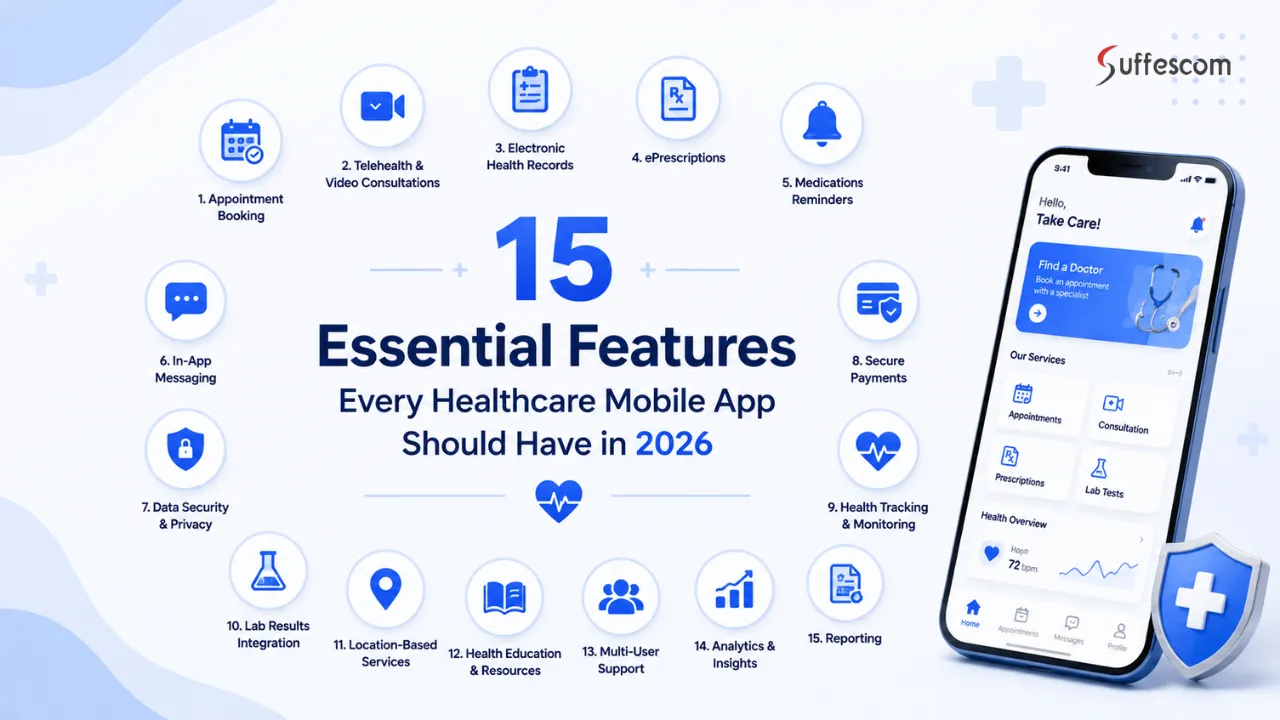
15 Essential Features Every Healthcare Mobile App Should Have
| No. | Healthcare App Feature | What It Does | Example |
| 1 | Patient Secure Registration & Profile Management | Enables patients to register and manage their profile safely. | Managing contact information and adding emergency information on the application. |
| 2 | Multi-Factor Authentication & Biometric Login | Ensures the safety of patient accounts with additional security like OTP, fingerprint, or face ID. | Finger authentication login for accessing medical reports. |
| 3 | Appointment Booking & Scheduling | Helps in scheduling, cancelling, or changing an appointment. | Scheduling a doctor’s appointment without having to call the clinic. |
| 4 | Telemedicine Video Consultation | Enables patients to consult doctors remotely through secure video calls. | A patient discussing symptoms with a doctor from home. |
| 5 | EHR Integration | Provides access to medical records, reports, prescriptions, and treatment history. | Viewing previous test results before a specialist visit. |
| 6 | ePrescription & Medication Management | Helps users manage prescriptions, medicines, and dosage reminders. | Receiving alerts when it is time to take medication. |
| 7 | Secure Doctor-Patient Messaging | Allows private communication between patients and healthcare professionals. | Asking a doctor a follow-up question after treatment. |
| 8 | Wearable Device Integration | Connects with smart devices to track health data in real time. | Sharing heart rate or glucose readings with a doctor. |
| 9 | AI-Based Symptom Checker | Uses AI to analyse symptoms and suggest possible next steps. | Checking whether symptoms require a doctor visit. |
| 10 | Push Notifications & Health Reminders | Sends alerts for appointments, medicines, and health activities. | Reminder for a vaccination or prescription refill. |
| 11 | Online Payments & Insurance Management | Allows users to pay bills and manage insurance details digitally. | Paying for an online consultation through the app. |
| 12 | Healthcare Provider Search | Helps patients find doctors based on speciality, location, and availability. | Searching for a nearby dermatologist and booking an appointment. |
| 13 | Patient Reviews & Feedback System | Allows users to share experiences and rate healthcare services. | Reviewing a telemedicine consultation experience. |
| 14 | Healthcare Analytics Dashboard | Displays health insights and progress using collected data. | Tracking blood pressure trends over time. |
| 15 | Accessibility Features | Makes the app easier to use for people of all ages and abilities. | Voice navigation or larger text for older users. |
For an efficient healthcare app, it is not enough just to offer online access to health care services. The app must enhance patient experience, help healthcare providers, maintain confidentiality of data, and optimize workflow.
These are the features which must be incorporated into healthcare mobile applications of 2026. Not every app is going to need all of them but such features are common for healthcare apps which are popular and successful.
1. Secure Patient Registration and Profile Management
Registration is the first contact that a patient will have when signing up for a healthcare application. The process should be easy, quick, and efficient.
Patients should be able to:
- Create an account securely
- Manage personal information
- Update contact details
- Add emergency contacts
- Store health-related information
This is because, when a patient changes his or her contact details, the patient should be allowed to make changes to the account details on the app.
This will enable both the health care organisation and the patient to communicate properly.
2. Multi-Factor Authentication and Biometric Login
Medical apps contain very confidential information; thus, the need for good authentication cannot be underestimated.
Modern healthcare applications often use:
- Multi-factor authentication (MFA)
- Fingerprint login
- Face recognition
- One-time verification codes
- Device-based authentication
For instance, when retrieving laboratory reports, one can begin by using the password followed by fingerprint authentication.
Such security measures will not allow unauthorised access, but at the same time will provide users with convenience.
3. Appointment Booking and Scheduling System
Online appointment scheduling has become one of the most demanded functions of healthcare apps.
Patients should be able to:
- View available appointment slots
- Book appointments instantly
- Reschedule consultations
- Cancel appointments
- Receive appointment confirmations
For instance, there is no need to call the clinic during office hours anymore to schedule an appointment with a GP; it is enough to do it online.
This function makes work easier for both patients and the clinic itself.
4. Telemedicine Video Consultation
Using Telemedicine is the ability to seek out the aid of Healthcare Professionals while they are a great many miles away via videoconferencing.
Benefits include:
- Reduced travel time
- Faster access to care
- Greater convenience
- Improved access for rural communities
- Better continuity of care
For instance, if there is a patient with a small skin problem, he/she can send pictures and conduct a video consultation without necessarily traveling to a health facility.
Telemedicine is one of the most common features in most healthcare applications nowadays.
5. Electronic Health Records (EHR) Integration
Securely and conveniently accessing your patients’ notes quickly is a must for both yourself and your staff.
EHR integration allows users to view:
- Medical history
- Diagnoses
- Laboratory results
- Vaccination records
- Treatment plans
- Clinical notes
For example, if a patient goes for a consultation appointment with a specialist, they would have quick access to their previous test reports via the application.
This feature enhances care coordination. Reduced paper work to your clinician.
6. ePrescription and Medication Management
Medication management ensures that patients stay on schedule with their medications.
Key capabilities include:
- Digital prescriptions
- Medication reminders
- Refill requests
- Dosage tracking
- Prescription history
For instance, the use of medication to manage a condition such as high blood pressure will ensure that there are daily reminders and alerts whenever the medication needs to be refilled.
7. Secure Doctor-Patient Messaging
There is the possibility for direct communication between patients and healthcare workers through secure messaging.
Patients can use messaging features to:
- Ask non-urgent medical questions
- Request prescription renewals
- Share documents
- Receive follow-up instructions
- Clarify treatment plans
For instance, a patient that has had an operation can ask a question on how to take care of wounds without having another appointment.
Communication must be encrypted and comply with privacy regulations in your industry.
8. Wearable Device and Health Tracker Integration
The usage of wearable technologies for health and fitness tracking is becoming common practice.
Healthcare apps can integrate with:
- Smartwatches
- Fitness trackers
- Blood pressure monitors
- Glucose monitoring devices
- Sleep tracking systems
As an illustration, the readings of a diabetic person can be shared with the medical professional by means of the application.
The live data stream will contribute to enhanced, personalized patient care and early diagnosis.
9. AI-Based Symptom Checker
AI may be used to aid the patient in identifying his/her symptoms prior to consulting a doctor.
AI-powered symptom checkers typically:
- Ask guided questions
- Analyse reported symptoms
- Suggest possible causes
- Recommend appropriate next steps
For instance, when a patient suffers from a sore throat and fever, he/she is advised to make an appointment for consultation.
However, one must remember that symptom checkers are supposed to complement and not substitute medical consultation.
10. Push Notifications and Health Reminders
A timely reminder will keep the patient engaged in his health care program.
Notifications can be used for:
- Appointment reminders
- Medication alerts
- Vaccination schedules
- Health check reminders
- Prescription refill notifications
For instance, one can send the patient a reminder one day before an appointment to minimize no-shows.
This is achieved by ensuring that the patient is engaged and assisting the health care professionals in reducing no-show rates.
11. Online Payments and Insurance Management
Online payments make it easier to manage the administration aspect of healthcare services.
Patients should be able to:
- Pay consultation fees online
- View invoices
- Access payment history
- Submit insurance information
- Track reimbursement claims
For instance, a patient who is booking a private video consultation will be able to pay online via the application prior to the consultation session.
This creates a smoother experience for both patients and healthcare providers.
12. Healthcare Provider Search
It is common that patients may require assistance to locate the correct healthcare providers.
The function of provider search will make it possible for users to filter out the healthcare professionals by:
- Medical speciality
- Location
- Availability
- Language spoken
- Insurance acceptance
And in the search for dermatology it can search and reserve appointments through application.
This feature improves accessibility and simplifies healthcare navigation.
13. Patient Reviews and Feedback System
Patient feedback is essential in providing guidance for the health care provider and future patients.
Users can:
- Rate healthcare services
- Leave reviews
- Share experiences
- Submit suggestions
- Report issues
For instance, the patient can provide feedback on their telehealth visit and point out areas that need to be improved.
The results provide health organizations a basis for developing methods of improving quality of care and satisfaction of patients.
14. Healthcare Analytics Dashboard
The healthcare analytics dashboard allows the user/providers to know more about the healthcare trends and metrics.
Patients may view:
- Activity levels
- Medication adherence
- Weight changes
- Blood pressure trends
- Health goals progress
Healthcare professionals may track:
- Patient engagement
- Appointment attendance
- Treatment outcomes
- Population health trends
For instance, an individual suffering from hypertension will be able to monitor his/her blood pressure for many months and see how the improvements have occurred.
It helps everyone involved make sense of the healthcare information they receive-from doctors to patients.
15. Accessibility Features for Inclusive Healthcare
All users, irrespective of their age and capability level, should be considered while designing any healthcare application.
Important accessibility features include:
- Voice navigation
- Screen reader compatibility
- Adjustable text sizes
- High-contrast display modes
- Captioned video consultations
- Simple navigation structures
For instance, an elderly person with poor eyesight should be provided with the capability to increase font size and use the application easily.
Developing software inclusively will enable healthcare organizations to have a greater reach as well as comply with the requirements of laws like Equality Act in the UK and WCAG guidelines.
Unsure which features your healthcare app really needs?
Healthcare Mobile App Development Cost Based on Complexity
The first question that healthcare organisations and health-tech companies ask is: “What is the cost of developing a healthcare mobile application?”
It mostly depends on a few different factors such as features, platform demands, security measures, third-party integration, and other aspects of compliance. Healthcare applications require additional attention due to the fact that they deal with patients’ data and work together with clinical systems.
Even though there is no specific answer regarding the cost of development, it is useful to know what factors influence this price.
Key Factors That Influence Healthcare App Development Costs
Number of Features
The more functions that an app will have, the greater its cost of development will be.
Features of a standard level such as user registration, account management, scheduling appointments do not demand so much time to develop as complex solutions like telemedicine, artificial intelligence for diagnosis, remote monitoring, etc.
For example:
- An appointment booking app may take no more than several months to be developed.
- A fully-fledged healthcare platform that includes EHR integration, video conferencing, analytics dashboard, and other features will take considerably more time and involve more developers.
In this way, feature selection is one of the largest factors affecting the project budget.
Platform Selection (iOS, Android, or Web)
The platforms you choose to support will directly affect development costs.
Common options include:
- iOS applications
- Android applications
- Cross-platform mobile apps
- Web-based healthcare portals
- Multi-platform healthcare ecosystems
Separate native app development in iOS and Android is generally more time consuming and expensive than going with a cross platform solution.
For example:
| Platform Type | Relative Development Cost |
| Single Platform (iOS or Android) | Lower |
| Cross-Platform Mobile App | Medium |
| Native iOS + Native Android | Higher |
| Mobile App + Web Portal | Highest |
A healthcare organisation’s selection of a platform should be influenced by business objectives, client segment, and scalability needs for future success.
Healthcare System Integrations
Integration requirements can significantly increase development complexity.
Many healthcare apps need to connect with:
- Electronic Health Record (EHR) systems
- Electronic Medical Record (EMR) platforms
- NHS services
- Pharmacy systems
- Laboratory information systems
- Insurance platforms
- Wearable devices
- Payment gateways
For instance, connecting patient data from various healthcare organizations needs secure APIs, testing, mapping and maintenance.
The higher the number of connections, the more development time that is needed.
Security Requirements
Security needs to be addressed to ensure security requirements for healthcare applications.
Security-related development costs may include:
- End-to-end encryption
- Multi-factor authentication
- Biometric login
- Secure cloud infrastructure
- Audit logging
- Role-based access control
- Penetration testing
- Ongoing security monitoring
Healthcare data is very confidential, and security must never be considered an add-on option. Proper implementation of cybersecurity will ensure that breaches do not occur to save companies from paying fines and suffering from bad publicity.
AI Capabilities
AI solutions are becoming more common in health care, but the use of AI technologies makes the development process expensive.
Examples include:
- Symptom checkers
- Virtual health assistants
- Predictive analytics
- Clinical decision support
- Automated patient triage
- Personalised healthcare recommendations
An AI-based symptom checker, for instance, demands model training, AI algorithm development, testing, and optimization.
The intricacy of the AI solution defines the amount of additional funding needed.
Compliance and Regulatory Requirements
Applications built for the healthcare industry need to adhere to multiple legal and regulatory requirements in accordance with their market.
In the UK, common compliance requirements include:
- UK GDPR
- Data Protection Act 2018
- NHS Digital standards
- Cyber Essentials requirements
- Medical device regulations (where applicable)
Compliance-related activities often involve:
- Legal reviews
- Security assessments
- Documentation
- Risk management processes
- Data governance planning
While this additional development work can raise your overall development cost, it can help you prevent misuse of sensitive patient information.
Estimated Healthcare App Development Costs by Complexity
These figures are average industry rates, and can vary with your project size, technology, and development center location.
| App Complexity | Typical Features | Estimated Development Cost |
| Basic Healthcare App | Registration, profiles, appointment booking, notifications | £20,000 – £50,000 |
| Medium Complexity App | Telemedicine, messaging, payments, EHR integration | £50,000 – £120,000 |
| Advanced Healthcare App | AI features, wearable integration, analytics, multiple integrations | £120,000 – £300,000+ |
| Enterprise Healthcare Platform | Full healthcare ecosystem with advanced compliance and scalability | £300,000 – £1 million+ |
How to Optimise Healthcare App Development Costs
The cost aspect and the risks associated with it can be reduced through a phased development process.
Best practices include:
- Prioritising core features for an initial launch
- Building a Minimum Viable Product (MVP)
- Using scalable cloud infrastructure
- Choosing integrations carefully
- Conducting early compliance planning
- Investing in UX research before development begins
For instance, a healthcare company can begin its operation by offering appointment booking, telemedicine services, and message encryption services and then introduce AI capabilities and analytics in subsequent releases.
Through this approach, organisations will be able to assess demand and receive user feedback.
Key Takeaway
The cost of developing a healthcare mobile application depends greatly on its complexity, functionality, compliance, and technical design. A simple health application will cost several thousand pounds; however, an enterprise-level healthcare platform with such features as artificial intelligence, telemedicine, and others will need hundreds of thousands of pounds.
Well-thought planning, focusing on valuable elements of an application, and working with an appropriate development company will allow healthcare providers to receive maximum value from their investments.
Healthcare Mobile App Development Cost Based on Complexity
The question which healthcare organisations and startups developing health-tech often have is, “What is the cost of healthcare mobile app development?”
This depends on a number of aspects, such as the number of features, the platform used, security measures, integration with third parties and so on. The development of healthcare applications is a more complicated process compared to standard mobile applications because they contain sensitive data and usually work with clinical systems.
There is no exact price for different projects but the knowledge of the cost factors will help you in budget planning.
Key Factors That Influence Healthcare App Development Costs
Number of Features
As more functionalities are integrated into the application, the cost of developing the application increases.
Basic functionalities, such as registration and scheduling appointments, consume much less time than sophisticated functionalities, such as telemedicine and symptom checkers powered by artificial intelligence.
For example:
- An appointment booking application that is rather simple might take several months to develop.
- However, the implementation of an integrated healthcare solution that has EHR connectivity and video consultation features will take more time and involve more developers.
For this reason, feature selection has the most significant effect on the budgeting of the entire project.
Platform Selection (iOS, Android, or Web)
The platforms you choose to support will directly affect development costs.
Common options include:
- iOS applications
- Android applications
- Cross-platform mobile apps
- Web-based healthcare portals
- Multi-platform healthcare ecosystems
More resources & more time needed You will likely require the use of more developers and resources to create iOS or Android native apps compared to a cross platform app.
For example:
| Platform Type | Relative Development Cost |
| Single Platform (iOS or Android) | Lower |
| Cross-Platform Mobile App | Medium |
| Native iOS + Native Android | Higher |
| Mobile App + Web Portal | Highest |
Healthcare organizations must consider their audience, their business objectives, and their future scalability needs when selecting platforms.
Healthcare System Integrations
System integration requirements can greatly complicate the development process.
Many healthcare apps need to connect with:
- Electronic Health Record (EHR) systems
- Electronic Medical Record (EMR) platforms
- NHS services
- Pharmacy systems
- Laboratory information systems
- Insurance platforms
- Wearable devices
- Payment gateways
For instance, integration of patient data from different healthcare systems will require the use of secure APIs, testing, data mapping, and maintenance.
The more the integrations, the more development time will be needed.
Security Requirements
These healthcare applications need to satisfy high standards for security.
Security-related development costs may include:
- End-to-end encryption
- Multi-factor authentication
- Biometric login
- Secure cloud infrastructure
- Audit logging
- Role-based access control
- Penetration testing
- Ongoing security monitoring
Given that healthcare data is very sensitive, security should never be considered as a secondary element.
Cybersecurity investments can save organizations from expensive breaches, lawsuits, and even reputational issues.
AI Capabilities
The implementation of artificial intelligence in healthcare is growing, yet AI elements may significantly raise development expenses.
Examples include:
- Symptom checkers
- Virtual health assistants
- Predictive analytics
- Clinical decision support
- Automated patient triage
- Personalised healthcare recommendations
To illustrate, for an AI symptom checker, one needs to spend on data modeling, machine learning development, testing, and optimization.
The level of AI complexity will determine the amount of additional investment needed.
Compliance and Regulatory Requirements
There are different regulations that should be followed by health care software in relation to the market they are addressing.
Some of the typical compliance rules for the UK market are:
- UK GDPR
- Data Protection Act 2018
- NHS Digital standards
- Cyber Essentials requirements
- Medical device regulations (where applicable)
Compliance-related activities often involve:
- Legal reviews
- Security assessments
- Documentation
- Risk management processes
- Data governance planning
Compliance may be costly but it is very important for patient privacy and legality.
Estimated Healthcare App Development Costs by Complexity
All of the estimates are general industry ranges and may differ based on the size and complexity of the application or software, as well as the technologies you chose and where you are developing it.
| App Complexity | Typical Features | Estimated Development Cost |
| Basic Healthcare App | Registration, profiles, appointment booking, notifications | £20,000 – £50,000 |
| Medium Complexity App | Telemedicine, messaging, payments, EHR integration | £50,000 – £120,000 |
| Advanced Healthcare App | AI features, wearable integration, analytics, multiple integrations | £120,000 – £300,000+ |
| Enterprise Healthcare Platform | Full healthcare ecosystem with advanced compliance and scalability | £300,000 – £1 million+ |
How to Optimise Healthcare App Development Costs
Organizations can benefit from cost reduction and risk mitigation by employing a phased development process.
Best practices include:
- Prioritising core features for an initial launch
- Approach MVP development
- Using scalable cloud infrastructure
- Choosing integrations carefully
- Conducting early compliance planning
- Investing in UX research before development begins
An example of this is an organization in the health care sector which starts off by offering appointment scheduling, telemedicine and message services to their clients while introducing AI and advanced analytics in subsequent releases.
With it, organizations can validate demand, obtain feedback from users, and control costs.
Healthcare App Development Cost Breakdown by Feature
Table: Feature-Wise Cost Estimation
| Feature | Complexity Level |
| User Registration | Low |
| Appointment Booking | Medium |
| Video Consultation | High |
| EHR Integration | High |
| AI Symptom Checker | Very High |
| Wearable Integration | High |
| Analytics Dashboard | Medium |
Want to estimate the cost of your healthcare app idea?
Advanced Healthcare App Features That Can Increase Market Adoption
In today’s competitive health care apps industry, merely providing a minimum level of functionality is not sufficient to draw customers and retain them. Such functionalities like booking appointments, telemedicine, electronic health record keeping are already a common thing that users of health care apps expect.
In order to be more attractive and successful in 2026 and further ahead, healthcare services providers and health-tech companies will have to develop cutting-edge technology solutions for the delivery of highly personalized and proactive care.
AI Healthcare Assistants
Virtual healthcare assistants utilizing artificial intelligence have become some of the most useful components within today’s healthcare applications. These virtual assistants can help patients by providing immediate assistance, answering frequently asked questions about health issues, and guiding users through healthcare processes without any human interaction required.
For instance, when a patient is displaying mild symptoms, he can engage with an AI assistant which will ask questions relevant to the situation, give general health advice, and tell the patient whether he needs to schedule an appointment, make a video appointment, or consult urgently.
The use of AI in healthcare is also extended to appointment scheduling, medicine reminders, prescription refills, and patient onboarding process. This makes healthcare apps more accessible all day long without increasing administrative burden.
With advancements in NLP technology, AI-enabled healthcare assistants are likely to become a major competitive advantage of mobile healthcare apps.
Predictive Health Analytics
Predictive health analytics uses machine learning and big data technology to detect any potential threats to patients’ health even before any problem arises. With the help of such technology, doctors are able not just to treat but also to prevent various diseases.
Thus, an application connected to patients’ medical history, physical activity, and information about wearables can detect possible cardiovascular threats and advise a person to undergo a medical check-up or change their health-related behaviors.
Predictive health analytics can be applied in different healthcare situations, including:
- Chronic disease management
- Early risk detection
- Hospital readmission prevention
- Population health monitoring
- Preventive healthcare planning
Predictive analytics can help improve patient and healthcare professional decision-making and reduce future costs associated with healthcare due to increased positive outcomes.
Remote Patient Monitoring
Remote Patient Monitoring (RPM) enables healthcare professionals to monitor patients’ health data outside of conventional clinical environments. The ability has proven crucial for patients with chronic diseases and elderly patients.
Through connections with medical devices and wearables, healthcare applications can continually collect such information as:
- Blood pressure readings
- Heart rate data
- Blood glucose levels
- Oxygen saturation levels
- Physical activity metrics
For instance, the use of a remote glucose monitor by a diabetic patient can be integrated to communicate data about blood sugar levels automatically to the healthcare provider via the mobile application. In case there is any anomaly in the results, healthcare professionals can act accordingly and change treatment procedures where necessary.
The use of remote patient monitoring enhances continuity of healthcare while at the same time lowering the frequency of physical visits.
Voice-Based Healthcare Assistance
The use of voice technology is gaining popularity because patients wish for convenient ways of communicating with healthcare applications.
Through voice technology healthcare applications, patients can carry out activities simply by speaking, for example:
- Booking appointments
- Accessing medication schedules
- Requesting health information
- Recording symptoms
- Navigating app features
As an illustration, an older person with a lack of technological proficiency could simply ask, “What’s the date of my next appointment?” and instantly get an answer without having to flip through numerous screens.
In addition, healthcare guidance via voice recognition could be helpful for patients with problems related to eyesight, movement ability, and reading. The more efficient voice recognition technology becomes, the more frequently it will be used in patient-centred care.
Blockchain-Based Health Data Security
Keeping patients’ information safe continues to be one of the most difficult issues related to healthcare technology. The use of blockchain technology in order to improve security, transparency, and trust in the sphere of health care data can become an effective solution.
In contrast to conventional database systems, in which data is stored in clear form, blockchain ensures that all the information is recorded in encrypted and immutable blocks.
For instance, it is possible to store a patient’s medical record in several places at once and keep the entire history of access to the record.
Potential benefits of blockchain in healthcare apps include:
- Enhanced data security
- Improved patient control over health records
- Reduced risk of data tampering
- Better interoperability between healthcare systems
- Increased transparency and auditability
Although blockchain adoption within the field of healthcare is not that widespread today, there are some firms who attempt to find out how useful its application can be in improving data security and facilitating safe information exchange.
Personalised Health Recommendations
In the modern world, people expect personalisation in healthcare. The process of personalised recommendations for health management includes data from medical history, wearables, lifestyle, and user behavior.
For instance, a healthcare application can analyze such a user’s behavior as physical activity, sleeping schedule, and blood pressure results to give particular lifestyle recommendations.
Personalisation can also be applied to:
- Nutrition guidance
- Medication management
- Mental health support
- Chronic disease care plans
- Preventive health reminders
Instead of offering generalized suggestions about healthy behaviors, personalized suggestions will assist users in receiving information that suits their unique situations.
This can help promote more engagement, healthier behaviors, and improved relations between patients and healthcare professionals.
Why Advanced Features Matter for Healthcare App Success
In the ongoing development of digital healthcare, the introduction of sophisticated features has emerged as a key factor that motivates users to use digital healthcare applications as well as provides an edge over competitors.
The use of technologies such as artificial intelligence-based healthcare assistants, predictive analysis, remote patient monitoring, voice interaction, blockchain technology-based security systems, and customized health advice allows healthcare organizations to provide a much more efficient service to their patients
Despite the need for extra costs for implementing these features, they can prove to be very valuable additions to any healthcare application.
Emerging Healthcare Mobile App Trends for 2026
The technological landscape in the field of health care is changing fast due to the advancements in artificial intelligence, Internet of Things and patient-focused healthcare practices. Mobile applications in this industry are becoming smarter and increasingly proactive in the context of continuous digitalisation of healthcare processes.
Knowing about these innovations in health care apps can be useful both for healthcare institutions and startups.
AI-Powered Preventive Healthcare
Historically, the healthcare system was oriented on the diagnosis and treatment of disease based on the development of symptoms. One of the main trends that will determine the development of mobile applications for healthcare in 2026 is the trend of prevention through artificial intelligence technology.
AI algorithms are capable of processing massive amounts of health-related data, which may include medical history, lifestyle data, information from wearables, and behaviour pattern information. This allows healthcare apps to suggest preventative measures to users when there are any signs of future problems.
For instance, an application for healthcare will be able to track such indicators as low activity level, poor sleep patterns, or increased blood pressure level. Depending on the situation, it will suggest the necessary actions to the user.
This proactive approach offers several benefits:
- Earlier identification of health risks
- Improved management of chronic conditions
- Reduced healthcare costs
- Better long-term patient outcomes
Since AI is becoming more advanced, prevention features are going to be the usual components of future health care application services.
Hospital-at-Home Solutions
The hospital-at-home concept is bringing about a revolution in the way health services are offered. Patients no longer need to stay in hospitals for prolonged durations as there are means of offering remote healthcare through digital technology.
Healthcare mobile applications have been playing an integral part in this revolution as they allow interaction and monitoring of patients and medical personnel.
Some of the activities that could be done using a healthcare application include:
- Report symptoms
- Track recovery progress
- Attend virtual consultations
- Share health measurements
- Receive medication reminders
Healthcare experts can assess the patient data from their homes and take action immediately if need be.
The hospital-at-home model may prove effective to alleviate the burden on the healthcare institutions and improve the comfort and convenience of the patients. Many patients prefer healing at home environments where possible.
Wearable Health Monitoring
Use of wearable health technology is expanding all over the world. Smart watches, fitness bands, heart rate monitors and continuous glucose monitors are collecting data about people’s health and this data could be used for healthcare apps.
Nowadays, modern healthcare apps are more and more focused on collecting and analyzing the data from wearable technologies.
For example:
- The smartwatch is capable of measuring heart rate and even identifying abnormal heart rhythm.
- The fitness watch measures daily physical activity and sleep.
- The glucose monitor continuously gives blood sugar levels of diabetic patients.
Industry research shows that wearable device usage is constantly growing worldwide because people have become increasingly interested in measuring their wellness using connected devices.
With the integration of wearables, health professionals have access to possibilities for offering more personalized treatments, chronic disease management, and early detection of health issues compared to routine check-ups.
Digital Therapeutics
One of the most rapidly evolving areas of digital healthcare is digital therapeutics. Digital therapeutics differ from wellness apps in that they are clinically proven software that helps prevent, manage, or treat certain health conditions.
Such applications usually assist health practitioners by providing treatment programs on their mobile devices.
Examples include:
- Cognitive behavioural therapy programmes for mental health conditions
- Diabetes management applications
- Chronic pain management tools
- Sleep improvement programmes
- Digital rehabilitation solutions
For instance, a patient who is undergoing anxiety will utilize an app for the treatment process which will have exercise therapy, behavioral intervention therapy, monitoring, and clinical supervision.
With an understanding of the importance of such interventions in the healthcare system, the use of digital therapeutics will become more prevalent in mobile health apps.
Connected Healthcare Ecosystems
Healthcare organizations are shifting their focus from disconnected systems to interconnected healthcare ecosystems, which allow smooth information exchange between various systems and participants.
In such a connected ecosystem, healthcare applications can communicate with:
- Electronic Health Records (EHRs)
- Hospitals and clinics
- Pharmacies
- Insurance providers
- Diagnostic laboratories
- Wearable devices
- Telemedicine platforms
For instance, a patient can make appointments, participate in virtual consultations, get electronic prescriptions, buy medicines, and check lab test reports all within one connected system of healthcare provision.
This degree of interoperability helps in alleviating administrative burden, improving coordination of care and offering a seamless patient experience.
With continued modernization of healthcare, connected ecosystems would become an important element for healthcare provision.
Real Examples of Successful Healthcare Mobile Applications
The key to finding out why some healthcare mobile apps succeed lies in looking at actual examples. The most advanced healthcare applications have changed the way patients receive medical services, store their health data, and interact with their healthcare providers.
Such applications prove that through the right mix of usability, security, innovation, and patient-centered approach it is possible to achieve success. The following healthcare apps provide lessons for organizations developing healthcare products in 2026.
NHS App Features and Learnings
One of the most popular apps related to healthcare in the UK is the NHS App. Created for convenient use of NHS services, the application offers patients an opportunity to handle various aspects of their health care on a single platform.
Key features include:
- GP appointment booking
- Repeat prescription requests
- Access to medical records
- COVID-19 and vaccination records
- Secure messaging and notifications
- Healthcare service information
The NHS App’s success shows the significance of accessibility and convenience. By integrating all healthcare-related features into one app, it has minimized the friction faced by the patient and the healthcare professionals in terms of administration.
From the NHS App, one can learn that healthcare apps need to concentrate on addressing the day-to-day needs of the patients. Such features will ensure that technology plays second fiddle to user convenience.
MyChart Healthcare Platform
MyChart is one of the most popular patient engagement tools that has been embraced around the world. It is used by many health care organizations worldwide to give patients access to their health data and health care professionals.
The platform enables users to:
- View medical records
- Access laboratory results
- Schedule appointments
- Request prescription refills
- Pay medical bills
- Communicate securely with clinicians
The major strength of MyChart is that it integrates very well with EHRs. Patients are able to obtain all information regarding their healthcare on one platform without the need to switch from one to another.
For developers of healthcare apps, MyChart shows that it is beneficial to integrate the system into the entire process of providing health services.
Ada Health AI Healthcare Assistant
Ada has become a widely known case that illustrates how artificial intelligence improves access to healthcare services.
This application employs symptom assessment technology based on artificial intelligence to help users comprehend the reasons for their symptoms and decide on further actions. Using a chatbot format, users are required to respond to a number of questions regarding their health condition to receive customized recommendations.
For instance, a user who suffers from fatigue, headache, and fever can perform an assessment to learn more about their condition and to find out whether the assistance of a doctor is necessary.
Ada Health reflects some of the main trends related to the development of healthcare applications nowadays:
- AI-powered patient support
- Personalised healthcare guidance
- Digital self-assessment tools
- Improved access to health information
An important lesson is that AI can make us smarter patients and the field is an adjunct not replacement for medical practitioners.
Babylon Health Digital Care Model
Babylon Health was highly influential in introducing health services that used mobile technology in a digital-first way.
Some of the services offered on the platform included:
- Virtual GP consultations
- AI symptom checking
- Prescription services
- Health monitoring
- Digital health records
Babylon introduced an innovative way of delivering telemedicine and digital health services. It did so by focusing on the reduction of health care barriers by enabling patients to communicate with healthcare practitioners remotely using their phones.
Despite facing business challenges with time, Babylon has greatly influenced innovation in the field of digital health. Some of the health apps today include innovations introduced by Babylon that have found their way into mainstream health care.
What These Healthcare Apps Teach Us
Even though they serve different populations and different health care systems, there are some common traits among those successfully implemented healthcare applications.
They prioritise:
- Strong security and patient privacy
- Simple and intuitive user experiences
- Easy access to healthcare services
- Integration with healthcare systems
- Personalised patient support
- Continuous innovation based on user needs
The key thing about successful healthcare applications is that they pay attention to improvement of health outcomes of patients and simplification of access to health care. It is not sufficient just to use technologies. Successful approaches are always focused on solving real problems in health care and are reliable and trusted.
The study of successful health applications like NHS App, MyChart, Ada, and Babylon Health is helpful for the healthcare organizations which want to develop a mobile application in 2026.
Table: Healthcare App Feature Comparison
| App | Telemedicine | Records | AI | Scheduling |
| NHS App | Yes | Yes | No | Yes |
| MyChart | Yes | Yes | Limited | Yes |
| Ada Health | No | Limited | Yes | No |
Common Mistakes to Avoid When Building a Healthcare Mobile App
Developing a mobile application for a healthcare company demands strategic planning due to the presence of confidential patient information, regulations, and customer expectations. Not making the most common mistakes will ensure that healthcare companies develop efficient applications.
Ignoring Healthcare Compliance
Another critical error is to view compliance as a last step. The apps that provide healthcare services have to adhere to certain rules, like UK GDPR and Data Protection Act 2018. Lack of compliance planning will lead to the problems mentioned above. Privacy and security needs have to be taken into account right away.
Poor User Experience
The healthcare application should be easy for everybody to use, including senior citizens and people with poor digital literacy. If navigation is complicated, application operates slowly, or other issues occur, then usage may be decreased.
Weak Data Protection
The health care apps hold very confidential data; hence security is of great importance here. If there is weak authentication or insecure storage, or even poor encryption, the patient records may be disclosed. Good security practices, like encryption and MFA, contribute to increased trust.
Building Too Many Features Initially
An excess of features in the initial version will make the app more costly and delay its release. That is why an MVP with basic functionality should be created.
Not Planning Scalability
Apps that can expand as much as you plan your growth, as long will be your success! If you don’t plan about scalability of the platform at early stages then as soon as you increase the number of users or include few new features for the growth, it may impact the performance.
How to Choose the Right Healthcare App Development Partner
Selecting the right partner for the development of the healthcare app is one of the key considerations during the development of such applications. A professional development team can assist to develop a robust, scalable and efficient app.
The development of healthcare applications requires specialized skills and knowledge since these are the applications that have to deal with personal and confidential data of the patients as well as with certain regulations and integration of other systems.
Healthcare Industry Experience
A suitable healthcare application development partner will need to have worked in the healthcare sector previously. This will provide the developer with an idea about the process and needs of the healthcare industry, which will enable him/her to develop applications for real-life needs.
A developer aware of the healthcare sector will be able to understand the requirements like scheduling appointments and telemedicine.
Security and Compliance Expertise
Security should always be one of the key concerns in identifying an appropriate partner for your healthcare technologies. The development team must have the knowledge of the healthcare data security needs, which include the compliance with UK GDPR and proper data management.
Seek out partners that adhere to strong security processes like encryption, secure login, access control, and testing.
Technical Capabilities
These applications generally require complex technologies such as cloud services, AI capabilities, wearables, APIs, and connections with the healthcare systems.
The most efficient development company must be proficient in developing scalable applications that will work effectively on mobile phones and provide room for further enhancements.
Post-Launch Maintenance Support
There is a need for healthcare applications to be monitored, updated and improved after being developed. This is due to technology changes, security challenges, and changing demands.
Having a development partner who will assist in maintaining the app is vital in ensuring that these challenges are addressed.
Previous Healthcare Projects
Analyzing earlier projects will allow for an evaluation of a company’s practical experience. For example, case studies and real clients’ experiences can give insight into how well the team succeeded in developing reliable, secure, and user-friendly healthcare apps.
A good development company is able to merge healthcare know-how with technical skills, security, and support to produce a successful healthcare app.
Benefits of Investing in a Healthcare Mobile Application
Mobile applications in healthcare are gradually growing into a vital component of the delivery process. This ensures easy accessibility for patients, while at the same time, healthcare providers are able to improve their communications and operations.
Well-constructed mobile apps will be beneficial in many ways and will turn out to be a good investment for the future.
Better Patient Experience
Healthcare apps help facilitate patients in managing their health care processes. Rather than communicating by phone or physically going for a visit to do routine tasks, the process is now done through mobile applications.
Functions like appointment scheduling, prescription of medicines, health records, and communication help provide an easier and more efficient process. For instance, a patient can schedule an appointment, be reminded, and read about his/her medical conditions in an easier manner.
It becomes easy to boost the trust of the patients in healthcare providers.
Increased Healthcare Accessibility
The use of mobile applications in providing healthcare services ensures that obstacles to healthcare service provision are addressed. Mobile technology enables patients to access healthcare services via telemedicine, obtain healthcare information, and make health service appointments wherever they are located.
This is particularly important to people living in rural communities, physically disabled persons, and people needing continuous healthcare monitoring.
Improved Operational Efficiency
Medical applications can decrease the burden of administration work for clinics, hospitals, and medical professionals.
Workflow automation in appointments booking, documentation, communication, and workflow management helps save time by decreasing manual work and making the health professionals concentrate more on patient care.
For instance, automated reminder service may prevent missed appointments and documentation will provide better access to patient’s data.
Higher Patient Retention
Patients tend to use healthcare services on a regular basis if they experience convenience and personalization of service.
Using mobile applications as a tool for communication is beneficial because of reminders, health tracking, follow-ups, and easy access to healthcare providers.
Maintaining relationships with patients via a healthcare application leads to building their loyalty.
Better Healthcare Data Management
Healthcare applications enable a systematic way of managing patient data through storage.
Through effective integration, healthcare organizations will have an easier time accessing patient histories, records, and even their health data.
For instance, patient health data collected using wearables will be very useful for monitoring trends and identifying risks early on.
In general, having a healthcare mobile application will result in increased patient satisfaction, accessibility, efficiency, and connectivity.
Future Scope of Healthcare Mobile Applications
The future of healthcare mobile applications revolves around building smarter, personalized, and interconnected healthcare experiences. With technological advancements, healthcare applications would go beyond mere service provision to prevent and monitor patients proactively.
AI-Driven Healthcare Ecosystems
AI would make it possible for healthcare apps to analyze data, offer virtual assistance, and make quick healthcare decisions. For instance, AI software will be able to analyze symptoms and health information and give advice on what to do next.
Personalised Digital Healthcare
In the future, applications would utilise information about patients’ lifestyles, health objectives, and other relevant data to give recommendations that would enable them to live healthier lives.
Predictive Disease Management
Using predictive analytics would make it possible to detect early health hazards through the analysis of the patients’ health history as well as the data provided by wearable devices.
Ready to turn your healthcare app idea into reality?
Conclusion
Healthcare mobile apps are revolutionizing the manner in which patients interact with healthcare solutions. An effective healthcare app is more than just having top-of-the-line technology but should have high security standards, easy-to-use interface, compliance, and features focused on the user’s needs.
The choice of the right combination of features would depend on the organization’s objectives, potential users, budget, and the extent of complexity of the project. Whether creating a simple healthcare app or a complex digital health solution, proper planning is necessary for success.
Collaboration with an experienced healthcare app development company is beneficial for healthcare companies looking to create robust applications. Companies will not only benefit from investing in advanced healthcare technology solutions, but they will also be well-prepared for future opportunities that may arise.
Frequently Asked Questions (FAQs)
1. What are the most important features of a healthcare mobile app?
Some of the essential healthcare application features include patient registration, appointment scheduling, telemedicine, electronic health records (EHRs), ePrescriptions, messaging, health monitoring, alerts, and security of data. The most appropriate set of features varies depending on the function of the application.
2. How much does it cost to develop a healthcare mobile app?
The development costs for healthcare mobile apps depend upon many things including complexity, functionality, platforms to be supported, integrations, security needs, and compliance issues. The cost of developing a basic healthcare application would fall between £20,000-£50,000.
3. How long does healthcare app development take?
The development period will vary depending on the scope of the application. A straightforward healthcare application could take anywhere from 3-6 months to develop, whereas an advanced healthcare platform with advanced capabilities could require anywhere between 9-18 months to complete.
4. What security features should healthcare apps include?
Security features that a healthcare application must-have include encryption, authentication, multi-factor authentication, access control, frequent testing for security, and proper storage of information.
5. Is GDPR compliance mandatory for healthcare apps in the UK?
That’s right, any healthcare app operating within the UK, as any would have access to your medical health data, will be subject to UK GDPR and data protection regulations.
6. Can healthcare apps integrate with NHS systems?
Yes, healthcare applications may connect to NHS systems when appropriate. However, this connection will need to be made using a secure link.
7. What is EHR integration in healthcare apps?
Integration with EHRs allows the healthcare applications to be connected to the EHR system. This helps in collecting all the information regarding the medical history, results, medications, and treatments in a single location.
8. How does telemedicine improve healthcare applications?
Telemedicine involves health care visits using remote video technology to patients. It also enhances accessibility and efficiency in care by decreasing travel required and getting timely care.
9. Can AI be added to healthcare mobile apps?
Sure AI can be added using symptoms checker, virtual assistants, predictions, customised advice based on the medical history, lifestyle of the patient. AI should not eliminate the Medical Judgement by the medical professional but to complement it.
10. Are wearable devices useful for healthcare apps?
Yes. Wearable technology allows exchange of information like heart rate, physical activity, sleep cycles, and glucose levels. It enables continuous monitoring and individualized healthcare.
11. What technology is used to build healthcare applications?
The healthcare application uses mobile technology platforms that include native iOS and Android, cross-platform solutions, cloud technologies, APIs, AI, secure database management systems, and other healthcare integration technologies.
12. What makes a healthcare app successful?
The good health care application is a combination of the following aspects: simplicity, good security, stable work, useful functionality, compliance, and an orientation towards patients’ needs. Trust and engagement of users are important factors.
13. Should healthcare startups build MVP apps first?
Yeah. Producing an MVP allows testing a startup’s concept, obtaining feedback, lowering the expense of the venture, and product upgrades prior to the building of high-quality features.
14. How can healthcare apps improve patient engagement?
Healthcare solutions improve user experience and their willingness to utilize apps and services, which can benefit them by offering alerts, personal data availability, booking arrangements and schedules, health analysis and consultation along with tailored solutions for improving their wellness.
15. What are future healthcare app trends?
The future trends of healthcare include artificial intelligence in healthcare, remote patient monitoring, digital therapeutics, health tracking using wearables, predictive analytics, voice assistants, and connected care ecosystem.
16. How do healthcare apps protect patient information?
Patient data within healthcare applications is safeguarded using encryption, secure login procedures, user data controls, routine audits and following relevant data-protection protocols like UK GDPR.

Senior Content Strategist
Jonathan Raabe is the Content Strategist at Suffescom Solutions and has more than 7 years of experience in developing data-driven content strategies for technology-centric organizations. He is proficient in the areas of mobile app development, software development, AI, cloud computing, fintech, healthcare, and digital transformation. Jonathan collaborates with industry leaders, developers, and business heads in creating high-value, SEO-optimized content that helps companies in increasing their visibility on the search engines, establishing trust, and driving business inquiries.
Need Help With
Development?