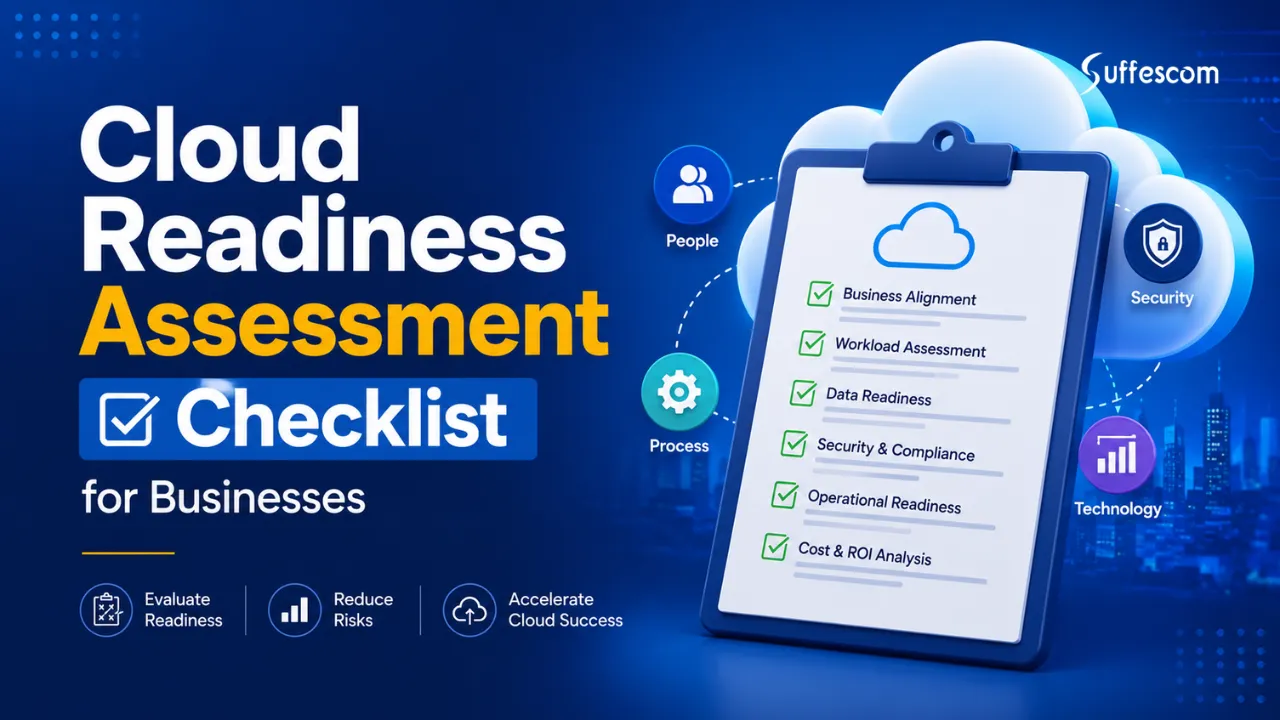
Key Takeaways
- Reduced migration risks through early issue identification
- Better cost management by avoiding unnecessary cloud spending
- Enhanced security compliance through proactive risk assessment
- Improved operational efficiency with optimised infrastructure and processes
- Greater confidence in cloud migration planning and decision-making
Cloud migration is a priority for businesses that want to scale better, have better security and save on infrastructure costs. Moving to the cloud without a plan can cause unexpected costs, disruptions, security issues and performance problems. That’s why doing a readiness check is crucial before migrating.
Many businesses face common cloud migration problems like application issues, poor network infrastructure, data security worries, IT skill gaps and unclear migration goals. Without evaluating these factors, businesses may not get the return on investment they expect from cloud projects.
A cloud readiness assessment helps businesses spot risks, evaluate current infrastructure, check application compatibility and find the best migration strategy. By knowing strengths and weaknesses, businesses can make a realistic migration plan that reduces downtime controls costs and increases project success rates. Cloud migration requires planning to achieve cloud benefits.
Cloud readiness assessments are essential for cloud migration projects. Whether you are planning to migrate to AWS, Microsoft Azure, Google Cloud, or a hybrid cloud environment, a structured readiness assessment provides valuable insights that support informed decision-making. It also helps ensure compliance with industry regulations and strengthens cybersecurity preparedness before migration begins.
This guide covers a cloud readiness assessment checklist, including evaluating infrastructure, analysing applications, and setting security requirements. Plus, it looks at compliance, costs, and making sure your team is ready. It also guides you through creating a migration plan. Following this checklist helps your org confidently and successfully migrate to the cloud without breaking the bank.
What Is a Cloud Readiness Assessment?
Shifting to the cloud can really boost business benefits, but you need proper prep for that. So, a cloud readiness assessment checks your org’s IT setup, goals, security needs, and tech abilities before migrating to the cloud.
Definition and Purpose of a Cloud Readiness Assessment
A cloud readiness assessment is a review that helps businesses figure out if they are ready for the cloud. This means checking if their applications, data, infrastructure and teams are all set for adoption.
The main goal of this assessment is to find out if there are any problems that might come up to understand what is needed to make the move and to come up with a plan that makes the transition to the cloud easy.
When businesses want to move to the cloud, they should not just think of it as a technology update. A cloud readiness assessment makes sure that the business thinks about its goals, costs, security needs and what it needs to run before moving anything to the cloud.
Why Businesses Need a Cloud Migration Readiness Evaluation
Many cloud migration projects run into snags or extra expenses because organisations undervalue how complex their existing systems are. Things like old apps, outdated hardware, regulatory demands, and a lack of internal expertise can trip up a project.
The good news is that doing a cloud migration readiness review can flag these potential issues beforehand. This lets decision-makers know what can move straightforwardly to the cloud, what needs updating, and where they face risks.
An added benefit? These assessments frequently turn up chances to fine-tune systems prior to migration. By cleaning out unused resources and boosting app performance, firms can actually cut their cloud migration costs early on.
Key Benefits of Conducting a Cloud Infrastructure Assessment
A cloud infrastructure assessment gives us a lot of information. This information helps us make a plan for moving to the cloud. The main advantages of an infrastructure assessment are:
- We get a picture of what our current infrastructure and workloads look like.
- We can plan better for the costs of using the cloud and how we will use its resources.
- We can find out where our security and compliance are not good enough.
- We are less likely to have problems when we are moving to the cloud.
- We can make a plan for how our systems will perform and grow.
Our business goals and cloud strategy will work better together. A cloud infrastructure assessment helps with our cloud infrastructure assessment. Makes our cloud infrastructure assessment more successful.
Assess Your Cloud Migration Readiness Today
Discover whether your infrastructure, applications, and teams are prepared for cloud adoption.
Why Cloud Readiness Assessment Is Critical for Successful Cloud Adoption
Moving to the cloud is way more than just shifting apps and data around. It’s a total biz transform that hits tech, processes, people, and growth roadmaps. Doing a cloud readiness check lets firms know where they stand and prep them well for migration success. Skipping this key step? Well, you might bump into unwanted costs, security blips, perf glitches, and ops interruptions.
Identifying Technical Gaps Before Migration
Many businesses juggle both modern and old systems. Some apps won’t work on the cloud, while others need fixing up or a total revamp before they can migrate.
The cloud readiness assessment spots these tech issues from the start. It checks out infrastructure, apps, databases, network speed, and security to figure out what needs changing before anything moves.
Also super helpful? Businesses can focus on the big-win upgrades first. This lets orgs finish their migration quicker and skip pouring money into systems that might become obsolete soon.
Evaluating Organisational Readiness for Cloud Transformation
Cloud adoption success relies on more than just the right tech. You need employees, management, and processes ready for change too. A readiness assessment checks if teams have the required cloud skills, policies, and support. Doing this ahead of time helps companies spot what training is needed and where resources are lacking.
It makes everyone more prepared and decreases resistance to change. So, teams can get used to their new cloud routines quicker.
Minimising Downtime and Business Disruptions
Unexpected downtime can really hurt customer satisfaction; it can also affect employee productivity and revenue. One of the things a cloud readiness assessment tries to do is find out what risks could cause problems with business operations when you are moving to the cloud.
When you look at how systems and applications work together you can make a plan to move things to the cloud in stages. This helps to cut down on times when services are not working and makes sure that the important business functions are always available while you are making the change to the cloud.
Aligning Cloud Adoption Strategy With Business Goals
Cloud migration needs to help the company achieve its goals; it should not be seen as just an IT project. The main goal of cloud migration can be to reduce costs, make the system more scalable, make it more secure, or speed up new ideas. The cloud strategy has to match these goals.
A cloud readiness assessment is very useful for companies. It helps them make decisions that will give them the results they want. This means that the money they spend on cloud services will actually give them benefits, it will not just be about moving their old system to a new platform.
Unique Business Value of a Cloud Readiness Assessment
One of the advantages of doing a readiness assessment is getting a clear idea of what the future holds. This is not about getting ready to move things to the cloud but also about finding ways to make your business work better. You can make your applications more up to date, automate the things you do every day and spend your money in a way. This changes the way you think about moving to the cloud. It is not a one time thing but a way to help your business grow and come up with new ideas over time.
Cloud Readiness Assessment Checklist for Businesses
Before you start moving things to the cloud you should take a look at what you already have. This means looking at the computers and systems you use, the applications you have and how you keep things secure, what you need to do to follow the rules. A cloud readiness assessment checklist is helpful because it finds problems and gaps before you move everything to the cloud.
You need to check each area to make sure your plans are realistic and will not cost much. This way you can make sure everything is working with what your business wants to do. It also helps you avoid problems like spending too much money, the system going down, security issues and things running slowly.
Here is a checklist that will help you see if you are ready for the cloud. It will help you reduce the risks of moving to the cloud, make things run smoothly and build a strong base for using the cloud in a way that works for you.
Business Objectives and Cloud Strategy Assessment
This part looks at if the organisation really knows why it is going to the cloud and how it will know if it is successful. The organisation needs to have an idea of what it wants to achieve. This means the organisation can make sure that moving to the cloud will help it save money, work better or get more done.
A good plan for using the cloud and making sure everyone involved agrees on it helps prevent confusion about what needs to be done, spending a lot of money and doing things in a way that is not coordinated when the organisation is moving to the cloud.
| Assessment Area | Questions to Ask | Status |
| Business Goals | Are cloud goals clearly defined? | ✔ |
| ROI Expectations | Have cost savings targets been established? | ✔ |
| Stakeholder Alignment | Are all departments aligned? | ✔ |
| Cloud Roadmap | Is there a documented cloud strategy? | ✔ |
Existing IT Infrastructure Assessment Checklist
This part looks at the organisation’s computer setup to see if it is ready for a move to the cloud. The main thing we want to do is find out what the computer setup can and cannot do so we can plan the move to the cloud. We need to know what we have now so we can decide what to do with each part when we move to the cloud.
Looking closely at the computer setup also helps us find problems that we did not know about like servers that are not being used, storage systems that are too small, old network setups and things that depend on the data centre. All these things can make the move to the cloud more complicated. Cloud Infrastructure Assessment is a way to do this.
| Infrastructure Component | Assessment Criteria | Status |
| Servers | Current capacity and utilisation | ✔ |
| Storage Systems | Scalability requirements | ✔ |
| Network Architecture | Cloud compatibility | ✔ |
| Data Centers | Migration feasibility | ✔ |
Application Readiness for Cloud Migration
Application readiness is really important because it helps us see if the software we already have is a fit for the cloud. We need to check if our existing software systems will work well in an environment and what we need to do to get them ready to move. This check helps us figure out if we can just move the applications as they are if they need some work or if we should just get ones. It also shows us any problems, with the way they are built, if they can handle the work and if they can work with systems, which can all affect how well the move goes.
When you do a review you can see what things depend on each other and you write down how things are working now. This helps because it reduces the risks when you move to something and you do not have unexpected problems. A structured review really helps with this. It makes sure you know what to expect from the migration.
| Application Factor | Assessment Questions | Status |
| Legacy Systems | Can applications be migrated? | ✔ |
| Dependencies | Are integrations documented? | ✔ |
| Performance | Current performance benchmarks available? | ✔ |
| Modernisation Needs | Refactoring required? | ✔ |
Data Readiness Assessment for Cloud Adoption
When we talk about data readiness we are looking at how ready an organisation’s data is to be moved to the cloud. This is important because we need to make sure the data is well organised and safe. We also need to think about how sensitive the data is and how we can get it back if something goes wrong.
If the data is not ready it can cause a lot of problems when we try to move it. It can make the move more complicated, cost money to store and even cause security problems or issues with following the rules. So it is an idea to carefully check the data before we start moving it. This check helps us find any mistakes, figure out what information is sensitive, get an idea of how work it will take to move the data and make sure we have a good way to back up and recover the data in case something goes wrong.
| Data Category | Evaluation Criteria | Status |
| Data Quality | Clean and accurate? | ✔ |
| Data Volume | Migration complexity assessed? | ✔ |
| Data Classification | Sensitive data identified? | ✔ |
| Backup Strategy | Recovery plans available? | ✔ |
Cloud Security Readiness Checklist
This checks if the basic Cloud Security foundations are in place before we move our work to the cloud. It looks at how we manage the identities of our users, how we protect our data if we understand what we need to do to comply with rules and how we will find out if there are any threats when our systems are running in the cloud.
A good Cloud Security Readiness review shows us what is missing so we can fix it before we make the move, which means we are less likely to have security problems and compliance issues with Cloud Security.
| Security Area | Assessment Criteria | Status |
| Identity Management | Access controls defined? | ✔ |
| Data Encryption | Encryption policies established? | ✔ |
| Compliance Requirements | Industry regulations identified? | ✔ |
| Security Monitoring | Threat detection systems ready? | ✔ |
Workforce and Skills Readiness Assessment
This checks if a company has the staff, skills and setup to adopt cloud technology. It looks at how much cloud knowledge is within teams, if there are any certifications, if the company is ready for changes and who does what during and after moving to the cloud.
A planned review helps find gaps in skills. This means that training, hiring or getting help from outside can be done before moving to the cloud starts. This makes adopting the cloud and reduces delays in operations.
| Skill Area | Assessment Question | Status |
| Cloud Expertise | Team trained on cloud technologies? | ✔ |
| Certifications | Are relevant certifications available? | ✔ |
| Change Management | Adoption plan prepared? | ✔ |
| Support Structure | Are roles clearly defined? | ✔ |
Financial Readiness and Cloud Cost Assessment
Financial readiness is about making sure that moving to the cloud is planned carefully and controlled before we start. It looks at things like budgeting. How much things will cost. We also think about how licenses will be affected and how to manage expenses on a basis. This helps make sure that using the cloud does not cost much money.
If we do not plan costs properly companies get surprised by big cloud bills and do not use resources in the best way. Financial readiness helps us understand how much things will cost from the beginning and makes sure that costs are managed over time when we are using the cloud.
| Cost Category | Evaluation Criteria | Status |
| Budget Allocation | Approved cloud budget? | ✔ |
| Cost Forecasting | Expected expenses calculated? | ✔ |
| Licensing | Existing licenses reviewed? | ✔ |
| Cost Monitoring | Governance process established? | ✔ |
Also Read: Introduction to the 7 Rs of Cloud Migration Strategy
Cloud Readiness Assessment Framework for Enterprises
A cloud readiness assessment framework gives companies a way to figure out if they are ready to move to the cloud. This framework does not just look at the technology it also checks how the company works, what security it needs, how it plans its money and what the company is capable of doing. The cloud readiness assessment framework checks these things before the company moves to the cloud. By doing this companies can avoid problems, make choices and get the most out of their cloud investment. The cloud readiness assessment framework is really useful for companies that want to make sure they are ready for the cloud.
Technical Readiness
Technical readiness is about checking the IT setup. This includes things like infrastructure, applications, database migration, how well the network performs and what the systems depend on. The main goal of readiness is to figure out which workloads can be moved easily and which ones may need to be changed or updated.
A complete check of the setup also helps find old systems that could cause problems when moving. One good thing about readiness is that it helps businesses make their applications better or get rid of the old ones before moving which can lower costs and make things less complicated in the cloud. Technical readiness is important for this reason.
Operational Readiness
When we talk about readiness we are looking at whether the business processes and the IT operations can really support a cloud environment. This means we have to think about things like monitoring, backup procedures, disaster recovery planning, service management and making sure the cloud is governed properly.
Companies that get their operations in order before they move to the cloud usually have time managing things on a daily basis after they make the switch. They are also in a position to handle any growth that might happen in the future. This is because they have thought about how their business processes and IT operations will work in an environment. Operational readiness is important for companies to think about when it comes to cloud adoption and operational readiness is something that can make a difference in how well they do.
Security and Compliance Readiness
Security is really important when you are moving to the cloud. This check looks at how you protect your data, who can access it and how you keep it safe. It also checks if you are following the rules and laws that you need to follow.
A good security plan helps companies keep their information safe and makes sure they are doing what they are supposed to do according to the rules and laws.
Financial Readiness
Cloud migration should give us benefits that we can measure. To be financially ready we need to think about how much it will cost to migrate to the cloud, how much we will spend on the cloud, what licenses we need and what we expect to get from our investment.
One good thing about planning for readiness is that we can avoid using too many cloud resources, which is a big reason why companies spend too much money on the cloud. Cloud migration is something that can really help us and financial readiness is a part of making sure we get the most out of cloud migration.
Organisational Readiness
Cloud adoption is as much about people as it is about technology. To get ready for this we need to look at how skilled our employees are, if our leaders are on board, what kind of training we need and how we will manage all the changes.
When companies put money into training people about the cloud and getting everyone involved they usually start using the cloud and do better in the long run.
If our teams really understand what the cloud can do and what our business goals are then we can really make the most of changing the way we do things with technology by just moving our work to a new system. We are talking about cloud adoption and cloud adoption is what we want to focus on so our teams need to understand cloud technologies and our business objectives to make cloud adoption successful.
Plan a Secure Cloud Migration Strategy
Build a roadmap that reduces security risks and ensures a smooth transition.
Common Cloud Readiness Gaps Businesses Overlook
A lot of companies that move to the cloud have problems. They get it. It costs more money than they thought. Sometimes they even have security issues. This happens because they find out about problems too late. If companies can find these cloud migration problems before they make the move they can save time and money. They can also avoid disrupting their business. Here are some common cloud migration issues that businesses do not think about. They are listed below along with some real life examples of cloud migration. The cloud migration issues are important to know about before a company starts their cloud migration project.
Incomplete Application Dependency Mapping
A lot of programs need systems, databases or services from other companies to work right. Companies often move a program without knowing what other things it needs to work.
For example a store in the UK moves its customer portal to the cloud. Forgets that the portal needs an on-premises inventory database to work. After the move stock levels stop updating which makes customers unhappy and the store loses sales.
A dependency assessment is very important because it helps make sure all the connected systems like databases and services from companies are found before the move starts. This is a dependency assessment. It is used for dependency assessment and to check dependencies.
Underestimating Cloud Security Requirements
Some businesses think that cloud providers take care of all the security work.. The truth is that businesses are still in charge of keeping their data, user access and applications safe.
For example a financial services company moves customer data to the cloud but does not set up multi-factor authentication for cloud providers. This creates security risks for cloud providers and increases the chance that someone, without permission, will get into the cloud providers system and access the data.
Lack of Employee Training and Change Management
When a company starts using the cloud it usually means they have to learn about tools and new ways of doing things. The people who work there might have a time doing their jobs well in this new setup if they do not get any training.
For example let us say a company moves to a cloud-based platform. The people in the IT department do not know much about the cloud. It takes them longer to do their work so they get less done and they need more help.
If the company teaches their employees about the cloud before they make the switch it will be easier for them to get used to it. It will help the company run more smoothly. The cloud is a part of this so understanding the cloud is very important. The cloud can be tricky. With the right training people can learn to use the cloud effectively.
Poor Cost Optimisation Planning
A lot of companies think about how much it costs to move to the cloud. They do not think about how much they will spend on the cloud every month. If you do not plan ahead your cloud bills can be a lot more than you thought they would be.
For example a company might move a program to the cloud and pick cloud resources that are bigger than they need. Then they have to pay for space they are not using every month, which makes their costs go up when they do not have to.
If a company checks how much things will cost before they move to the cloud they can pick the cloud resources and not waste money on things they do not need. Cloud spending is something that companies should think about all the time and cloud costs can be a deal for cloud migration. Companies should always think about cloud spending when they are planning for cloud migration.
Ignoring Compliance and Regulatory Requirements
Compliance requirements are still important when you move to the cloud. You have to follow the rules and make sure you are protecting your data.
For example a healthcare provider moves records to the cloud without checking how the data will be stored and who can access it. Then when someone checks to make sure everything is okay they find out that they are not doing things correctly, and they have to spend a lot of money to fix it.
If you check that you are ready for the cloud before you move,you can make sure you are doing everything you need to do. This helps you avoid getting in trouble with the law and losing money.
You need to do a readiness assessment to make sure you are meeting all the compliance requirements from the start. This cloud readiness assessment will help you with compliance requirements. Reduce the risks of getting in trouble legally and financially.
Identify Cloud Security Gaps Before Migration
Evaluate your security posture and strengthen compliance before moving critical workloads.
How to Conduct a Cloud Readiness Assessment Step by Step
A cloud readiness assessment works well when you do it in a step-by-step way. This is better than looking at the technology one time. If you follow these steps, your business can find problems, see where you can make things better and make a plan for using the cloud. A lot of companies that try to move to the cloud have trouble. It is not usually because of technology. It is because they do not plan well. Doing a readiness assessment in a structured way can help you avoid these problems. You can use the cloud effectively if you make a good cloud adoption strategy and a cloud readiness assessment is a part of that.
Step 1 – Define Business Objectives
The business needs to figure out why it wants to move to the cloud. Some common reasons for this include cutting down on costs for infrastructure, making the system more scalable, making it more secure, helping people work from home or making the company more digital.
For example a retail company might want to make its website work better when a lot of people are shopping at the time. On the other hand , a financial company might want to make sure it can recover from disasters more easily.
The company needs to have an idea of what it wants to achieve by moving to the cloud. This way every decision about the move will be based on what the cloud business needs rather than just moving the system to a new platform.
Step 2 – Inventory Existing Infrastructure and Applications
We need to make a list of all the servers, applications, databases, storage systems and network resources we have. We also need to figure out which applications rely on each other and group the workloads based on how important they’re to the business.
A lot of companies find out that some applications are not used often but they still take up a lot of resources. These applications are usually 10 to 20 percent of the total. If we can find these servers and applications, we can save money and make the migration process easier. We can do this by identifying the servers and applications that are not used much like the ones that are only used by people or only used once in a while. By doing this we can reduce the costs and complexity of migration, which is a big plus for the company and for the servers and applications themselves.
Step 3 – Assess Security and Compliance Requirements
You should review the security controls, the access management policies, the data protection measures and the compliance obligations before you do the migration.
Questions to consider include:
- * Where is the sensitive data stored?
- * Who can access the systems?
- * What industry regulations apply to the migration?
This step helps to prevent the security gaps and the compliance issues that can happen after the migration of the security controls, the access management policies and the data protection measures. The security controls, the access management policies and the data protection measures are very important to review before the migration.
Step 4 – Evaluate Team Skills and Resources
Cloud adoption needs skills in cloud architecture, security, monitoring, automation and cost management.
For example if internal teams do not have experience with the cloud businesses might need training programs or external cloud consultants to help with the migration.
Many studies have found that organisations that invest in cloud training usually adopt the cloud quickly and have fewer operational problems.
Step 5 – Create a Cloud Migration Readiness Report
The findings from the assessment need to be documented, including areas where technology performance is lacking, potential security issues, applicable rules and regulations, estimated costs, and recommended actions.
A readiness report gives people who care about this project an idea of what we can do now and what we need to work on before we start moving things.
The good thing about this report is that we can also use it to see how we are doing with the migration and how our business is changing over time.
Step 6 – Build a Cloud Transformation Roadmap
The last step is creating a phased plan that sorts workload priorities, sets timelines, hands out tasks, and details risk management strategies.
Instead of moving everything all at once, smart companies typically begin with less risky apps, learn along the way, and gradually tackle more complicated projects.
This careful planning turns cloud migration into a long-term business boost, aiding organisations in getting the most value while cutting down disruption and risks.
Cloud Readiness Assessment Scorecard Template
| Assessment Category | Weight (%) |
| Infrastructure | 20 |
| Applications | 20 |
| Security | 20 |
| Data | 15 |
| Workforce | 15 |
| Financial Planning | 10 |
How to Interpret Your Cloud Readiness Score
| Score Range | Readiness Level |
| 90-100 | Fully Ready |
| 70-89 | Mostly Ready |
| 50-69 | Needs Improvement |
| Below 50 | Significant Preparation Required |
Best Practices for Improving Cloud Migration Readiness
Cloud migration prep goes beyond just checking your current systems. It’s about adopting practices that boost readiness and up the odds of success too. These strategies help companies lower risks, amp efficiency, and get more out of their cloud spending.
Establish a Cloud Governance Framework
Cloud governance is like a set of rules that helps people in a company use the cloud correctly. These rules make sure the company does not waste money, keeps everything safe and follows the law. They also control who can use the cloud and what they can do with it.
For example if a company does not have these rules different teams might start using the cloud on their own, which can be very expensive and not safe. This is where cloud governance comes in. It makes sure everyone in the company is on the page and follows the same rules.
A good cloud governance model makes it easier for the company to grow and use cloud services in the future. Cloud governance is important for companies that use the cloud because it helps them manage their cloud resources better.
Invest in Cloud Skills Development
Technology by itself is not enough to make a migration successful. The people who work with the technology need to know how to use it and have the skills to manage the cloud in a way.
Companies should spend money on training for the cloud, get certifications, have workshops and give people a chance to learn by doing things for the teams that work with computers and the people who make decisions.
One good thing about this is that when companies teach their people about the cloud they do not have to hire outside experts as much which saves them money in the long run and helps them be more able to change and come up with new ideas.
Implement Security by Design
When you are planning to move things to the cloud you should think about security from the start. Do not try to add it on. This way of thinking is called “Security by Design.”
It means you need to put in place things like managing who can access what encryption to keep things multi-factor authentication to make sure people are who they say they are. You also need to keep an eye on things all the time and test for security problems while you are moving everything to the cloud.
For example, a company that sets up security controls before moving customer data to the cloud will have a much lower chance of people getting to that data when they should not, and the company will also have a much lower chance of getting in trouble for not following the rules. Cloud migration planning is very important. Security is a big part of that. Cloud migration planning needs to include security from the beginning; this is what “Security by Design” is about.
Start With Pilot Workloads
When a company wants to move to the cloud, it is better to start with a project. This is called a pilot project. The pilot project lets the people working on it see how the cloud works, make sure the process of moving is good, and find out if there are any problems that could happen. The good thing is that it does not put the business at risk.
For example, a company might start by moving an application that is only used inside the company. This application is not very important. Does not affect the customers. After that, the company will move the systems that the customers use.
This way, the company can learn a lot from the project. The company can use these lessons to make the steps of moving to the cloud even better. Cloud migration is easier and less risky when the company starts with a pilot project, like this. Cloud migration is what the company is doing. The pilot project is a big part of the cloud migration.
Continuously Monitor and Optimise Cloud Performance
Cloud migration is not the end of the journey. Businesses should always keep an eye on the performance of the cloud migration, the security of the cloud migration, how the cloud migration uses resources and the costs of the cloud migration after the cloud migration is complete.
The businesses can save money. Get the most out of the cloud migration by regularly checking the cloud migration and making adjustments as needed. This helps to make sure the cloud migration resources are still what the businesses need and do not waste money on things they do not need.
New Insight: A lot of organisations find that they save the money on the cloud migration after the cloud migration is done by making sure they have the right amount of resources for the cloud migration getting rid of services for the cloud migration that they do not use and automating tasks for the cloud migration that they do every day. Keeping an eye on the cloud migration and making changes all the time can often be more helpful, than just moving to the cloud migration in the first place.
Conclusion: Prepare Your Business for a Successful Cloud Migration
A cloud migration can bring a lot of things such as being able to handle more work, having better security, being more efficient and not having to manage as much equipment.. To get these good things you need to plan carefully. A cloud readiness assessment helps companies understand what they have now, find out what could go wrong and make a plan to move to the cloud that will work well in the run.
Throughout this guide we looked at the things every company should think about before moving to the cloud. These things include if your technology is ready, how you do things you need to do to be secure and follow the rules, how to plan your money if your company is ready, what your applications need and if your employees have the skills. When you look at all these things together you get a picture of how ready your company is for the cloud. This helps you avoid making mistakes when you move to the cloud.
One of the things about a cloud readiness assessment is that it gives you a clear idea of what is going on. By just guessing, companies get facts and information that help them make better decisions, plan their money better and move to the cloud more smoothly.
Whether you are moving to the cloud for the time or updating your cloud you should always start with a readiness assessment. It helps you build a foundation for a cloud plan that is secure, does not cost too much and can handle a lot of work.
If your company needs help from experts the cloud specialists at Suffescom Solutions can help you look at what you have found ways to move to the cloud and make a practical plan to use the cloud that fits your company’s goals.
Frequently Asked Questions About Cloud Readiness Assessment
What is a cloud readiness assessment checklist?
A cloud readiness assessment checklist is a structured framework used to evaluate whether a business is prepared to move its applications, data, and workloads to the cloud. It helps organisations review infrastructure, security, compliance, costs, team capabilities, and business objectives before migration begins. The purpose of the checklist is to identify risks, uncover gaps, and create a clear migration strategy that improves the chances of a successful cloud adoption project.
How long does a cloud readiness assessment take?
The duration of a cloud readiness assessment depends on the size and complexity of the organisation. Small businesses may complete an assessment within a few days, while large enterprises with multiple applications and complex infrastructure may require several weeks. In most cases, a comprehensive assessment takes between two and six weeks. The goal is not speed but accuracy, ensuring all technical, operational, and business requirements are properly evaluated before migration.
What are the key components of cloud migration readiness?
Cloud migration readiness typically includes infrastructure assessment, application analysis, security evaluation, compliance review, cost planning, network assessment, disaster recovery planning, organisational readiness, and employee skills evaluation. Together, these components provide a complete view of an organisation’s ability to adopt and operate cloud technologies successfully.
Who should be involved in a cloud readiness assessment?
A successful cloud readiness assessment requires input from multiple stakeholders. Common participants include IT teams, cloud architects, cybersecurity specialists, compliance officers, finance managers, project managers, and business leaders. Involving both technical and business stakeholders ensures that migration decisions support organisational goals while addressing operational and security requirements.
How often should businesses perform a cloud readiness assessment?
Businesses should conduct a cloud readiness assessment before any major cloud migration project. It is also recommended whenever significant infrastructure changes occur, new compliance requirements are introduced, or cloud strategies are updated. Many organisations perform a formal assessment annually to ensure their cloud environment continues to align with business objectives and industry best practices.
What tools can help with cloud infrastructure assessment?
Several tools can support cloud infrastructure assessments by analysing applications, dependencies, performance, costs, and migration readiness. Common examples include cloud provider assessment tools, infrastructure monitoring platforms, application dependency mapping solutions, security assessment tools, and cloud cost management software. The right tool depends on the organisation’s existing technology environment and migration goals.
What is the difference between cloud readiness and cloud migration assessment?
A cloud readiness assessment determines whether an organisation is prepared for cloud adoption. It focuses on evaluating infrastructure, processes, security, compliance, skills, and business objectives. A cloud migration assessment, on the other hand, focuses specifically on how workloads will be migrated, which migration strategies should be used, and what technical changes are required during the migration process. In simple terms, readiness assessment answers “Are we prepared?” while migration assessment answers “How should we migrate?”
Can small businesses benefit from a cloud readiness assessment?
Yes. Small businesses can benefit significantly from a cloud readiness assessment. While they may have fewer systems to evaluate than large enterprises, they often have tighter budgets and limited resources. A readiness assessment helps small businesses avoid costly mistakes, choose the right cloud services, strengthen security, and create a migration plan that supports future growth. It also helps ensure that cloud investments deliver measurable business value rather than unnecessary complexity or expense.

Senior Content Strategist
Jonathan Raabe is the Content Strategist at Suffescom Solutions and has more than 7 years of experience in developing data-driven content strategies for technology-centric organizations. He is proficient in the areas of mobile app development, software development, AI, cloud computing, fintech, healthcare, and digital transformation. Jonathan collaborates with industry leaders, developers, and business heads in creating high-value, SEO-optimized content that helps companies in increasing their visibility on the search engines, establishing trust, and driving business inquiries.
Need Help With
Development?