Key Takeaways
- In 2025, the UK remote patient monitoring market was $1.75 billion, and by 2033, it will reach almost $8 billion, a CAGR of over 21%.
- The NHS is increasingly using remote patient monitoring technologies to capture over 2.2 million patient readings in various care pathways, including managing patients with diabetes, COPD, heart failure, and those in virtual hospitals.
- RPM applications are designed with key features, including real-time vital sign monitoring, integration with wearables, AI alerts, integration with EHR systems, video consultations, and health analytics dashboards.
- The cost to develop applications for remote patient monitoring in the UK depends on the complexity of the project, the degree of integration required, compliance requirements, and the required AI functionality, and development ranges from £40,000 to £1,000,000+.
- RPM applications in the UK must comply with the UK GDPR, the NHS Data Security Standard, and the Designated Specialist Providers Toolkit (DSP toolkit), and with the Medicines and Healthcare Products Regulatory Agency (MHRA) standards when applicable.
- Examples of use cases for remote patient monitoring applications are managing diabetes, monitoring the heart, treating patients with hypertension, caring for geriatric patients, recovering after surgery, monitoring patients with mental illnesses, and providing maternal health care.
The healthcare sector in the United Kingdom is going through an accelerated digital transformation owing to the adoption of technological solutions by healthcare providers. From digital initiatives taken up by the NHS to innovative private sector healthcare offerings, digital health platforms have become an indispensable part of healthcare delivery in contemporary times. Increasing demands of patients and challenges being faced by healthcare systems have led to increased investments in remote healthcare technologies.
One of the major changes being witnessed as a result of the above development has been the adoption of remote care solutions. Hospitals, clinics, and healthcare providers are increasingly using RPM (remote patient monitoring) platforms in order to monitor patient health status beyond the boundaries of conventional clinical setups. The use of mobile apps, wearable gadgets, Internet of Things-based medical devices, and cloud technologies has become common practice in this context.
Remote patient monitoring application development is highly crucial for improving the quality of healthcare services and managing the health of patients. Through such applications, healthcare professionals can monitor patients’ vital signs, identify potential risks in advance, manage patients with chronic diseases, and react quickly to changes in patients’ health. Thus, remote patient monitoring systems help provide better-quality care, increase patient involvement, and prevent unnecessary hospitalization of patients.
Due to the rising popularity of remote healthcare app development, there has been an increase in investments from hospitals, healthcare startups, HealthTech companies, and NHS vendors into patient monitoring system development. The benefits of remote patient monitoring application development extend beyond just better health outcomes – they include cost savings and resource optimization for the future of healthcare. This guide covers everything you need to know about remote patient monitoring app development.
What Is Remote Patient Monitoring (RPM)?
Definition of Remote Patient Monitoring
Remote Patient Monitoring (RPM) is a mode of care delivery that employs technologies on patients in remote locations the data related to patient vitals and signs is collected, stored, storage and assessment to keep them remotely at the hospital as a ward and this model offers great level of benefits to the patients without them physically at the hospital or in clinic, by providing mobile solutions for data capturing.
RPM services can be quite effective when it comes to managing chronic diseases like diabetes, high blood pressure, heart disease, respiratory illnesses, and post-surgery treatment. This type of service helps doctors see what is going on with a patient continuously and deal with any problems in advance.
From the perspective of healthcare providers, this technology facilitates more efficient use of resources and fewer hospitalizations. From the patient side, it brings more convenience and better engagement with healthcare.
How Remote Patient Monitoring Apps Work
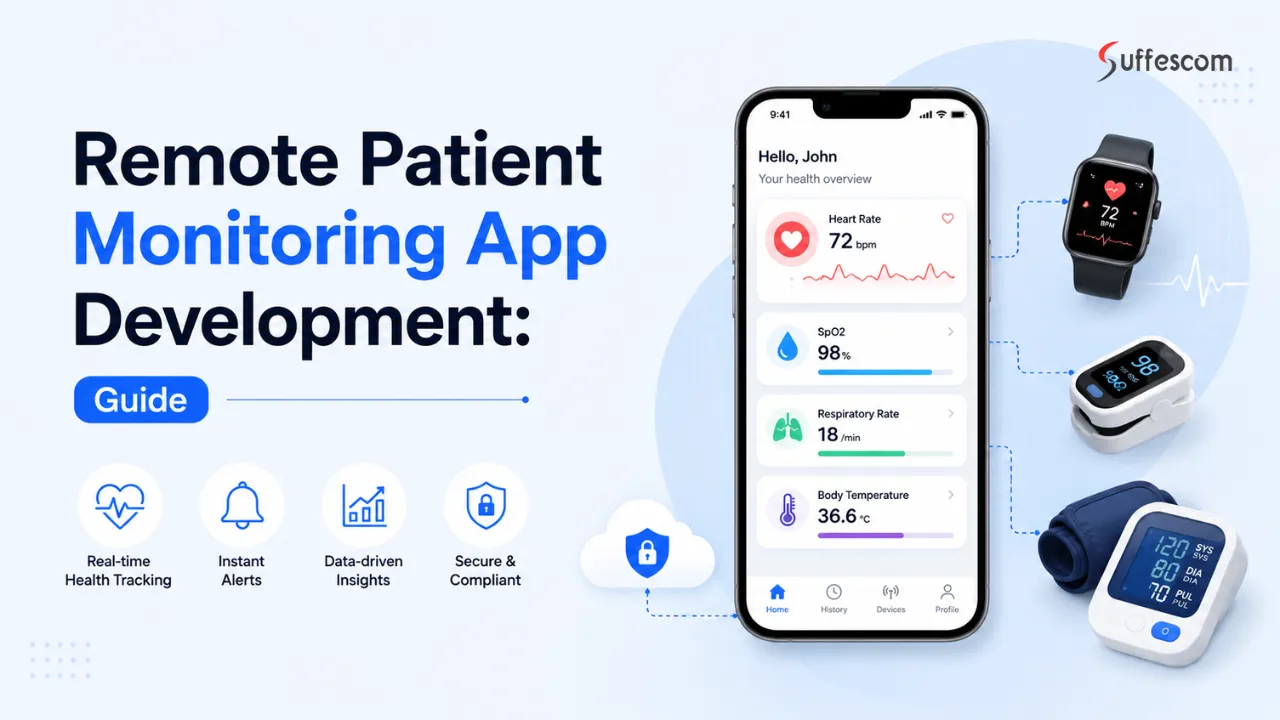
RPM apps act as the primary medium in gathering and administering the patient’s health information. The connection between RPM applications and connected devices, medical sensors, and healthcare systems makes it easier for the exchange of health information between the patient and healthcare provider.
This whole process starts from using a connected device like a blood pressure monitor, glucose monitor, pulse oximeter, ECG monitor, or a smartwatch by the patient. The health information is recorded and then transmitted via mobile applications or connected gateways into the RPM platform.
It will then store and process the data in the secure cloud environment. The data coming into the system will be analyzed using powerful analytical software and algorithms based on artificial intelligence to discover trends and abnormalities and create alerts once any health markers go beyond the set limits.
It is possible for the healthcare specialists to access the information provided by the application through the dedicated provider dashboard, where they can control the health condition of the patients remotely, analyze previous data, communicate with the patients, and make their clinical decisions.
Core Components of an RPM Platform
In order for a remote patient monitoring system to be effective, there should be many components that are connected in a certain way in order to provide ongoing patient care and make data-based decisions.
Patient Mobile Application
The application is used as the primary device by the users. Patients can use it for checking on their health status, medication reminders, reviewing their treatment programs, contacting their physicians, scheduling their appointments, and getting health information.
Healthcare Provider Dashboard
An at-a-glance portal to patient information is provided to a clinical or administrative staff team. This includes doctors, nurses, care coordinators, and so on. Via an engaging dashboard, medical staff are equipped with current indicators of health, observed trends, alert notifications, and a capability to administer cases where an action is needed most.
Connected Medical Devices
RPM systems utilize medical devices and wearables that collect patients’ health information through continuous monitoring. Such devices may include BP monitors, glucose monitors, ECG devices, pulse oximeters, smart scales, fitness trackers, and other IoT-based medical devices.
Cloud Infrastructure
The cloud platform is useful for providing security of data storage, real-time synchronization, scalability, and high availability of the system. Moreover, cloud technology helps to integrate electronic health records (EHRs), telehealth services, and third-party healthcare systems without violating healthcare regulations on the data.
Analytics Engine
Healthcare analytics engines help convert unstructured healthcare information into valuable insights. With the help of advanced analytics, machine learning, and AI technologies, remote patient monitoring systems can detect trends, measure patient risks, predict any complications, and create automated health alerts.
Difference Between RPM, Telehealth, and Telemedicine
Though RPM, telehealth, and telemedicine have been used interchangeably as one and the same term, there is a difference in their meanings. The distinctions between them will assist health organizations in identifying technology solutions that suit the intended goals of health service delivery.
Remote Patient Monitoring concentrates on collecting and analyzing the patient’s health data continuously using connected devices and monitoring systems.
Telehealth is a wider concept that includes remote health care services like virtual appointments, health education, remote monitoring, and digital communications.
Telemedicine involves narrower services of delivering clinical services using digital communication means.
| Parameter | RPM | Telehealth | Telemedicine |
| Patient Monitoring | Continuous | Periodic | No |
| Video Consultation | Optional | Yes | Yes |
| Wearable Integration | Yes | Limited | Rare |
| Real-Time Alerts | Yes | Sometimes | No |
Why Remote Patient Monitoring Apps Are Becoming Essential in the UK Healthcare Market
There have been numerous instances where healthcare providers in the United Kingdom have integrated technology to increase efficiency, enhance patient outcomes, and control the costs associated with healthcare. Consequently, RPM applications have emerged as vital components that help healthcare service providers undertake patient monitoring.
Rising Demand for Virtual Healthcare
In virtual healthcare, patients will be able to access health care services without regular visits to hospitals, which increases the flexibility and accessibility of health care services. Remote patient monitoring applications have become integral parts of the process because they help health care practitioners monitor their patients remotely using devices and applications on mobile phones.
NHS Digital Healthcare Transformation
The NHS is promoting the digital transformation of healthcare to increase efficiency and effectiveness through digital adoption of electronic health records (EHRs), telehealth, artificial intelligence (AI), and remote patient monitoring solutions. Remote patient monitoring solutions closely support these goals by enabling continuous care outside hospitals, making them a key part of NHS healthcare app development.
Reducing Hospital Readmissions
Hospital readmission is a continuing problem that faces many hospitals, especially those dealing with patients suffering from chronic diseases or patients recovering after being discharged from hospitals. This is because most of the patients get readmitted due to failure to detect any change in their health status. Remote patient monitoring applications can be used to help solve this problem.
Improving Chronic Disease Management
Chronic diseases, including diabetes, high blood pressure, heart problems, asthma, and chronic obstructive pulmonary disease (COPD) need constant monitoring and management of their treatment. The software for remote patient monitoring helps in tracking the vital health indicators consistently, and thus, doctors can see patterns, evaluate the efficiency of the treatment, and change the treatment plans accordingly.
Increasing Patient Engagement
Engagement of the patient is one of the most important elements in achieving good health care results. Patients who take an active part in the process of checking their health and treatment will be able to have better results from treatment. Remote patient monitoring tools help patients engage due to features such as real-time health monitoring, medication alerts, health tips, etc.
Benefits of RPM Apps
| Stakeholder | Benefits |
| Patients | Convenience, better monitoring |
| Doctors | Real-time patient insights |
| Hospitals | Reduced operational costs |
| Healthcare Providers | Scalable care delivery |
Ready to Build a Remote Patient Monitoring App?
Transform your healthcare idea into a secure, compliant, and scalable RPM solution with expert healthcare app developers.
Key Features of Remote Patient Monitoring Apps
The remote patient monitoring apps include a variety of features that are developed in order to provide uninterrupted delivery of healthcare services, make clinical decisions easier, and improve patient involvement. The features allow communication between patients, healthcare professionals, and connected devices and guarantee timely awareness about the patient’s state of health.
Patient Registration and Digital Health Profiles
The RPM application starts by creating a safe patient onboarding process where patients can build up and manage their own electronic health records. These records contain all necessary information about patients’ medical history, current treatment, allergies, and other personal data about their health condition.
Real-Time Vital Monitoring
The capability of tracking vital parameters of patients is one of the main capabilities of RPM solutions. Parameters like heart rate, blood pressure, oxygen saturation, temperature, glucose level, and other metrics are measured constantly and sent to healthcare professionals for evaluation and possible intervention.
Wearable Device Integration
Remote patient monitoring apps often link to wearable gadgets, including fitness trackers, smartwatches, and medical sensors, to wirelessly sync health information automatically with the apps, allowing a patient’s vital signs and other health indicators to be monitored in real time.
IoT Medical Device Connectivity
IoT-based medical equipment including ECG monitors, blood pressure measuring cuffs, glucose monitors, and pulse oximeters is linked with RPM systems to make sure that there is accuracy and automation in data capture.
AI-Based Health Alerts
Artificial intelligence integration is one of the major components of the analysis of patient information and the generation of automated health alerts. In case of the identification of any kind of abnormal pattern or risk factor, the system automatically sends notifications to both healthcare professionals and patients.
Medication Tracking
Through medications, RPM helps the patient get a handle on their doses: from setting timely and custom-made reminders that notify them to take their medication on time to dose monitoring to a full fledged adhere-to-up regime that takes a look at medication noncompliance and then helps get it back on the correct track.
Appointment Scheduling
Integrated Scheduling Systems. Patients can schedule or change their appointments with their doctors in real-time without needing assistance from the hospital administration. This feature improves the patients’ experience and accessibility of care.
Video Consultation
The video consultation system will facilitate real-time interactions between patients and health care providers. This will minimize the need to physically go to hospitals and clinics to obtain quality clinical interactions.
Secure Doctor-Patient Communication
The secure messaging systems in the RPM mobile applications allow patients and doctors to communicate safely. These secure communication channels enable the sharing of health information, reports, and medical guidance among others.
Electronic Health Record (EHR) Integration
Integration with Electronic Health Record (EHR) systems synchronises patient data across different healthcare applications and a total patient history, making the assessment and diagnosis of a patient’s overall medical health as efficient as possible, and a more coordinated approach to their care possible.
Health Analytics Dashboard
These analytics give healthcare providers access to visualisations that reveal patterns in the health trends, patient risk factors, and health outcome performance indicators. This enables them to anticipate trends, follow the progress of various patient trends, and drive their clinical decisions in a data-driven manner.
Emergency Alert System
Healthcare professionals or emergency contacts are automatically alerted through these systems when critical levels are reached. This is particularly relevant in the case of patients at higher risk.
Advanced Features That Make RPM Apps Stand Out
The advanced capabilities serve to boost clinical insight, automate decision-making, and promote a more proactive approach to patient care.
AI Predictive Analytics
AI-based predictive analytics allows healthcare organizations to predict possible future health hazards for their patients by processing historical and current patient information. Early detection of signs, such as deviations from the norm in the patient’s vital signs and other health parameters, will allow RPM technology to implement preventative action in advance.
Machine Learning Risk Prediction
The use of machine learning in RPM systems makes them more efficient through the constant process of learning from the collected patient data in order to determine their risk level. Machine learning enables the classification of patients according to their health conditions, the prediction of disease development, and the identification of those who have a higher risk of becoming ill in the near future.
Voice-Based Health Assistance
The voice-enabled capabilities help the patients to interact with the applications through natural language commands. The patient can monitor his/her health status, get reminded about the intake of the medicines, and report any symptoms without going through the complicated interfaces.
Remote Patient Triage
Remote triaging is possible through RPM technology, where the medical staff will be able to assess the patients’ health remotely by using their symptoms, vital signs, and other related health data to see if the patients need emergency treatment, virtual consultation, or monitoring.
Digital Therapeutics Integration
The digital therapeutics integration makes it possible for RPM systems to offer evidence-based therapeutic solutions through software applications. The therapeutic solutions may be in the form of behavioral therapy solutions, chronic condition management systems, or lifestyle improvement solutions.
Personalized Care Recommendations
Personalized recommendations for the well-being of the patient can be provided by RPM apps using the patient’s data along with the lifestyle and medical history of the individual. The recommendations could pertain to anything ranging from diet, exercise, medicine dosage, etc.
Population Health Management Dashboard
The population health management dashboard provides an overview of patients at the macro level to healthcare organizations. The dashboard helps the providers in analyzing the trends among the patient population, identifying the high-risk patient population, and disease outbreaks.
Remote Patient Monitoring App Development Process
In order to create an efficient RPM system, it is important to create an ecosystem that will be reliable and safe, and would allow connecting patients, healthcare providers, and medical devices in real-time. It means that each stage of the development process has its own importance.
Step 1 – Healthcare Market Research
Before starting work on a particular RPM application, it is crucial to conduct in-depth market research related to the healthcare sector. It is important because it allows understanding the constantly changing needs of both healthcare providers and patients, as well as changes that take place in terms of regulations.
At this stage, development teams analyze different healthcare challenges, including chronic conditions treatment, hospital readmission rates, and shortcomings in remote care delivery. They also conduct research on competitor RPM systems in order to find out what features are still absent.
Key activities include:
- Identifying target user groups (hospitals, clinics, NHS providers, startups)
- Studying chronic disease management requirements
- Evaluating existing RPM and telehealth solutions
- Defining core value propositions and market gaps
This provides assurance that the proposed product is technically possible and that it matches existing demands.
Step 2 – Requirement Gathering
Now that the direction of the market has been established, the next logical step is requirement gathering from all stakeholders, including health care professionals, hospital administration, product owners, and technical architects.
The purpose is to convert the healthcare needs into structured digital workflows. At this stage, we get insights on how patients will interface with the system, how doctors will manage the health data, and how alerts can be raised.
It includes:
- Patient journey mapping
- Doctor and caregiver workflows
- Data collection requirements (vitals, reports, alerts)
- Device and wearable integration needs
- Security and compliance expectations
Having a solid requirements phase helps eliminate a number of common risks associated with product development and keeps the development effort squarely in line with clinical goals.
Step 3 – Compliance Planning
Compliance is one of the most essential components that are needed while developing an RPM application as it deals with the health data of the patients. Compliance needs to be taken very seriously while dealing with the patients’ data in the UK.
In this phase, the emphasis is laid on making the system compliant in the initial stages of development.
This includes:
- UK GDPR compliance for data privacy and protection
- NHS data security and interoperability standards
- Medical device classification considerations (MHRA guidelines)
- Consent management workflows
- Secure data storage and access control policies
Careful compliance planning builds an RPM platform that your health system partners trust and meets security expectations at the enterprise level.
Step 4 – UX/UI Design
User adoption is greatly affected by UX/UI Design, while long-term engagement and use may be driven and impacted by it significantly. Given that RPM is utilised by both patients and physicians, the app must be easy to navigate, clinically effective, and intuitive. Elderly users or people with pre-existing conditions may be using the app, and therefore, ease of use should be key, while doctors require efficient, informative dashboards for decision-making.
Key design considerations:
- Clean and minimal interface for easy navigation
- Accessibility compliance (large fonts, high contrast, clear icons)
- Separate dashboards for patients and doctors
- Real-time data visualization for vitals and alerts
- Smooth onboarding and registration flow
A strong UX design directly impacts patient engagement rates and clinical efficiency.
Step 5 – Mobile App Development
Mobile application development involves the design of those patient-oriented and doctor-oriented applications that make up the core interface of the RPM system. The applications have to be highly responsive, highly reliable, and able to handle real-time health information.
The mobile platform bridges the gap between patients and healthcare professionals via constant monitoring, communication, and health management services.
Core functionalities include:
- Health tracking and vitals monitoring
- Push notifications and alerts
- Appointment booking and reminders
- Secure messaging and communication
- Offline and low-network support capabilities
Performance and stability are critical here because even minor delays can impact patient care decisions.
Step 6 – Backend Development
It is the central hub of the RPM system that handles large quantities of data generated from patients in real time, processes logic for the system, and enables secure communication between all the parts of the system. In the case of healthcare-level solutions, scalability and reliability are critical in the backend design.
Key responsibilities:
- Secure data storage and processing
- Real-time synchronization of patient data
- API management for device and third-party integrations
- Role-based access control (patients, doctors, admins)
- Cloud-based scalability and redundancy
A performant backend of the platform ensures that the RPM solution can grow from hundreds to millions of patients and maintain consistent performance.
Step 7 – Device & API Integration
This stage centers on the integration of the RPM solution with various devices and healthcare facilities. The IoT-based solution is an integral element of modern patient monitoring systems, which allow for automatic data gathering.
This helps to ensure that patient data is transmitted automatically to healthcare dashboards without any human interaction.
Common integrations include:
- Blood pressure monitors
- Glucose monitoring devices
- ECG and pulse oximeters
- Smartwatches and fitness trackers
- EHR and hospital information systems
An in-person setup should ensure an accurate connection, and real-time performance monitoring is possible.
Step 8 – Testing & Quality Assurance
Before installation, the RPM application is subjected to rigorous testing to confirm that it works effectively in a practical healthcare environment. As the application is directly related to patients’ health, testing should involve both technical and clinical aspects.
This stage confirms the performance, security, user-friendliness, and accuracy of the entire system.
Testing includes:
- Functional and regression testing
- Security and penetration testing
- Device compatibility testing
- Performance and load testing
- Clinical workflow validation
The result is a platform capable of stable real-world operations in the health sector.
Step 9 – Deployment
Deployment is when the RPM app is released into the cloud environment which should be very secure and ready for production purposes. This process has to be carried out effectively to avoid any risks to compliance and disruption of healthcare operations.
It entails setting up infrastructure and configuring the environment.
This stage involves:
- Cloud infrastructure setup (AWS, Azure, or equivalent)
- Production environment configuration
- Data migration and system validation
- Security hardening and access configuration
- Go-live release management
A robust deployment contributes to rapid adoption and ensures you have the operational capabilities you need.
Step 10 – Maintenance & Scaling
Maintenance after the system is launched will become very crucial for its continued functioning, security, and improvement. The RPM systems need to keep up with the increase in the number of patients, new devices, and the changing needs of healthcare systems.
Ongoing activities include:
- Bug fixes and performance improvements
- Feature enhancements and updates
- Security patch management
- Infrastructure scaling
- Monitoring and analytics optimization
This ensures long-term reliability and adaptability of the RPM solution.
RPM Development Timeline
| Development Stage | Estimated Time |
| Healthcare Market Research | 2–4 Weeks |
| UX/UI Design | 4–6 Weeks |
| MVP Development | 3–6 Months |
| Enterprise Platform | 6–12 Months |
A well-planned timeline ensures structured delivery, reduced development risks, and faster time-to-market for healthcare organizations investing in remote patient monitoring app development.
Remote Patient Monitoring App Development Cost in the UK
RPM Healthcare app development costs in the UK can vary greatly based on how complex the software is, how deeply it is integrated into the healthcare system, and the level of intelligence that is built into it. Unlike regular mobile applications, RPM solutions need an advanced technological stack to process information in real time, connect IoT devices, conduct analytics using AI, and comply with healthcare regulations.
Average Cost of Building an RPM App
The cost of developing an RPM application in the UK is normally £40,000 – £1,000,000+, depending on complexity and functionality. An inexpensive RPM solution will have basic monitoring functions, but if the platform is advanced and includes artificial intelligence, wearables integration, and predictive analytics, the price will be higher.
In most instances, the cost of developing an RPM application is between:
Basic RPM MVP: £40,000 – £80,000
The RPM minimum viable product can cover fundamental functionalities for patient enrollment, basic vital signs logging, simple dashboards, and alerts. This option may be beneficial for a startup, a company developing pilot programs for product idea validation, or one interested in building a limited MVP with minimal device support.
Mid-level RPM application: £80,000 – £180,000
This platform comes with state-of-the-art wearable connectivity, integrated with Electronic Health Record (EHR) functionality, and allows for communication between physician and patient with security. RPM analytics dashboards are also part of the system, which can cater to any hospital or healthcare system looking for reliable and scalable RPM solutions.
Advanced AI-powered RPM platform: £180,000 – £400,000+
This enterprise platform layers AI-powered analytics, predictions, scoring, and real-time risk notification. It’s built for larger healthcare organizations focused on predictive and proactive patient outcomes.
Enterprise-grade healthcare ecosystem: £400,000 – £1M+
The next generation’s end-to-end national health systems. We connect systems together across multiple sites and combine it with Population Health, cutting-edge AI & of course, the robustness required of any NHS-level platform. Built for national health providers and HealthTech Giants.
Table: Complexity-Based RPM Development Cost
| App Complexity | Features Included | Estimated Cost UK |
| Basic RPM MVP | Patient app, basic monitoring, dashboard, notifications | £40,000 – £80,000 |
| Medium Complexity RPM App | Wearables, EHR integration, analytics, messaging | £80,000 – £180,000 |
| Advanced RPM Platform | AI, IoT devices, predictive analytics, multiple dashboards | £180,000 – £400,000+ |
| Enterprise Healthcare Platform | NHS integration, advanced security, population analytics | £400,000 – £1M+ |
Factors Affecting RPM App Development Cost
There are several aspects that affect the cost of development of remote patient monitoring software applications. Each element brings a unique degree of complexity and resources needed to build the app, thus affecting the budget directly.
Features and Functional Complexity
The amount and the complexity of features are an essential aspect that contributes to development cost. A simple remote patient monitoring software application that includes patient monitoring and dashboards would be much cheaper than an app that features AI predictions, real-time alerts, and analytics.
Platform Choice (iOS, Android, Web)
The selection of platforms influences development cost as well. Development of native apps for two platforms requires additional budget as compared to cross-platform development. Besides, web dashboards for health care providers should also be developed.
Device and Wearable Integrations
The integration of IoT medical devices and wearables considerably raises the level of development complexity. The implementation of secure data transfer protocols, compatibility tests, and synchronization with the backend system takes more time and money.
Healthcare Compliance Requirements
Conformity with UK GDPR, NHS data security policy, and medical devices legislation imposes additional development requirements. The introduction of encryption, audit trail, consent management, and secure data storage raises the engineering complexity and cost of development.
AI and Machine Learning Implementation
Development of AI-based solutions for predictive analytics, risk scoring, and automated notifications involves the use of special machine learning algorithms and data processing pipelines. Such advanced features increase the cost of development due to increased computing power and engineering complexity.
Security Requirements
Such an application used within an enterprise setting will obviously have to have very high levels of security and protection of sensitive data. This, in turn, introduces extra complexity and cost with features like full encryption between client and server, multi-factor authentication, and role-based access control.
Development Team Location
The geographical location of the development team also determines the costs. The hourly rate of development teams in the UK and Western Europe is relatively higher than that in Eastern Europe or Asia.
Modernize Patient Care with Remote Monitoring Technology
Empower your healthcare organization with real-time patient monitoring, predictive analytics, and connected medical device integrations.
Cost Breakdown by Development Component
The total cost incurred while developing an application for remote patient monitoring is shared among various technological and operational elements. The different levels of the system play different roles when it comes to contributing to the overall cost, depending on their level of complexity and scalability.
| Component | Estimated Cost Impact |
| UI/UX Design | Low–Medium |
| Mobile App Development | Medium |
| Backend Development | High |
| Cloud Infrastructure | Medium |
| IoT Integration | High |
| AI Features | Very High |
| Compliance Implementation | High |
| Testing | Medium |
UI/UX Design
It aims to offer a simplified and convenient UI/UX for users, as patients and doctors use such applications. An RPM app involves dashboard views, patient health updates, and patient alerts, easy enough for an aging patient to operate.
Mobile App Development
Our mobile app development includes building patient-centric and provider-based applications for iOS as well as Android platforms. They come with some useful functionalities such as notification systems, health tracking devices, messaging options, and more.
Backend Development
Backend is the heart of the RPM platform, which manages data storage, user authentication, and real-time processing of patients’ health information. Backend secures communications between devices, applications, and dashboards while ensuring scalability and reliability of the system.
Cloud Infrastructure
Cloud infrastructure is used to ensure data storage, real-time synchronization, and scalability of RPM platforms. Cloud infrastructure guarantees the availability of data, secure handling of information, and integration with other healthcare systems. The cost depends on the volume of data and scalability needs.
IoT Integration
The IoT integration is done to connect wearables and medical devices such as glucose monitors, ECG devices, and blood pressure monitors. It allows for collecting and sending patients’ health information automatically. Complexity depends on the number and variety of devices to be integrated.
AI Features
The AI features will entail predictive analytics, risk scores, and automated health alerts using patient data patterns. This will need the use of machine learning models, data training, and optimization of the processes, and this makes the feature among the most costly to develop.
Compliance Implementation
The compliance process will ensure the app adheres to UK GDPR, NHS data standards, and medical device regulations. The process will entail encryption, consent management, audit logging, and proper data handling methods. This will be essential for the legality of the system and for the healthcare grade.
Testing
The testing phase helps ensure the RPM application is safe, secure, and robust in an actual healthcare setting, involving functional, security, performance, and device-related testing prior to the system launch.
Features Impacting RPM App Development Cost
Remote patient monitoring app development costs heavily depend on how complex or deep the range of functionalities available on the app. Each added feature in the patient remote monitoring software costs a varying degree of effort on technical resources, and needs to integrate third-party API and meet compliance.
Features that are basic in nature, such as user authentication and dashboards, can be relatively easier to develop, while advanced features, such as integration with wearables, artificial intelligence, and voice assistance, are more complex and demand specialized knowledge to develop. This is because they often rely on third-party integrations, machine learning algorithms, and real-time processing.
Also, there are some features that may be unique to the healthcare sector, like secure messaging, interoperability with EHRs, and compliance, which make developing such features very difficult.
| Feature | Cost Impact |
| User Authentication | Low |
| Patient Dashboard | Medium |
| Doctor Dashboard | Medium |
| Wearable Integration | High |
| AI Health Prediction | Very High |
| Video Consultation | Medium |
| EHR Integration | High |
| Blockchain Security | High |
| Multi-language Support | Medium |
| Voice Assistant | High |
Technology Stack for Remote Patient Monitoring App Development
The technology stack selection process plays an essential role in developing remote patient monitoring software, since it determines the performance, scalability, security, and integration abilities of the application. An efficient technology stack guarantees successful data transmission between the mobile application, back end, cloud, and IoT devices.
See below for the description of technologies utilized to develop RPM apps.
Mobile Development Technologies
Mobile platforms typically form the main patient and clinician interface in RPM implementations. Mobile technology choice influences performance, user-friendliness, and cross-platform support
Common technologies include:
- Flutter cross-platform app development using one code base
- React native app development for rapidly developing and scaling up mobile apps.
- Native App Development (Swift for iOS & Kotlin for Android) for a demanding app)
Backend Technologies
The backbone of the RPM world is the backend, responsible for managing the health data processing, user authentication, business rules, and APIs. The backend is the heart of the health data journey and has to be massively scalable and protected against unauthorized data access and leaks.
Popular backend technologies include:
- Node.js for scalable real-time applications
- .NET for enterprise-grade healthcare systems
- Python for data-heavy and AI-integrated applications
Cloud Platforms
Storing large data quantities for the patient’s health in real time. The data must be processed, and it requires storing it in an elastic manner in the cloud storage. For it, there is high availability, fault tolerance, & DR infrastructure.
Leading cloud platforms include:
- AWS (Amazon Web Services) for scalable healthcare infrastructure
- Microsoft Azure for enterprise healthcare integration and compliance support
AI and Machine Learning Technologies
Patient data is interpreted using artificial intelligence and machine learning to identify discrepancies and offer predictive analytics, which is vital for proactive healthcare-based platforms on which future generation RPM systems have been built.
Common technologies include:
- TensorFlow for building machine learning models
- Scikit-learn for data analysis and predictive modeling
- Custom ML pipelines for real-time risk scoring and alerts
IoT Healthcare Technologies
IoT connections linking the RPM platform to medical devices and wearable health monitoring products facilitate a constant and autonomous data retrieval from patients. This connection constitutes the heart of up-to-date remote care solutions.
Key IoT technologies include:
- Bluetooth Low Energy (BLE) for wearable connectivity
- MQTT protocol for real-time device communication
- APIs to communicate directly with health-monitoring devices, including glucose readers, ECG and EKG machines, and pulse oximeters
Recommended Technology Stack
| Layer | Technologies |
| Mobile | Flutter, React Native |
| Backend | Node.js, .NET, Python |
| Database | PostgreSQL, MongoDB |
| Cloud | AWS, Azure |
| AI | TensorFlow, ML Models |
Healthcare Compliance Requirements for RPM Apps in the UK
The area of healthcare compliance is one of the most important factors in the creation of RPM apps in the United Kingdom. Because of the fact that RPM apps collect, process, and store confidential patient data, compliance standards are essential for their safety and patients’ privacy.
Failure to comply with healthcare regulations may lead to negative consequences, including security threats and financial penalties. It is important to note that compliance should be considered in the process of development from the very beginning, rather than being considered as a separate phase of the development process.
UK GDPR Compliance
UK GDPR compliance will regulate the collection, processing, storage, and transfer of personal and medical data. In view of the fact that patient health data is considered sensitive personal data, RPM systems should have tight security measures to ensure user privacy.
Some important requirements of UK GDPR include the need to obtain the explicit consent of patients, provision of secure data storage, making provisions for accessing and deleting data, and being transparent about the use of patient data.
NHS Data Security Requirements
NHS-compliant RPM applications are supposed to be in compliance with NHS data security and protection guidelines. Data security and protection in this context refer to the confidentiality, integrity, and availability of healthcare information, as well as the security of patient record access.
Healthcare institutions need to put in place effective security measures as well as sound governance practices when dealing with patient information.
DSP Toolkit Compliance
DSP Toolkit stands for Data Security and Protection (DSP) Toolkit. It is a self-assessment tool utilized by organizations that have access to or process any data about patients in the NHS (National Health Service).
The ability of an organization to comply with the DSP Toolkit demonstrates its ability to adhere to best practices in information governance and cybersecurity.
MHRA Medical Device Regulations
The RPM application can be regarded as a medical device based on the functionality of the software in question, according to the UK regulations. Any software that involves a clinical evaluation, diagnosis, or health-related decision-making process can be considered a medical device by the Medicines and Healthcare products Regulatory Agency (MHRA).
Each organization will need to decide if its RPM offering constitutes a medical device and if regulations are required prior to its implementation.
Cybersecurity Standards
Since the remote patient monitoring program deals with healthcare data, it needs to be adequately secured with various cybersecurity approaches to protect it from various cyber attacks. Without security features, patients can be subject to security incidents such as unauthorized data access, hacking, ransomware, and more.
Essential cybersecurity practices include:
- End-to-end data encryption
- Multi-factor authentication (MFA)
- Secure API communication
- Role-based access controls
- Continuous security monitoring and threat detection
These measures can effectively defend both healthcare workers and their patients from new and changing cybersecurity threats.
Patient Consent Management
One key area related to this is managing patient consent, a cornerstone of regulatory compliance in health services. When using RPM applications, you have an obligation to disclose what data is being collected and its intended use, as well as access permissions.
In doing so, patients will be able to give or revoke consent when needed, as well as revise their consent at any time. Clear and transparent consent logs assist in both keeping abreast of all legal requirements and maintaining customer trust in health apps.
RPM Compliance Checklist
| Requirement | Importance |
| Data Encryption | Critical |
| Patient Consent | Mandatory |
| Audit Logs | Required |
| Access Control | Required |
Remote Patient Monitoring Device Integrations
Device integration forms the core of any remote patient monitoring (RPM) technology solution. Device integrations allow healthcare organizations to gather real-time patient health data directly from the connected devices and wearables, without having to manually enter the data.
Device integration options will depend mostly on the patient demographic, the specific use case in healthcare, and the monitoring needs. Some of the common device integrations used in remote patient monitoring technologies include:
Smart Blood Pressure Monitors
Intelligent blood pressure monitors automatically record and send blood pressure results to the RPM system. They are popularly used to manage blood pressure and cardiovascular health, which allows clinicians to monitor patients and identify any abnormalities before it’s too late.
Glucose Monitoring Devices
The Glucose Monitoring System will allow diabetes patients to keep a record of their blood sugar levels either constantly or periodically. The integration of this system into the RPM system will enable medical professionals to monitor the glucose level remotely.
ECG Devices
ECG (electrocardiogram) is a device that monitors the functioning of the heart and also detects any arrhythmia or other related heart problems. RPM technology provides cardiologists with the ability to gather information on the heart and its risks.
Pulse Oximeters
Pulse oximeters assess oxygen saturation (SpO2) readings along with the patient’s pulse rate, which makes them highly beneficial in respiratory surveillance. Pulse oximeters are widely utilized in patients suffering from chronic respiratory diseases, in post-operative respiratory surveillance, and remote respiratory surveillance programs.
Smart Wearables
Sophisticated wearable devices like fitness trackers and smartwatches constantly track user health and activity information, which includes heart rate, sleep patterns, physical activities, and stress levels. Because of their capability of continuous tracking, these devices are among the most favored device integrations in RPM platforms.
Smart Scales
“Smart scales” measure body weight along with other health parameters like body mass index, body fat percentage, and muscle mass. Such types of connected medical devices are often used in weight management programs, chronic disease monitoring, and heart-related treatment plans that require continuous monitoring of weight.
With the help of connected medical devices, telehealth applications will be able to provide health information in real time and allow healthcare professionals to make better-informed clinical decisions.
Build a Secure & Scalable Remote Patient Monitoring Platform
Our healthcare technology experts help hospitals, clinics, and startups launch compliant RPM solutions faster and more efficiently.
Use Cases of Remote Patient Monitoring Applications
The remote patient monitoring apps have brought about revolutionary changes in the way that healthcare is delivered through continuous monitoring, early interventions, and personalized care within different medical disciplines. The healthcare practitioners leverage RPM systems in collecting health data in real time and making treatment adherence possible.
Below are some of the most common uses of remote patient monitoring applications.
Diabetes Management
Diabetes is among the top chronic diseases that can be effectively treated through RPM services. The software interfaces with continuous glucose monitors (CGMs) and smart glucometers, allowing healthcare professionals to monitor the glucose levels of their patients.
The healthcare professional can monitor the patient’s data remotely and detect any irregularities in the blood glucose levels of the patients to adjust the treatment plan.
Key benefits include:
- Continuous glucose monitoring
- Improved medication adherence
- Early detection of glucose fluctuations
- Reduced diabetes-related complications
- Better long-term disease management
Cardiac Care Monitoring
People who have cardiovascular disorders will need continuous monitoring so that any possible complications related to the heart could be discovered. The remote patient management systems have connectivity with ECG machines, heart rate monitors, and wearable devices to give real-time data about the heart.
Doctors will be able to monitor heart activity from afar and discover the signs of any possible problems even before the occurrence of a full-blown medical emergency.
Key benefits include:
- Continuous heart rate monitoring
- Early detection of arrhythmias
- Reduced emergency hospital visits
- Improved patient safety
- Enhanced cardiac rehabilitation support
Hypertension Management
Hypertension is one of the major risk factors associated with cardiovascular diseases and strokes. RPM technologies enable patients to monitor their blood pressure levels via connected devices in the safety of their own homes.
Health professionals will be able to monitor any trends in the patient’s health and tailor their medical interventions accordingly.
Key benefits include:
- Regular blood pressure tracking
- Better treatment effectiveness monitoring
- Reduced risk of cardiovascular complications
- Increased patient engagement
- Fewer in-person consultations
Elderly Care
For example, remote patient monitoring systems allow the elderly to continue living independently but with an assurance that someone will still be watching their health and wellbeing from a safe distance, using wearable devices and smart sensors, to tracking vital signs and activity patterns, sleep, or any falls.
Key benefits include:
- Fall detection and emergency response
- Continuous health monitoring
- Improved safety for seniors living alone
- Reduced caregiver burden
- Better quality of life
Post-Surgery Monitoring
For discharged patients, consistent observation will usually be necessary so they can recover fully and continue with their lives. RPM software makes it easy for medical staff to monitor their vital signs, symptoms, wound healing status and prescription usage all from the ease and safety of their homes, ensuring any problems are spotted and treated quickly and avoiding time and costs involved in unscheduled return appointments.
Key benefits include:
- Faster recovery monitoring
- Early identification of post-operative complications
- Reduced hospital readmissions
- Better patient compliance
- Lower healthcare costs
Mental Health Monitoring
RPM technologies are gaining popularity among mental health practitioners who aim to track the well-being of patients outside of medical facilities through the use of various NHS integrated mental health apps. Healthcare practitioners can analyze the data and take appropriate actions if need be.
Key benefits include:
- Continuous mental health assessment
- Improved patient engagement
- Early intervention opportunities
- Better treatment adherence
- Personalized mental health support
Maternal Healthcare
Remotely monitoring their health in the weeks leading up to birth, and then at home in the weeks following a birth RPM solutions help new mothers monitor blood pressure, weight, glucose, and so many other vital health metrics wirelessly from home via smart devices.
Monitoring can help identify women who are at higher risk in earlier pregnancy and also enable timely clinical action when unexpected health issues arise after pregnancy.
Key benefits include:
- Improved prenatal monitoring
- Early detection of pregnancy-related risks
- Reduced need for frequent clinic visits
- Better maternal and fetal outcomes
- Enhanced postnatal care support
Remote Patient Monitoring App Monetization Models
The selection of the right monetization approach is crucial for the sustainability and scalability of the RPM platform. Monetization can not only help in the sustained growth of the platform but also in generating maximum ROI for the RPM application development process.
SaaS Subscription Model
Software-as-a-Service (SaaS) is a popular strategy when it comes to generating income from a remote patient monitoring system. In this case, health care organizations make regular payments on a monthly or yearly basis in order to use the software services.
Depending on such factors as the number of users, number of connected devices, number of patients, and some additional services, the subscription price can change. It is beneficial, especially for the HealthTech companies, to use this strategy.
Enterprise Licensing
The enterprise licensing option means selling the RPM platform directly to hospitals, health systems, insurers, or healthcare institutions via extended license agreements. Rather than monthly subscriptions, enterprises usually have to pay a big licensing fee for using the platform.
Additional services like installation, system integration, compliance assistance, training of staff, and maintenance may be offered as part of the deal. Enterprise licensing works best if you need a big deployment of your solution with customized workflows.
Pay Per Patient Model
Through the Pay Per Patient Per Month (PPPM) model, the healthcare providers are billed according to the number of patients who are being monitored using the platform. This billing mechanism ensures that there is a relationship between the cost and the usage of the platform, thus making the payment model highly beneficial.
With more patients being registered to the platform, the income generated is equally scaled, resulting in a performance-based business model.
White Label RPM Solutions
With white label RPM software, it becomes possible for the healthcare organization to rebrand and resell the existing RPM solution under its own brand name. Organizations don’t have to start from scratch; instead, they just need to create customized services that make use of the existing technological framework.
This particular approach is quite commonly adopted by healthcare organizations, digital health firms, and medical service organizations when they want to enter into the RPM domain.
Healthcare Marketplace Model
A healthcare marketplace is a system where the above players get connected to each other via the use of an integrated central platform. The RPM functionality may be provided through a healthcare marketplace that earns income from subscriptions, transaction charges, service fees, or premiums.
Such a system would be useful for entities that wish to develop a digital health ecosystem integrating RPM, telehealth, scheduling, and healthcare resource management on one platform.
RPM Revenue Models
| Model | Suitable For |
| SaaS | Startups |
| Licensing | Hospitals |
| PPPM | Clinics |
| White Label | Healthcare Businesses |
Choosing the proper monetization strategy will be determined by factors such as the target market, scalability, and the business strategy. The most profitable RPM companies are those that have more than one source of income to serve the needs of their consumers.
Challenges in Remote Patient Monitoring App Development
Despite the fact that there are many benefits of implementing remote patient monitoring apps, there are many challenges that need to be addressed when developing such systems. They might include compliance and integration issues.
Data Privacy Issues
Data privacy is an important consideration in RPM systems because of the sensitive health information of the patients that is contained in the system. This means that the developers should think about using secure methods such as encryption, secure logins, and authorization, among others.
Device Compatibility
These remote patient monitoring systems consist of numerous devices from different suppliers. Making sure a system has proper working compatibility for each device is not easy and will require the system.
Healthcare Regulations
There are a number of regulatory considerations that need to be addressed in order to ensure the safety of the patient, data protection, and other concerns. Navigating through UK GDPR, NHS regulations, DSP Toolkit guidelines, and MHRA regulations could increase the complexity of software development.
Patient Adoption
Even the most advanced RPM technology could be rendered useless when patients cannot use it properly. It is important that user experience designers create the technology to be as intuitive as possible since some senior patients would be less experienced with new gadgets.
Data Accuracy
Decision-making in the medical field is made on the basis of data collected using RPM technologies, which is why precision is an essential factor for decision-making. Some of the issues that could impact data quality include faulty devices, communication errors, and incorrect user input.
System Scalability
Considering the increasing number of patients and devices for healthcare systems, the key thing about remote patient monitoring systems is that they have to be scalable in managing large amounts of data. This is due to the fact that building scalable architectures requires time and effort.
How to Choose the Right Remote Patient Monitoring App Development Company
Choosing the appropriate healthcare application development agency will be an important step in influencing the future outcome of your project. Below are several key elements that will help you to find a trustworthy partner in the sphere of developing remote patient monitoring applications.
Healthcare Industry Experience
A healthcare application development company with relevant experience in the field will be able to understand the needs of patients, clinical processes, and specific aspects of healthcare better. Experienced healthcare application developers will develop a product according to medical demands.
Compliance Expertise
The software for the RPM program should adhere to regulations like UK GDPR, NHS data security, DSP Toolkit, and MHRA. With a development company that has good compliance knowledge, it will be easier for you to make sure that your platform is developed with considerations of security, privacy, and regulations.
IoT Integration Capability
Since remote patient monitoring platforms depend greatly on connected medical devices and wearable technology, it is important for the development company to have experience in IoT integration technologies. The development company should have experience with things like device connectivity, synchronization of real-time data, interoperability, and integration with other healthcare platforms.
Security Practices
Ensuring that patient data is protected should be among the key factors when choosing an app development company for RPM systems. Assess whether the company is following proper security practices and implements such things as data encryption, security authentication, access controls, vulnerability assessments, and adherence to cybersecurity requirements within the healthcare sector.
Post Launch Support
Any RPM application requires constant maintenance, optimization, monitoring, and updates after deployment. It is important that your development team assists you in making sure that your platform operates successfully in the future.
Previous Healthcare Projects
A review of the company’s portfolio of healthcare projects would offer great insights into their competencies. Successful case studies, client references, and implementation of healthcare projects indicate the competency of the company in delivering secure and scalable digital health solutions.
Remote Patient Monitoring App Case Studies and Real-World Applications
RPM technology is no longer in the process of being developed but rather already in use to help change the way healthcare is provided through hospitals, clinics, and home settings. This has been proven through positive changes seen in patient outcomes, operational effectiveness, and the availability of healthcare services.
These examples provide insights into the most frequent practical uses of remote patient monitoring technology.
Hospital Remote Monitoring Programs
Remote monitoring has been adopted by many hospitals to offer care to their patients even outside the confines of the healthcare facilities. Through the use of mobile technology and devices, the medical team will be able to track vital signs and intervene when necessary.
This is an efficient strategy through which unnecessary visits to the hospital are reduced, thus improving efficiency and allowing management of a large number of patients without adding any more strain. In cases where there are staffing issues in the hospital, remote patient monitoring can be of great assistance.
Chronic Disease Management Success
The use of remote patient monitoring has proven effective in the management of chronic illnesses like diabetes, hypertension, cardiovascular diseases, and chronic respiratory disorders. Unlike depending on regular appointments, health care professionals are able to have constant insights into the state of health of their patients.
In this way, physicians can be able to detect problems early enough, implement corrective measures as required, and also enhance medication compliance. Therefore, patients will benefit from improved management of their illnesses and will also cut down on health expenses.
Elderly Care Monitoring Solutions
Increasing aging populations have fueled the need for healthcare solutions that promote independent living. RPM systems assist elderly adults to continue living independently while connected to their caretakers and health care providers through consistent health observation.
The wearables, fall detection, and connected medical devices let caregivers, loved ones, and families see key metrics about their loved one – activity levels, heart rate, and so much more from wherever they are, while knowing that alerts can be triggered if something unexpected happens.
Post-Discharge Patient Tracking
Perhaps the most useful way that RPM technology can be applied is in the monitoring of patients after discharge. Post-surgery or hospitalization, a lot of times, patients need to be monitored to ensure their safety during the recovery process.
Applications that enable remote monitoring are very helpful to doctors as they help in identifying any warning signs at an early stage, and this helps to prevent hospital readmissions.
RPM Outcomes
| Area | Improvement |
| Patient Monitoring | Better visibility into real-time health conditions |
| Hospital Care | Reduced workload and fewer avoidable readmissions |
| Chronic Care | Improved disease management and treatment adherence |
With continued adoption of technology within the healthcare system, remote patient monitoring software is set to become even more important in improving patient care and achieving better clinical outcomes at lower costs.
Future Trends in Remote Patient Monitoring App Development
The development of future remote patient monitoring apps will be guided by innovations in AI technology, connected healthcare devices, fast connectivity, and predictive analytics.
AI-Powered Healthcare Monitoring
AI technology is revolutionizing remote patient monitoring through the automatic processing of patients’ data and health anomalies. AI-driven patient monitoring solutions can detect any possible risk and alert clinicians about the situation before the condition worsens.
Digital Twins in Healthcare
Digital twins are digital copies of patients created based on real-time health information, health history, and predictive analytics. Through the use of digital twins, health care providers can evaluate treatment options and monitor the progression of diseases.
5G Remote Healthcare
The use of 5G technology is going to make the process of remote patient monitoring more effective through fast data transfer, low latency, and dependable connectivity between devices.
Predictive Patient Care
In the future, RPM systems are going to be built around predictive care as opposed to being based on reactive care. Through the analysis of historical and real-time patient data, it is possible for analytics systems to predict any health events in advance.
Smart Wearable Expansion
Wearable healthcare devices are not limited only to fitness tracking. Advanced smart wearables are anticipated to deliver advanced health data, improved accuracy, and continuous monitoring, thus becoming an important component of telehealthcare ecosystems.
Generative AI Healthcare Assistants
Another important technology in this space is generative AI assistants that can help in engaging patients and offering healthcare services. Generative AI assistants can answer any health-related question, offer personalized recommendations, assist with symptom assessment, and enable workflow automation.
ROI of Investing in Remote Patient Monitoring Apps
RPM application technologies are not only enhancing the quality of patient services but bringing tangible monetary and operational advantages to health care facilities. Thus, the development of such applications is increasingly considered a smart and long-term strategic move by many hospitals, clinics, and HealthTech firms.
Reduced Healthcare Costs
One of the most significant benefits that RPM offers is the potential for lowering total healthcare expenses. This technology enables healthcare practitioners to diagnose problems early enough to prevent any emergency room visits, hospital stays, and readmission expenses. Staff utilization and operational expenses will be lowered by the ability to monitor more patients remotely.
Improved Patient Retention
Patients become more engaged in RPM applications since they provide easy access to healthcare services, individualized monitoring, and constant communication with the care teams. It increases the chances of retaining these patients for a longer period due to the improved experience and support they receive.
Better Clinical Outcomes
The process of real-time monitoring and early intervention provides health care professionals with faster decision-making, which helps to achieve better results in managing diseases, higher compliance rates, fewer complications, and overall better patient outcomes.
New Healthcare Revenue Streams
Remote patient monitoring solutions offer further business opportunities via subscription services, remote care programs, value-based health care, and other packages. The organization will be able to grow its portfolio of services and earn from digital health solutions.
Why Build a Custom Remote Patient Monitoring Application?
Though using off-the-shelf solutions for RPM can help to quickly enter the world of remote medicine, at the same time, such solutions have certain restrictions that can limit the possibilities for customization and scaling in the future. Using a custom remote patient monitoring solution can help you create a platform that will suit your needs.
Complete Control Over Features
Customized development enables organizations to develop exactly what they need without being limited by the constraints of pre-developed solutions. Whether it is custom monitoring capabilities, customized patient interaction features, or powerful analytical capabilities, everything can be customized for healthcare purposes.
Better Scalability
As the volume of patients, healthcare services, and device connections increases, an RPM platform can scale up. Organizations will have the ability to develop additional capabilities, increase infrastructure, and handle increased data load without being limited by the capabilities of third-party solutions.
Improved Security
RPM applications built specifically can give the users more control over the security architecture and compliance framework. The healthcare organization can use advanced security features, encryption, and access controls in accordance with their data security needs and compliance.
Custom Healthcare Workflows
Each healthcare organization is unique and hence can have its own RPM platform designed for them to suit their clinical procedures, therapies, and care provision process. This increases efficiency and guarantees that the platform will integrate easily within the healthcare organization’s system.
Competitive Advantage
Customized RPM platform allows the healthcare organization to gain a competitive advantage through offering distinctive services and innovations in healthcare service delivery. This helps the healthcare organization to stand out among its competitors.
Conclusion
RPM apps are becoming a critical part of today’s healthcare system. They allow healthcare organizations to track the health of patients constantly, receive clinical insights immediately, and provide patients with more care without extra efforts on the part of doctors and the expenses of patients. As virtual care is gaining popularity in the UK, hospitals, clinics, NHS, and HealthTech companies are paying more attention to remote patient monitoring software.
In the future, developments in the fields of artificial intelligence, IoT-based medical devices, predictive analytics, and health ecosystems will lead to greater capabilities for remote patient monitoring technology. These developments will pave the way for new possibilities in terms of personalized medicine, chronic condition management, and preventive healthcare through remote patient monitoring.
Develop your healthcare application for Remote Patient Monitoring with our team of healthcare technology experts. Being a healthcare provider, startup, or enterprise company, developing a custom RPM application is an investment that would prove to be fruitful for you in terms of improved patient results and enhanced healthcare services.
Planning to Develop a Remote Patient Monitoring App?
Get expert guidance on features, compliance, technology stack, and development costs before you start your project.
FAQs
1. What is remote patient monitoring app development?
Remote patient monitoring app development refers to the creation of healthcare software programs that enable healthcare professionals to monitor patient data from remote locations through the use of mobile applications, medical devices, and cloud platforms.
2. How much does it cost to develop a remote patient monitoring app?
The development of remote patient monitoring apps costs between £40,000 and £1,000,000+ in the UK. The exact price will be determined by several aspects, including the complexity of features, integration with devices, AI functionality, and others.
3. How long does it take to build an RPM app?
Development of the MVP of an RPM system will take about 3-6 months, whereas development of an enterprise-level RPM platform will take 6-12 months and even longer.
4. What features should an RPM app include?
A remote patient monitoring app must consist of patient registration, a health dashboard, real-time vital monitoring, wearables integration, medication alerts, appointment booking, secure messaging, EHR integration, analytics dashboard, and an emergency alert system.
5. Are remote patient monitoring apps medical devices?
However, some RPM apps could be considered medical devices if they conduct diagnostics, provide decision support for clinicians, and perform automatic patient health assessments. The MHRA Medical Device Regulations may apply to such apps in the UK.
6. What regulations apply to RPM apps in the UK?
UK RPM applications need to adhere to laws like UK GDPR, data security laws at NHS, DSP Toolkit guidelines, and possibly MHRA medical devices laws, depending on the application.
7. Can RPM apps integrate with NHS systems?
Yes. With their approved interoperability standards and health care APIs, all new RPM systems can connect with the NHS and also integrate data to enhance your care delivery and streamline processes.
8. What devices can connect with RPM applications?
Your health data can be accessed and utilized by the RPM app from a variety of connected devices, such as glucose devices, smart scales, ECGs, blood pressure monitors, smartwatches/activity trackers, and pulse oximeters.
9. How does AI improve remote patient monitoring?
Leverage your RPM platform to use AI to analyze patients’ health data and identify risks, detect health anomalies, and predict outcomes with automated alerts to the right provider.
10. What technologies are used to build RPM apps?
Examples of technologies employed in RPM applications include Flutter and React Native for building mobile apps, Node.js and .NET for backend programming, PostgreSQL and MongoDB for database management, AWS and Azure for cloud services, and TensorFlow for artificial intelligence functionalities.
11. How secure are patient monitoring applications?
Remote patient monitoring software solutions use robust security mechanisms such as encryption, multi-factor authentication, role-based access control, auditing, and a secure cloud environment in order to safeguard any sensitive health information of patients.
12. What diseases can RPM apps monitor?
Common RPM applications include diabetes management, hypertension, cardiovascular disease, respiratory illness management, weight management, post-operative recovery, women’s health, and home and remote elder care.
13. How do healthcare companies monetize RPM apps?
Revenue models used by healthcare companies in the monetization of RPM platforms include SaaS Subscription, Enterprise Licensing, Pay-per-Patient pricing, White-label model, and Healthcare marketplace business model.
14. What is the difference between RPM and telehealth?
Patient monitoring involves gathering health information of patients continuously by means of connected devices, while telemedicine helps establish virtual contact and consultation between healthcare providers and patients.
15. Can RPM apps reduce hospital readmissions?
Yes, RPM devices allow patient observation for continued monitoring of progress in the home setting in order to get an idea as to whether problems are developing and if so, to get them addressed prior to the problems becoming worse. This may result in an overall reduction in unnecessary readmissions.
16. How much does wearable integration cost?
There are different costs associated with the integration of wearables, which depend on the quantity and type of devices used. In the case of most remote patient monitoring systems, the cost of the integration of wearables is between £10,000 and £50,000+.
17. How do I choose an RPM app development company?
In choosing an RPM app development firm, consider its experience in healthcare software development, compliance skills, IoT integration abilities, security strategies, past projects in the healthcare sector, and post-deployment services.
18. What is the future of remote patient monitoring technology?
The future of remote patient monitoring lies in artificial intelligence-based health care monitoring systems, digital twin technologies, predictive analytics, 5G networks, improved wearable devices, and generative artificial intelligence assistants for health care.

Senior Content Strategist
Jonathan Raabe is the Content Strategist at Suffescom Solutions and has more than 7 years of experience in developing data-driven content strategies for technology-centric organizations. He is proficient in the areas of mobile app development, software development, AI, cloud computing, fintech, healthcare, and digital transformation. Jonathan collaborates with industry leaders, developers, and business heads in creating high-value, SEO-optimized content that helps companies in increasing their visibility on the search engines, establishing trust, and driving business inquiries.
Need Help With
Development?